












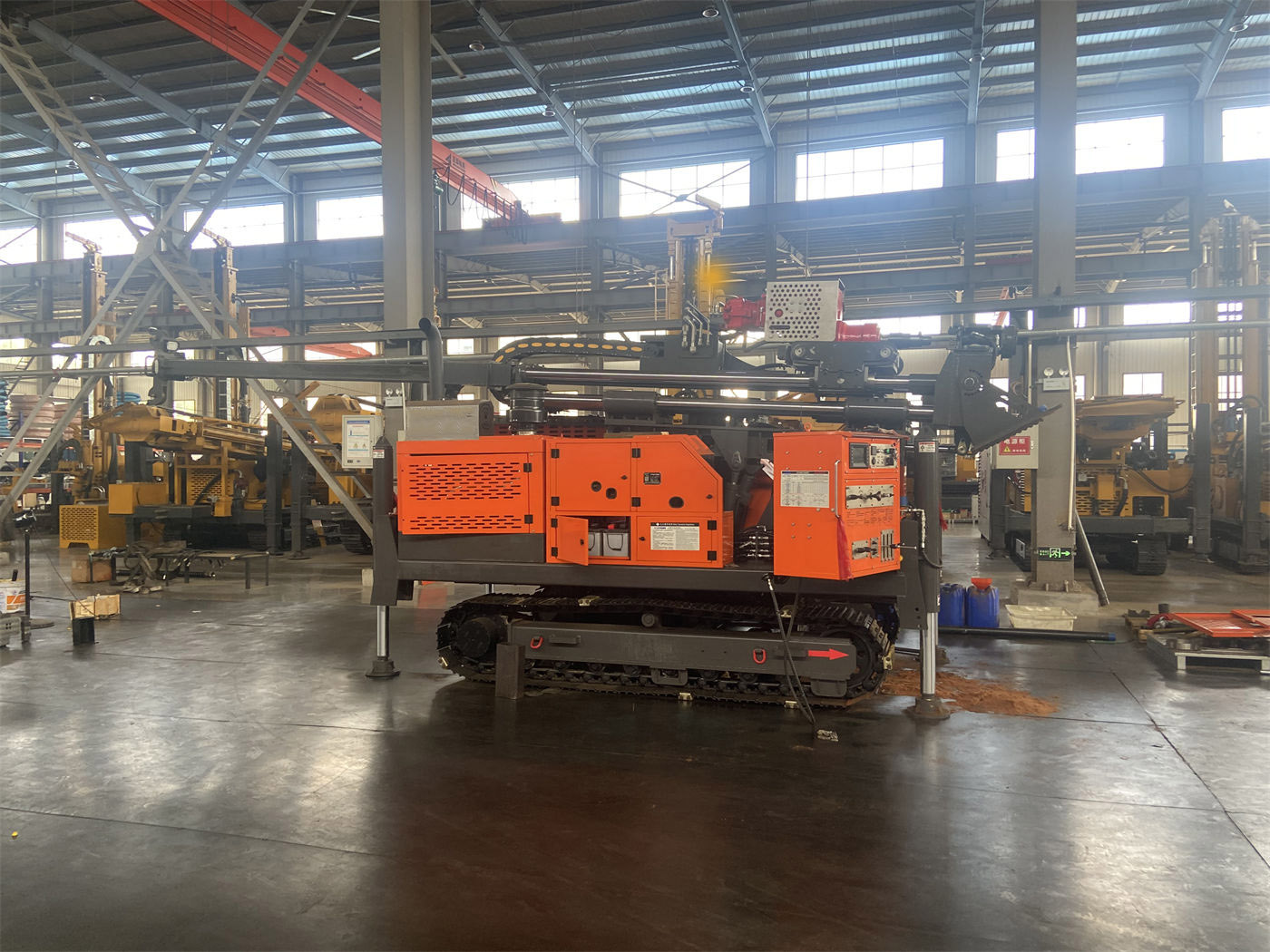
When well locations are scattered across multiple villages, farms, or mining areas, the time a water well crew actually spends on the road is often not the drilling itself but moving equipment from one hole to the next. How rig moves are organized directly determines what kind of work a rig is suited for. Using a 600 m-class vehicle-mounted direct-mast water well drilling rig as an example, this article compares the practical differences in rig moves between integrated vehicle-mounted models and models that require separate transport.
Two Rig-Move Approaches: Where the Process Differences Lie
Vehicle-mounted direct-mast rigs integrate the mast, power head, hydraulic feed, winch, and control system on the carrier chassis, so road moves are completed by the chassis driving itself. Models that require separate transport must first be disassembled or loaded whole onto a transport vehicle, then unloaded, repositioned, and connected on site. The difference is not just "driving there" versus "hauling there"; it also includes the number of loading and unloading cycles, the reset work required on arrival, and the support vehicles needed.
| Comparison Item | Integrated Vehicle-Mounted Model | Model Requiring Separate Transport |
|---|---|---|
| Road move | Chassis drives itself | Must be loaded and transported |
| Loading/unloading | No whole-machine loading/unloading | Usually one load and one unload per site change |
| On-site preparation | Mast and working mechanisms restored to operating state | After unloading, repositioning and connection still required |
| Main constraints | Road width, height clearance, bearing capacity, and turning space | In addition to road conditions, affected by transport vehicle organization |
This table only illustrates process differences in rig moves between the two structural types; it does not mean one type is always faster under all conditions. The actual difference also depends on well spacing, road conditions, and the operating time per well.
What the Vehicle-Mounted Direct Mast Delivers: Fewer Loading Cycles, Not Fewer Limits
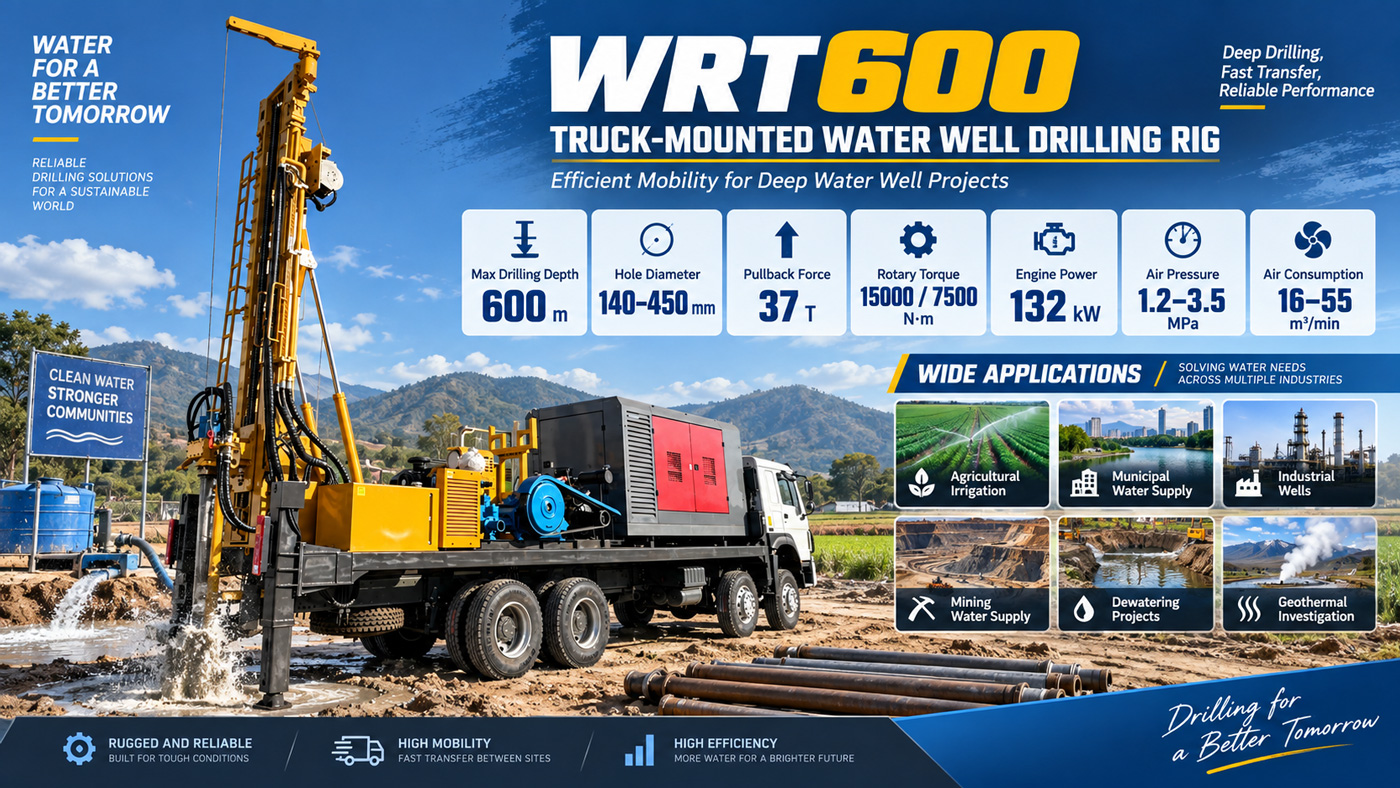
Take the WRT600 referenced in this article: its integrated vehicle-mounted structure is suited to rapid cross-region moves, and the materials explicitly state that it reduces loading/unloading cycles and shortens preparation time when moving from one drilling point to another. For drilling contractors, mining construction crews, and regional water well service teams, when a project consists of multiple scattered well locations and per-site operating time is not very long, reducing loading/unloading directly meets the need.
But ease of moving does not mean it can access any site. The machine weighs approximately 26 T, with transport dimensions of approximately 10 × 2.48 × 3.75 m. Even when driving on its own chassis, road width, bridge load capacity, height clearance, turning radius, and drilling site ground bearing capacity must be confirmed before entry. The direct-mast structure does not change mast length through multi-stage telescoping, so road height clearance and site clearance must be confirmed in advance for transport and entry. In other words, the integrated vehicle-mounted design eliminates loading/unloading and transfer organization, but not the need to check roads and sites.
What the Direct-Mast Structure Means for Rig Moves and the Job Site
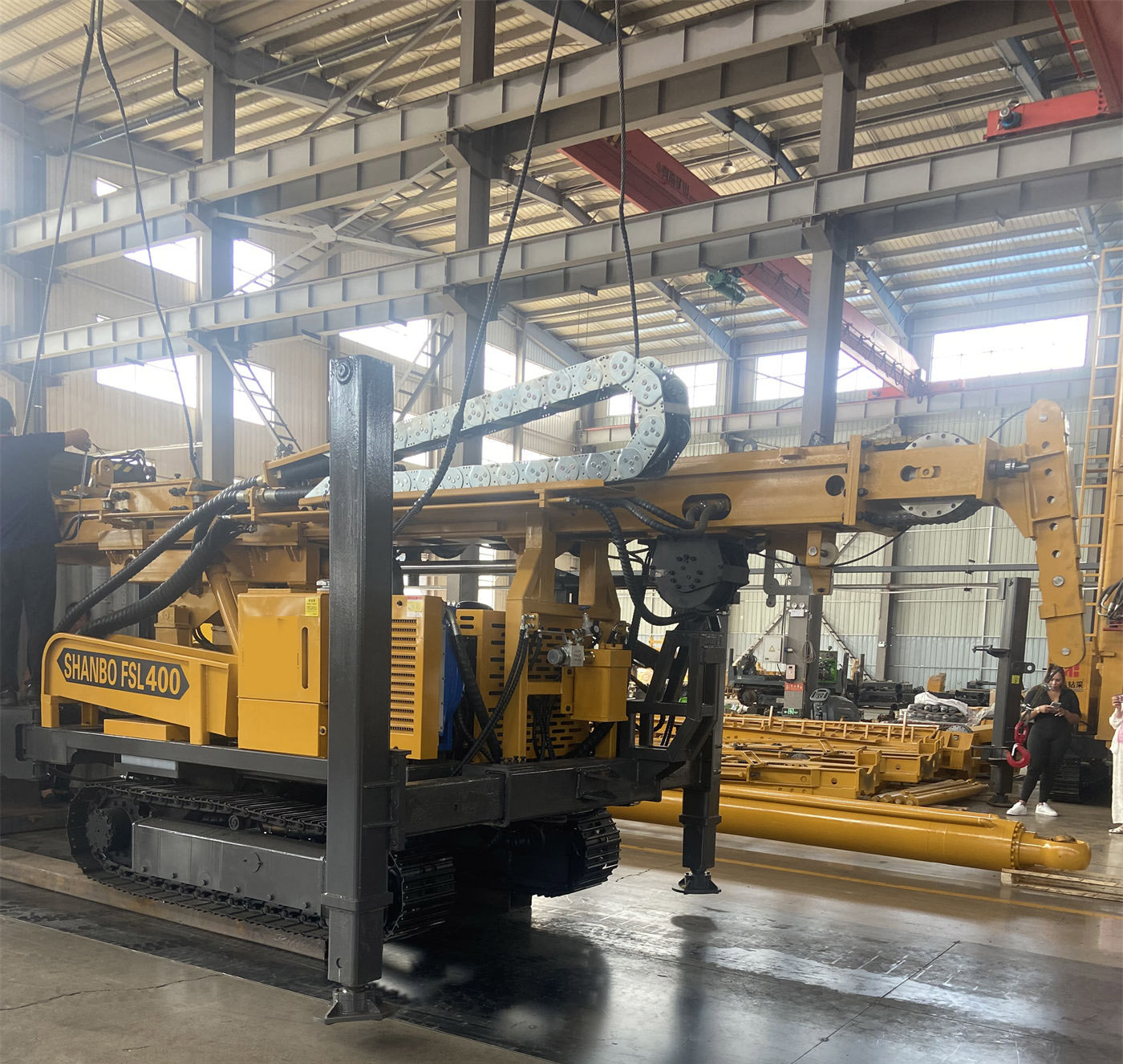
The direct mast has a relatively direct load path, simple structure, and straightforward maintenance, making it suitable for continuous rotation, deep-hole drill pipe handling, and high-load water well construction. However, its mast length does not shorten in transport mode, which distinguishes it from telescopic-mast models: telescopic masts may reduce transport height during moves, while direct masts rely more on prior confirmation of height clearance along the route and clearance on site.
So to decide whether to use this type of rig, ask three questions first: Are the well locations connected by highways or village roads? Are there obvious height restrictions or narrow bridges along the route? Is there enough space on site to unfold the mast and park the equipment? Only when all three can be confirmed does the advantage of vehicle-mounted moves hold.
Which Projects Should Prioritize an Integrated Rig-Move Solution
- Well locations are scattered across multiple farms, villages, or mining areas, requiring repeated site changes;
- Single-well depth is in the medium-to-deep range, and equipment capability matches project targets;
- The site has road access conditions and can coordinate space to unfold the mast;
- The crew wants to reduce dependence on transport vehicles and loading/unloading labor.
The rig has a maximum drilling depth of 600 m and a hole diameter of 140–450 mm, with 37 T lifting force and dual-condition torque of 15000 / 7500 N·m. It can be used for medium-to-deep groundwater development such as agricultural irrigation, municipal water supply, industrial water wells, mining water supply, and geothermal investigation. Rig-move efficiency is only one factor in selection; well depth, hole diameter, and formation processes must still be checked separately.
When Site Changes Are Frequent, What Supporting Equipment Must Also Be Considered
The vehicle-mounted model solves whole-machine transfer, but supporting equipment such as air compressors, mud pumps, drill pipes, and casing still must move with the project. When using DTH hammer drilling, the recommended working air pressure is 1.2–3.5 MPa and air consumption is 16–55 m³/min. Air compressor selection must consider hole diameter, hole depth, DTH hammer specifications, rock hardness, and altitude; in soil, clay, and gravel layers, a mud pump can be configured for mud rotary drilling. Whether the transport organization of supporting equipment is smooth will amplify or offset the convenience brought by whole-machine moves.
In addition, the choice between 3 m and 6 m drill pipes also affects site organization: 6 m pipes reduce the number of connections, while 3 m pipes are better suited to sites with limited space or ordinary handling conditions. For projects with frequent moves, this can be determined together with site space and lifting conditions.
Items to Confirm Before Purchase
If the project is characterized by multiple well locations, short cycles, and cross-region work, the integrated vehicle-mounted model can be included in the comparison; if well locations are concentrated, per-site duration is long, or access road conditions are complex, the trade-off must be reassessed. Before requesting a quote, prepare: drilling purpose, target well depth and hole diameter, expected formation structure, well location distribution and spacing, access road width, height clearance and bearing capacity, available drilling site area, power or air supply conditions, and the specifications of air compressors, mud pumps, and drilling tools to be matched. Actual drilling depth capability and well completion results remain subject to on-site hydrogeological conditions and construction organization.