












When scheduling deep water wells and deep mineral exploration on the same WR600RC, the transition points often do not appear in the equipment capability table, but rather in the different hole sections traversed by the same drill pipe. According to the materials on this site, this 600-meter-class crawler reverse circulation drill rig has a maximum drilling depth of 600 m, hole diameter of 105–450 mm, lifting force of 29 T, rotary torque of 12000/6000 N·m, recommended working air pressure of 1.6–6 MPa, and air consumption of 16–75 m³/min. It supports RC drilling, conventional DTH hammer drilling, and mud rotary drilling, and its applicable directions include deep exploration of gold, copper, and iron ores, geological sampling, and deep water well construction. The overlap in capability range is a fact, but the requirements of the two types of projects for circulation medium, cuttings discharge organization, collar configuration, and acceptance criteria within the same hole are not synchronized.
The two types of projects alternate within the same hole
The difference between deep water wells and deep exploration is not just "whether samples are needed." The endpoint of a water well project is the completion structure: well diameter, well wall, aquifer position, casing installation, and well washing; the endpoint of an exploration project is rock cuttings samples segmented by depth, with attention to whether samples are contaminated by cross-layer flow, whether sample return is continuous, and whether depth records correspond. When the same rig first drills an exploration hole and then a water well, or simultaneously undertakes both types of drilling in one mining area, what truly needs to be designed in advance is the position and sequence of process transitions.
Taking the WR600RC as an example, the two working angles of 45° and 90° given in the equipment materials indicate that it can drill both vertical water wells and inclined holes crossing ore bodies. This type of general capability is easily understood at the procurement stage as "one rig replaces two," but at the scheduling stage it means more nearly: the same chassis must alternately adapt to two types of collar layouts, two sets of sample return paths, and two sets of acceptance criteria.
Working condition transition one: using mud rotary to stabilize holes in upper loose overburden
The materials clearly state that soil layers, sand layers, gravel layers, and other loose overburden may not be suitable for direct high-air-pressure RC drilling. The equipment supports mud rotary drilling, which can first stabilize and form the upper hole section, and then switch to RC or DTH processes after entering stable rock formations. This statement applies equally to deep water wells and deep exploration, but the purpose of the two types of projects in the upper hole section is different.
- Water well projects: the focus of the upper hole section is hole wall integrity and the casing passage, and the mud rotary stage must preserve the well diameter for subsequent completion.
- Exploration projects: the focus of the upper hole section is to pass through the overburden and reach bedrock as early as possible, reducing the occupation of schedule and cost by ineffective footage.
The basis for judging the transition point comes from the depth at which stable rock formations are entered, not a fixed meterage. What needs to be confirmed with the manufacturer at the procurement stage is: in what order the drill tool replacement, wellhead device adjustment, and circulation system cleaning between mud rotary and RC are carried out.
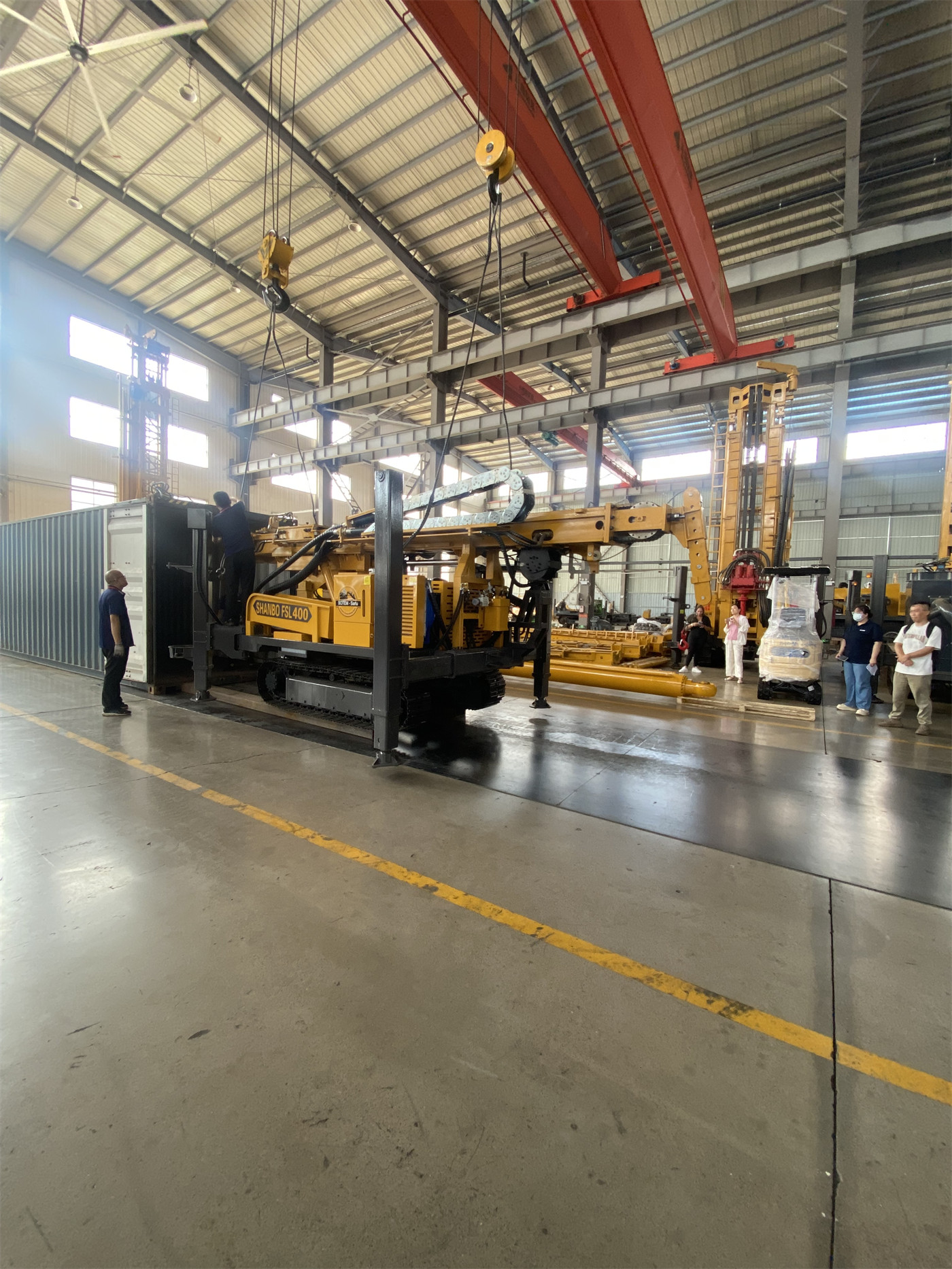
Working condition transition two: choosing between RC and DTH in stable rock formations
The materials show that the WR600RC supports RC drilling and conventional DTH hammer drilling. For relatively intact rock formations such as granite, limestone, and sandstone, RC or ordinary DTH can be selected according to whether geological samples are needed. This sentence clarifies the divergence point for the two types of projects: exploration holes need samples, so use RC; water well holes mainly need drilling efficiency, so DTH can be used.
Different processes also change the requirements for the air compressor. The materials give a recommended working air pressure of 1.6–6 MPa and air consumption of 16–75 m³/min, and note that when hole depth, hole diameter, altitude, and rock hardness increase, the required effective air volume usually also increases. In addition to driving the downhole drilling tool, 600-meter-class RC drilling must also return cuttings to the surface along the inner tube, and this long-distance sample return itself is a major air consumer. Therefore, when the same rig switches to a 600-meter-class RC hole, the air compressor configuration is usually the first item in the supporting equipment that needs to be rechecked.
Working condition transition three: advancement pace in fractured zones and fissured formations
The materials describe fault fracture zones as follows: they easily cause hole wall caving, air leakage, and abnormal sample return; after entering such hole sections, excessively fast advancement should be reduced, continuous hole cleaning should be maintained, and pressure changes should be observed; in cases of severe air leakage, foam, casing, or other treatment methods should be combined to avoid a significant decline in sample return capacity.
For deep water wells, fracture zones also involve aquifer determination and completion structure, and treatment methods must be coordinated with hydrogeological design; for exploration holes, fracture zones directly affect sample return continuity and sample representativeness. The two types of projects share the same set of observation indicators in this hole section: pressure changes, sample return volume, particle size, color, and moisture. The difference is that exploration projects must also record these changes synchronously in the sample depth records.
When switching to water well caliber, the equipment end remains unchanged while the completion end changes entirely
The drilling depth and hole diameter range given in the materials are a maximum drilling depth of 600 m and a hole diameter of 105–450 mm, and it is stated that actual drilling depth will be affected by hole diameter, drill pipe, air compressor, rock formation, hole deviation, and drilling tool wear, and that 600 m should be taken as reference capability under typical configuration. At the same time, the materials also state that the focus of water well projects is the hole wall, well diameter, aquifer, and completion structure, which differs from the focus of mineral RC sampling projects.
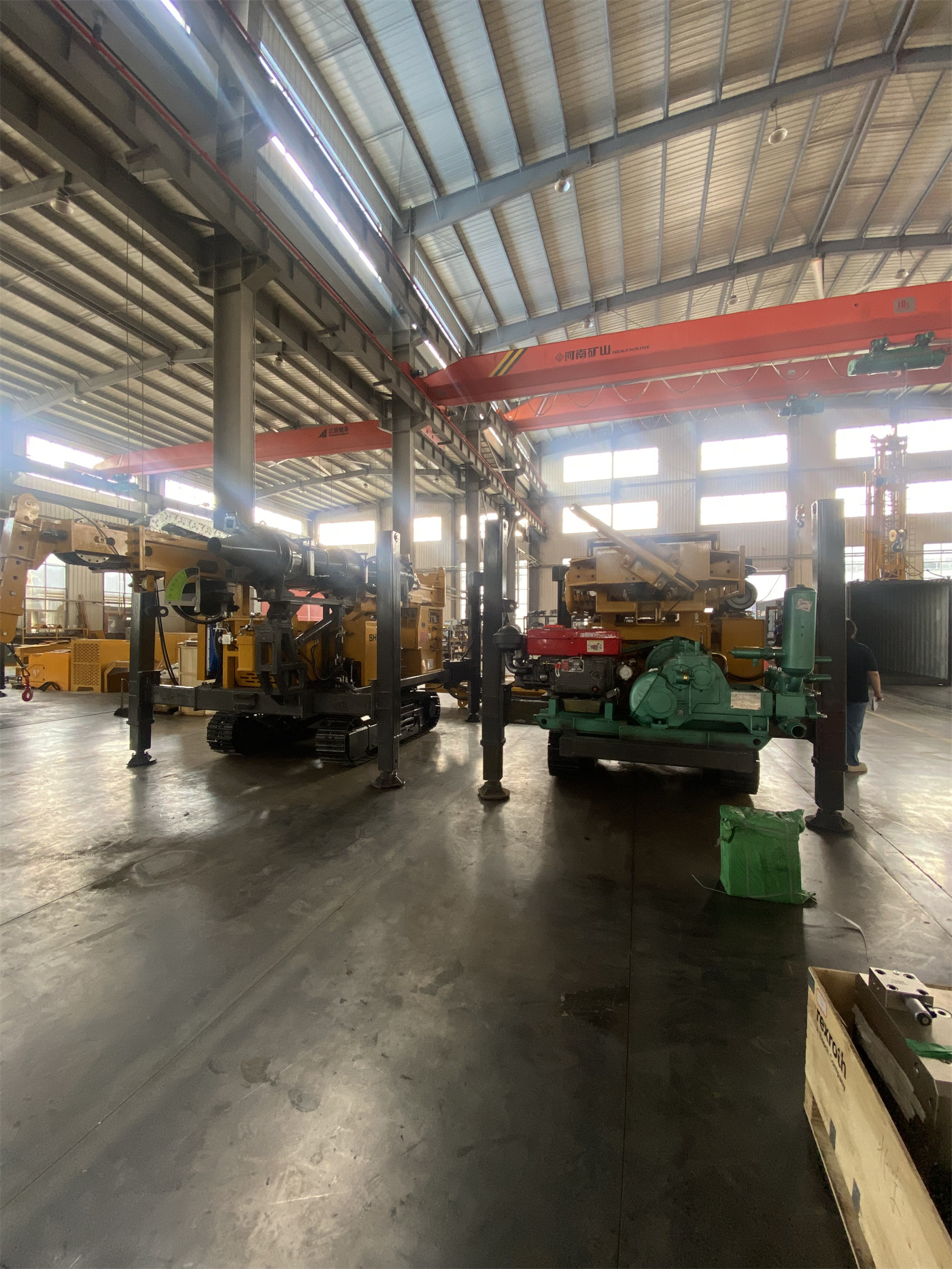
| Project stage | Deep exploration hole focus | Deep water well focus |
|---|---|---|
| Circulation method | RC inner tube sample return, sampling by depth interval | DTH or mud drilling, mainly for hole formation |
| Drilling angle | 45° can be used for inclined ore bodies, veins, and fault zones | Usually mainly 90° vertical |
| Recording focus | Hole number, sample number, start and end depths, anomalies | Well diameter, aquifer position, completion structure |
| Subsequent process | Samples sent to laboratory for assay | Casing installation, well washing, and other completion processes |
The same rig can switch between the two types of projects, but the on-site items that need to be reorganized after switching are not the same. What remains unchanged on the equipment end is the chassis, rotation, and lifting systems; almost everything on the completion end needs to be rearranged.
Site and transport conditions do not distinguish project type
Regardless of which type of hole is drilled, the conditions of overall weight of about 12.5 T, dimensions of about 7 × 2.1 × 2.9 m, crawler travel speed of about 3.5 km/h, and maximum climbing angle reference of 21° all apply. The outrigger stroke is 1.7 m, used for equipment leveling and stabilization; when performing 45° inclined holes or high-torque drilling, the force direction on the equipment is more complex, and the outriggers, ground bearing capacity, and overall level state directly affect hole direction control. In deep hole projects, the drilling tools are heavier, and the winch lifting force of 2.5 T can be used for handling RC hammers, drill pipes, casing tools, and other on-site accessories, but the rated load must be controlled.
Water well projects usually also need to consider the site for casing installation, well washing, and water supply testing; exploration projects require air compressors, sample return hoses, sampling devices, and sample areas. When the two types of projects are scheduled at the same site, the drilling platform dimensions and access width should be planned according to the party with the larger number of equipment.
Actual impact of power and supporting equipment during switching
The WR600RC uses a 132 kW Cummins engine to provide power for rotation, feed, crawler travel, and auxiliary hydraulic systems. The materials also note that RC projects usually require large air compressors and sampling systems, and the site should plan fuel, equipment locations, and maintenance space in advance to avoid interference between different equipment.
In the scenario of "sharing one rig," this statement has a more specific meaning: engine power is the rig's own capability, while the air compressor is a separate piece of equipment. When the same drill rig rotates between exploration holes and water well holes, the start-stop frequency, placement position, and air supply pipeline routing of the air compressor all need to be rearranged according to the current hole type, rather than being continued according to a fixed layout.

Sampling management is not part of equipment switching, but directly affects exploration hole data
The materials state that the WR600RC mainly obtains rock cuttings samples, with synchronous sample return during drilling. On-site geologists record lithology, alteration, and mineralization changes at fixed footage intervals, and then send representative samples to the laboratory for assay. The hole number, sample number, start and end depths, and anomalies should be recorded; mineral samples sent to the laboratory for analysis should also include duplicate samples, standard samples, and blank samples according to the project quality control system.
This part of the work is not directly related to equipment working condition switching, but when the two types of projects share one rig, personnel and processes will be intertwined. If exploration hole sampling and water well hole construction are scheduled on the same day, the sampling record step needs to be arranged separately and should not be treated as a subsidiary process.
Items not covered in the materials that require written confirmation before procurement
The existing product materials give clear values for some content and only directional explanations for other content. The following items have not formed directly executable parameters in the materials and should be confirmed with the manufacturer before procurement:
- The specific switching steps between mud rotary and RC, the required drill tool specifications, and the wellhead device form.
- The conditions for using air foam in air-leakage hole sections, foam pump specifications, and consumable usage.
- The specific requirements of RC inner tube sample return for dual-wall drill pipe specifications, seal service life, and replacement cycles.
- Outrigger load distribution, ground treatment methods, and hole direction control means during 45° inclined hole construction.
- The correspondence between well diameter, casing specifications, and the equipment hole diameter range during the water well completion stage.
These contents are directly related to working condition switching, but the materials on this site do not give specific values, and they cannot be inferred at the procurement stage based on parameters of other models. The equipment capability range can be confirmed, but the executable conditions and supporting equipment lists for specific processes still need to be based on the manufacturer's written materials and actual project conditions.