












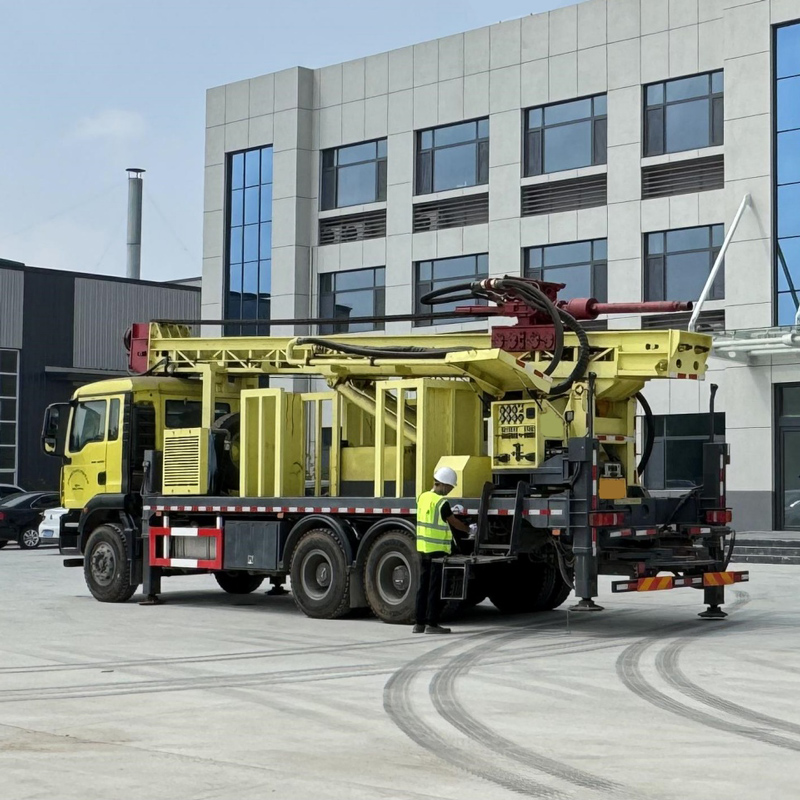
Before spudding an ultra-deep water well, the steps most often compressed are confirmation of the circulation plan and the drill string assembly. Once well depth exceeds several hundred meters, upper hole section stability, drill pipe specifications, lifting capacity and air compressor configuration all interact; making these decisions after spudding usually costs time dealing with downhole problems and reorganizing the drill string. This article organizes the preparation sequence: which mud circulation and drill string items a crew should confirm before spudding an ultra-deep well, using a 1,200 m class truck-mounted straight-mast water well rig as an example to show how these preparation items correspond to equipment data.
Determine hole structure first, then circulation method
The circulation method is not chosen by first selecting a technique and then matching it to hole depth; it is determined by hole structure and the nature of each hole section. Ultra-deep wells typically do not use a single circulation method throughout: upper loose layers, sand layers and gravel layers require mud rotary drilling or casing to maintain the hole wall; only after entering more competent hard rock can the method switch to DTH hammer drilling. During preparation, list the target hole depth, collar diameter, final hole diameter, casing stages and main aquifer positions, then mark the circulation method for each section.
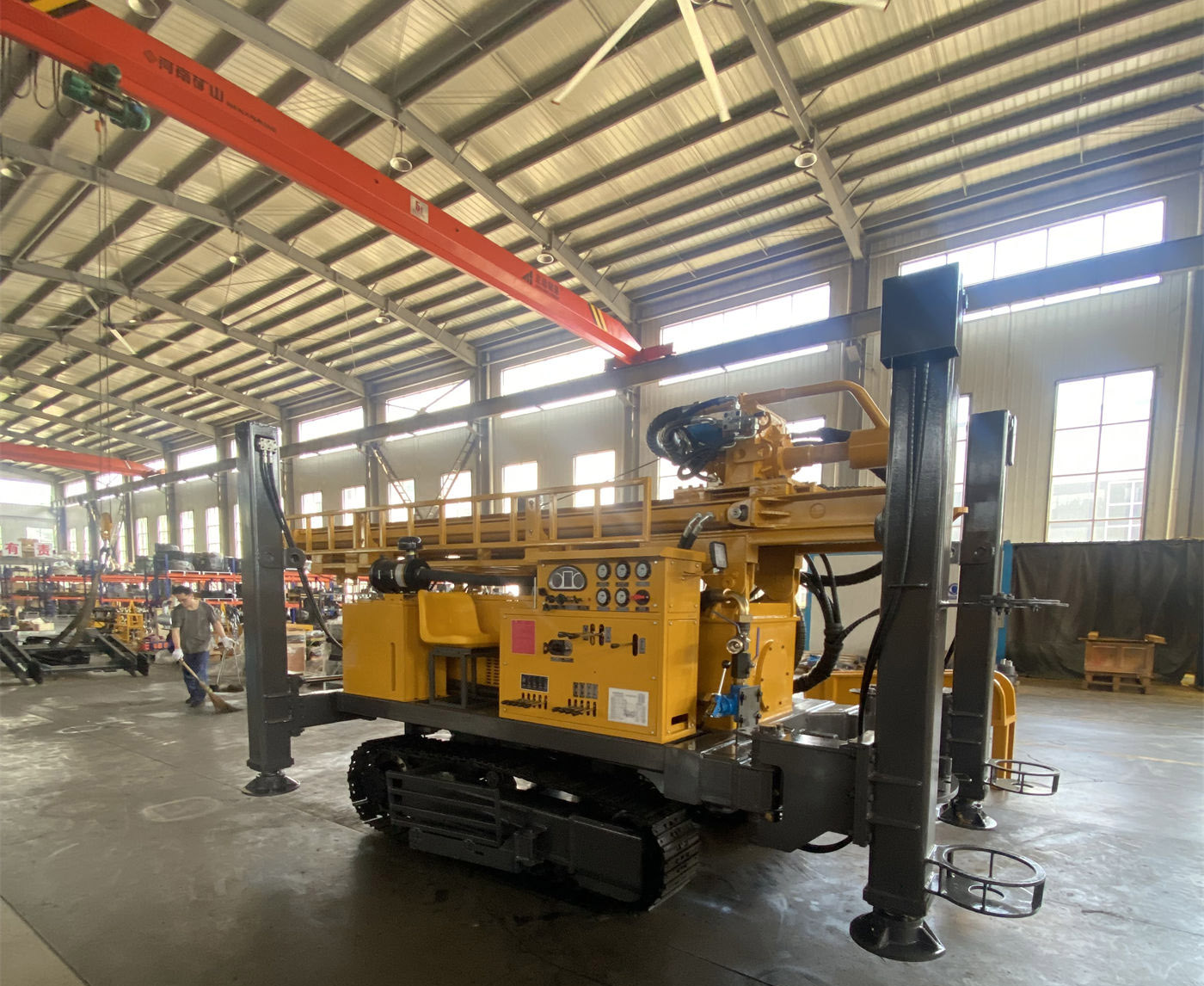
For a 1,200 m class truck-mounted straight-mast water well rig, the data gives a drilling diameter range of 105–900 mm and a maximum drilling depth of 1,200 m, and specifies that upper loose layers may use mud rotary, casing or other hole-stabilizing methods, while competent hard rock can be equipped with medium-to-high pressure DTH hammers. Note that 105–900 mm is the hole diameter range, not a single diameter used from collar to final depth in one well; deep wells usually require stepwise reduction by hole section. Before spudding, confirm whether the bit diameter, casing specification and drill pipe outer diameter at each stage can pass each other.
Conditions to confirm for the mud circulation portion
Mud materials and reserve volume
- Estimate mud consumption and reserves by hole section; consumption in upper large-diameter sections is significantly higher than in deep small-diameter sections.
- Confirm delivery methods and storage areas for bentonite, weighting materials and lost-circulation materials to avoid waiting for materials after spudding.
- Define mud property testing items and frequency, to be determined by the on-site technical lead rather than relying on a single experience-based judgment.
Circulation and solids-control equipment
- Verify whether the mud pump displacement and pressure cover the cuttings-carrying requirements of the largest-diameter hole section.
- Confirm that the processing capacity of shale shakers, desanders and other solids-control equipment matches the mud pump.
- Consider the volume and layout of mud pits and circulation ditches together with the drilling site area; ultra-deep well projects usually occupy more land than medium-shallow wells.
Hole wall stability and lost circulation prevention
The data specifically notes that upper hole section stability is particularly critical for ultra-deep wells; early hole collapse, diameter reduction or casing problems will significantly increase the risk and treatment cost of subsequent deep construction. During preparation, mark the depth intervals of lost-circulation-prone and collapse-prone layers on the hole structure diagram, and predetermine lost-circulation materials and casing running plans. This judgment depends on formation data; without a geological column, circulation parameters should not be set first.
Drill string assembly must follow lifting capacity and torque
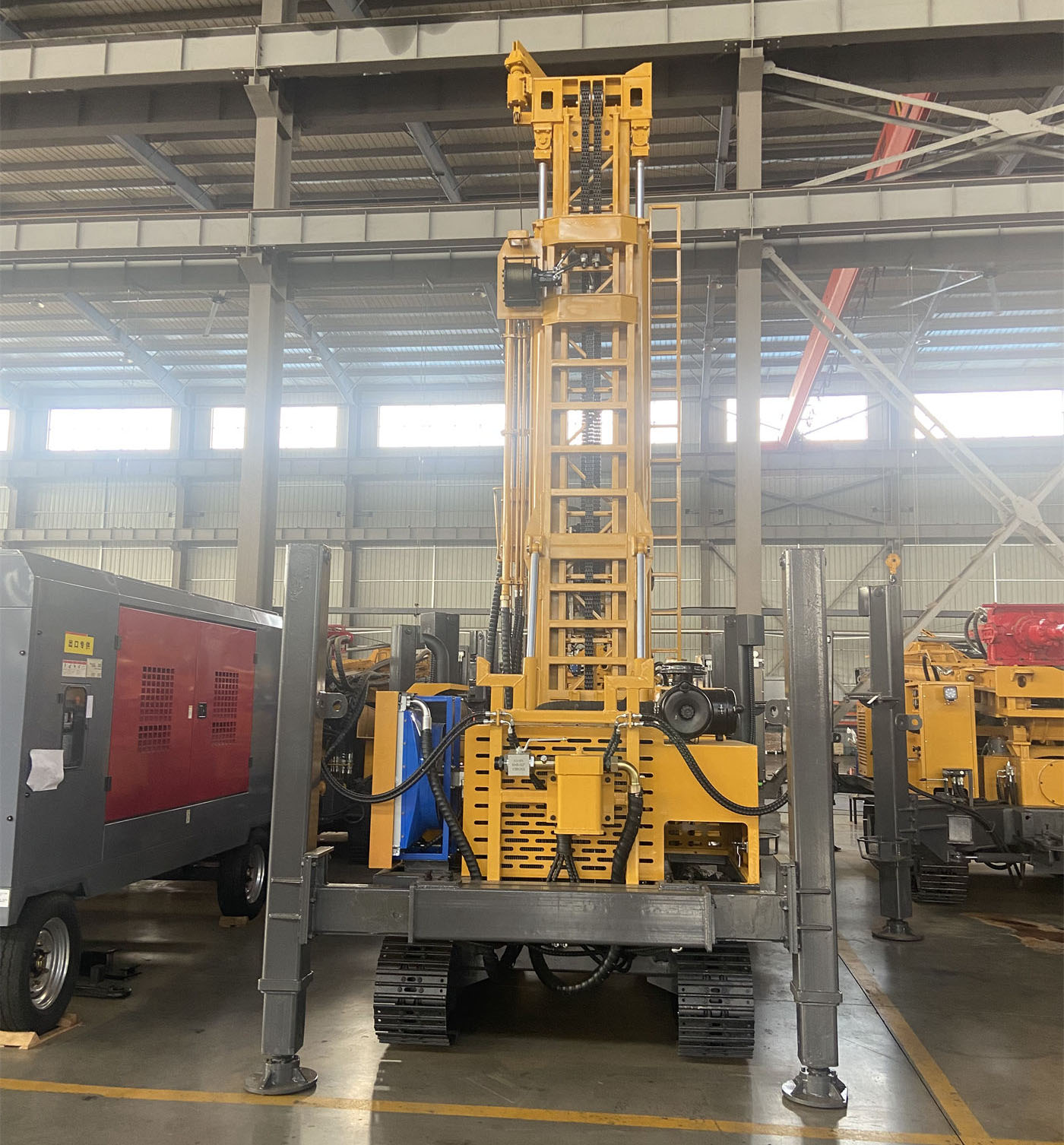
Deep-hole drill string weight, casing weight and hole wall friction increase with depth, so drill string specifications cannot be selected solely by collar diameter. The data for the 1,200 m class truck-mounted straight-mast water well rig gives: lifting capacity 61 T, bit load 13 T, rotary torque 24000/12000 N·m, corresponding to a 75/150 r/min two-speed configuration, recommended drill pipe diameter 127 mm, and drill pipe lengths of 3 m or 6 m.
| Preparation item | Data basis | What to confirm before spudding |
|---|---|---|
| Drill pipe diameter and length | Recommended 127 mm, supports 3 m or 6 m | Whether it matches the hole structure, mast stroke and pipe connection method |
| Torque condition | 24000/12000 N·m two-speed | Whether the low-speed high-torque gear for large-diameter or hard-rock sections is included in the construction plan |
| Lifting capacity | 61 T lifting capacity | Whether the drill string and casing weight in the deepest hole section are within capacity |
| Feed stroke | 7 m or 13 m, depending on final configuration | How the actual delivered configuration matches the drill pipe length |
The choice between 3 m and 6 m drill pipes is not only a matter of efficiency: 6 m pipes reduce the number of connections, but are less flexible than 3 m pipes in transport and operation in restricted sites. Deep-hole projects often prefer 6 m, but the specific configuration should be based on supplier technical confirmation data; the 7 m and 13 m feed strokes given in the data also need to be verified against the final configuration.
Air supply conditions for DTH hammer sections cannot wait until deep drilling
If the plan includes DTH hammer drilling, air supply capacity must be included in the preparation checklist before spudding. The data for the 1,200 m class equipment gives a recommended working air pressure for DTH hammers of 1.65–8 MPa and air consumption of 16–120 m³/min. This range is wide and corresponds to different hole diameters and depths, so an air compressor cannot simply be purchased according to the maximum or minimum value.
Items to confirm in advance include: whether the selected air compressor's pressure and displacement can simultaneously meet the cuttings removal requirements of the target hole diameter and depth; whether the air hose specifications, connection types and pressure ratings are compatible; and whether the air supply pipeline layout on the drilling site affects movement of the truck-mounted chassis. The data also notes that meeting pressure alone while displacement is insufficient can still lead to insufficient impact, difficult cuttings removal and cuttings accumulation at the hole bottom.
Go through site and supporting conditions in order
- Roads and site: the complete machine weighs about 32 T and transport dimensions are about 11.5×2.25×3.2 m; verify road width, bridge and culvert load capacity, turning radius, site bearing capacity and overhead clearance. The straight-mast structure has a fixed transport profile, so height restriction issues must be checked in advance.
- Power: the equipment can be configured with 220 kW or 264 kW diesel power, which should be selected according to the main hole diameter, rock hardness and auxiliary system load, and fuel reserves and cooling conditions must be arranged.
- Hoisting and tripping organization: the 4 T large auxiliary winch and 3 T small auxiliary winch can be used to handle DTH hammers, drill pipes, casing and air hoses; before spudding, arrange the drill string storage area and lifting access routes.
- Aquifer records: after entering the main aquifer, groundwater will change DTH hammer cuttings removal and downhole pressure conditions; the site should prepare a form to record the depth of water-producing layers and adjust air supply, hole cleaning and casing plans accordingly.
Items still requiring confirmation from the supplier and survey party
The following items cannot be determined from product data alone and should be verified item by item during procurement and pre-spudding preparation: target aquifer depth and expected water inflow; lost circulation and collapse risks in each formation interval; casing stages, steel grade and running depth; the specific supporting list for mud pumps and solids-control equipment; air compressor model and air hose configuration; the actual delivered feed stroke configuration; and whether on-site power, water supply and road conditions meet the requirements for deploying the complete machine. These conditions directly determine whether the circulation plan and drill string assembly can be executed as planned.
When requesting quotations and organizing construction, it is recommended to also provide the drilling purpose (water supply, irrigation, mine dewatering or geothermal investigation), geological column or nearby well data, target hole depth and diameter of each section, proposed circulation and drilling methods, casing design, access roads and site conditions, water, power and air supply conditions, and existing drill string and air compressor information, so that the completeness of the supporting configuration can be checked item by item.