












Village water supply wells and medium-to-deep geothermal wells are often planned within the same drilling site framework: both use mud rotary drilling to create the borehole, both involve relatively large borehole diameters and casing operations, and sometimes the same crew works across both project types. However, the completion objectives of the two well types differ—one extracts water, the other extracts heat. Whether a trailer-mounted rotary drill can be switched between the two project types depends on the formation in the borehole section, borehole diameter, circulation medium, and supporting conditions, not merely on whether the nominal drilling depth is sufficient. This article outlines the applicable scope of this equipment based on condition boundaries and the items that require separate verification.
Similarities and Differences Between the Two Well Types
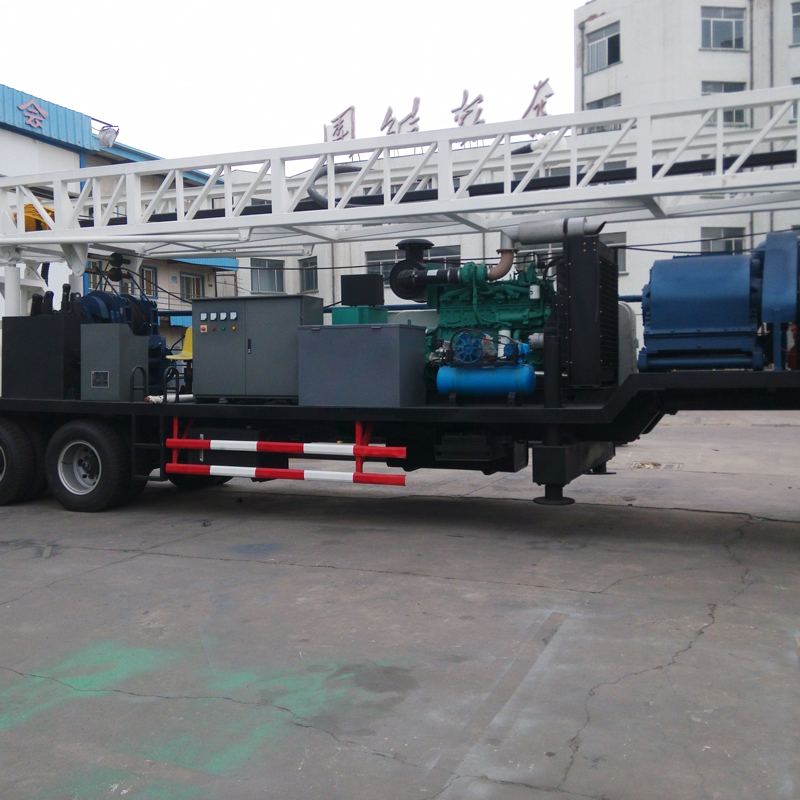
Process-wise, village water supply wells and some geothermal wells both use rotary table rotation with mud circulation: the drill string drives the bit to break the formation, and the mud carries cuttings out of the borehole and maintains the borehole wall. The trailer-mounted rotary drill integrates the mast, rotary table, winch, mud pump, and diesel generator on a single chassis. This integrated approach is meaningful for both project types—remote well sites often lack a stable power grid, and the mud pump and auxiliary electrical equipment require their own power source.
The differences lie in the well completion stage. Water supply wells focus on aquifer location, screen configuration, and yield, with depths ranging from tens of meters to several hundred meters; geothermal wells must also address formation temperature, circulation medium selection, and cementing requirements, and the depth-to-diameter combination is more constrained by heat exchange design. How deep the equipment can drill is one matter; whether the completion design can be realized within the equipment's capabilities is another.
Mobility Conditions Brought by the Trailer Structure
The advantage of the trailer-mounted chassis is that the entire system can be moved with a towing vehicle, and the mast, power, and mud system do not need to be disassembled for transport. For water supply construction moving between multiple villages, this reduces some of the relocation logistics. However, the trailer structure also brings limitations: the equipment has no self-propelled capability, and entry and exit depend on towing vehicles and road conditions.
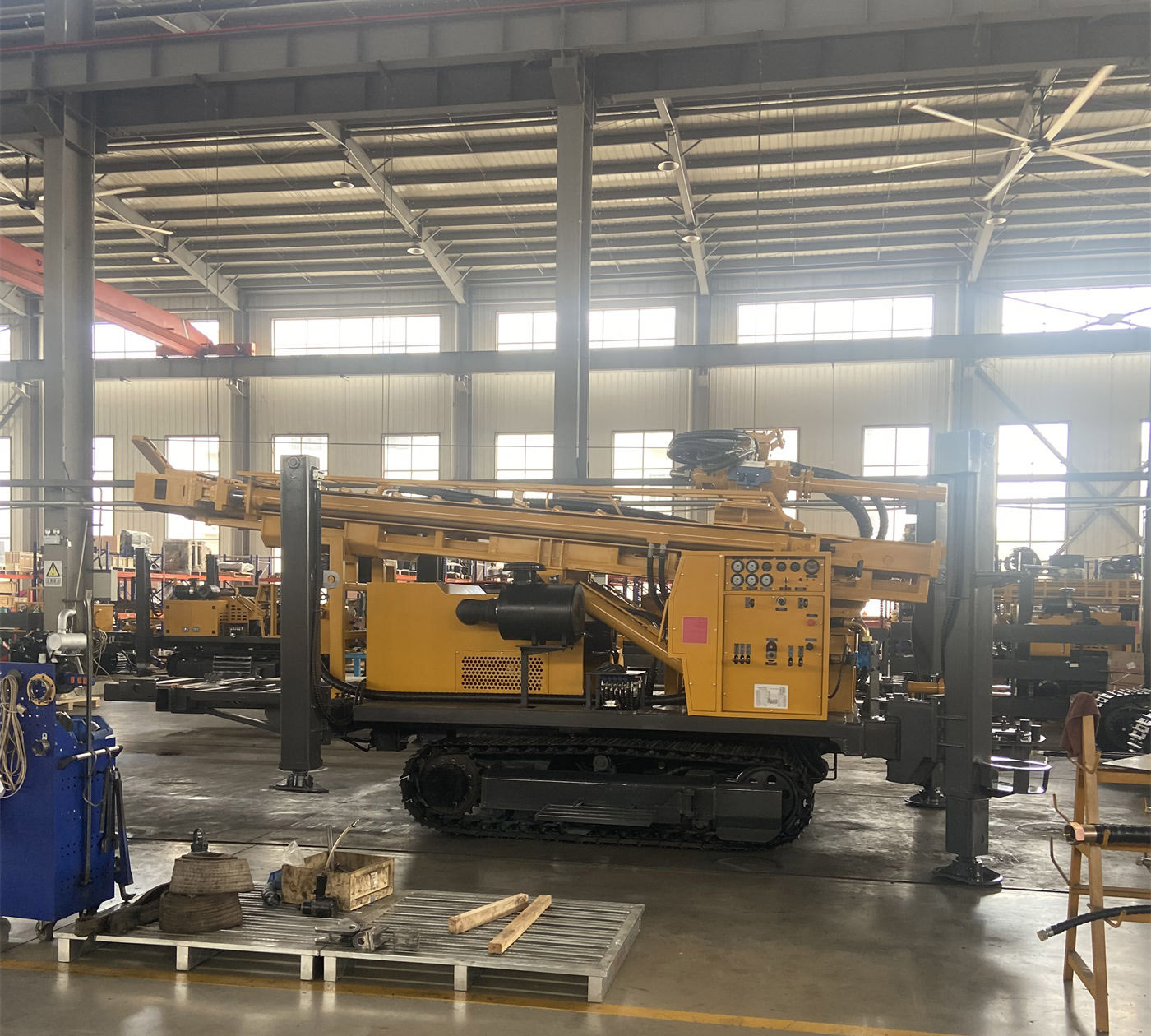
This model's short mast transport dimensions are approximately 15100 × 2480 × 4100 mm, and the long mast approximately 16630 × 2480 × 4100 mm. Village road width, turning radius, bridge and culvert load capacity, height restrictions, and local trailer transport regulations must all be verified before entry. When the well site is beside a field ridge or courtyard, whether the towing vehicle can approach and whether the site can be leveled to provide space for mast deployment and pipe storage often determines the feasibility of the plan earlier than the drill's specifications.
Which Drilling Capabilities Can Be Shared
According to the equipment specifications, this drill has a maximum drilling depth of 600 m and a maximum borehole diameter of 500 mm, with a rotary table through-hole diameter of 500 mm. The rotary table offers three speed ranges of 38 / 57 / 85 r/min, corresponding to theoretical torques of approximately 13.8 / 9.2 / 6.2 kN·m. The low-speed range provides higher torque, suitable for larger borehole diameters and sections with greater resistance; the higher speeds suit stages with lower resistance. The swivel has a maximum load of 30 T, the main winch has a single-line pull of 40 kN, and the auxiliary winch has a single-line pull of 30 kN.
The shared capabilities between the two project types mainly involve rotary drilling in medium-to-deep borehole sections, casing lifting assistance, and mud circulation. The large-diameter opening of village water supply wells and casing installation in aquifer sections, as well as continuous drilling in the medium-to-deep sections of geothermal investigation holes, may all fall within this capability range. However, the nominal maximum drilling depth does not equal the actual achievable depth in any given formation; actual depth is affected by formation, drill string assembly, mud performance, casing design, and downhole resistance.
Relationship Between Mast Selection and Project Pace
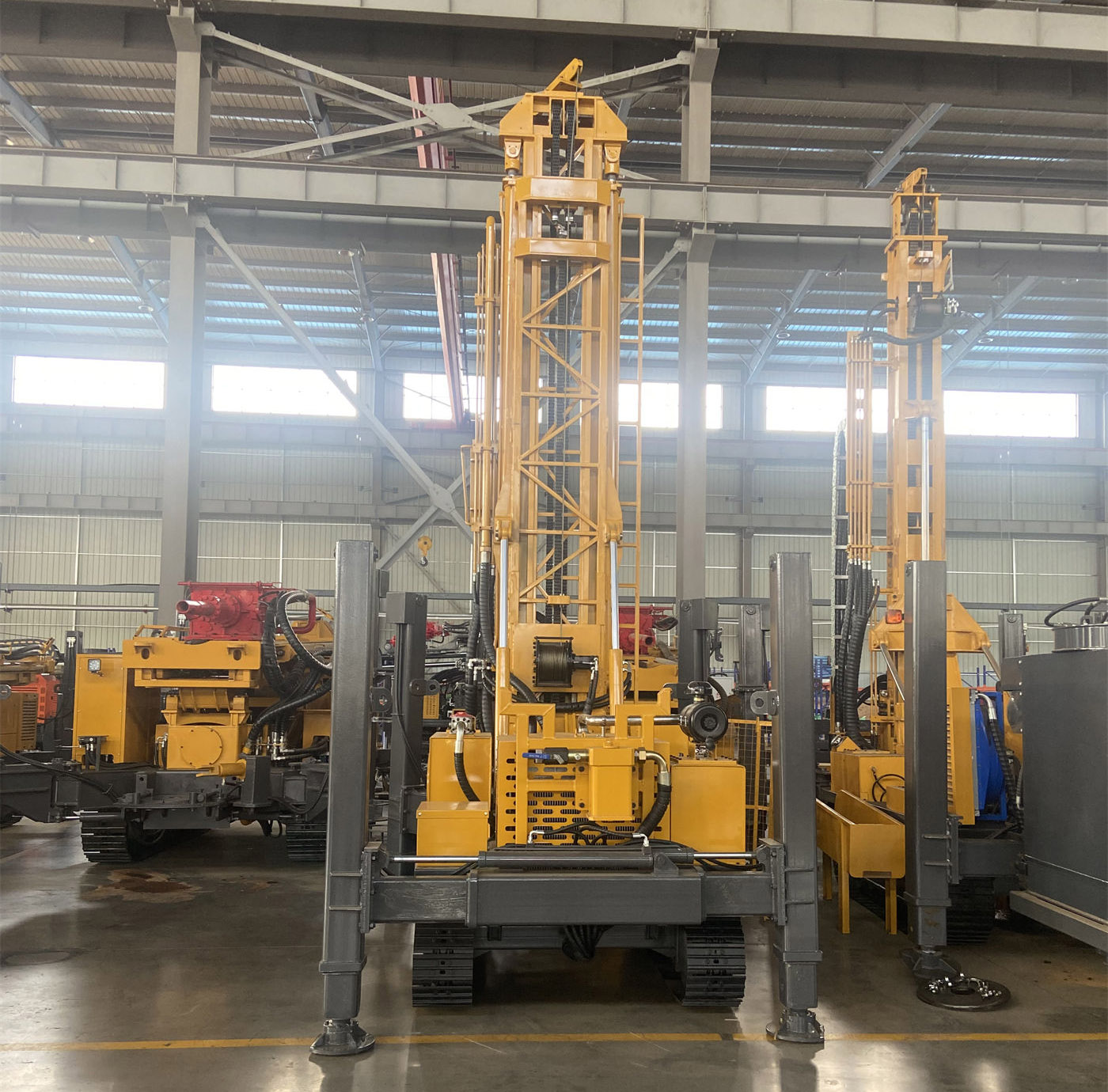
The equipment offers two configurations: a short mast and a long mast. The short mast has an effective height of 12 m and is equipped with a 7.5 m kelly and 5.5 m drill pipes; the long mast has an effective height of 15 m and is equipped with a 10.5 m kelly and 9 m drill pipes. The short mast has smaller transport dimensions and adapts better to village roads and narrow sites; the long mast provides a longer single-trip pipe connection stroke, reducing the number of connections during continuous deep-hole drilling.
For village water supply wells with shallower depths and dispersed well sites, the transport convenience of the short mast may be more valued; for geothermal wells or deep water supply wells with greater depths, the operational value of the long mast in reducing pipe connections becomes more apparent. This is the trade-off direction between the two configurations; the specific choice should also be based on the project's depth distribution, road conditions, and construction organization.
Constraints of the Mud System in Different Formations
The equipment is equipped with a 3NB-130 mud pump with a specified displacement of 8.4–16.6 L/s, a rated working pressure of 5–10 MPa, driven by a 90 kW motor. The mud serves to carry cuttings, cool the bit, stabilize the borehole wall, and control downhole pressure. In soil and clay, mud viscosity must be adjusted according to formation permeability and return flow conditions: too thin may result in insufficient cuttings removal, while too thick increases circulation resistance and pump load.
Sand layers, gravel layers, and loose overburden are prone to borehole collapse and mud loss, typically requiring temporary casing or staged casing installation to first establish a stable borehole section before continuing deeper. Weathered rock and mixed soil-rock formations show pronounced hardness variations, and the drill tool type, rotation speed, and displacement must all be adjusted according to downhole conditions. Geothermal wells also require separate confirmation of circulation medium performance under temperature conditions; this aspect is not covered in the information on this site and is an item that must be verified separately.
Power Supply and Supporting Conditions
The equipment integrates a 200 kW diesel generator set with a rated voltage of 380 V, rated current of 360 A, and frequency of 50 Hz, providing power for the mud pump, hydraulic oil pump, and auxiliary electrical equipment—suitable for remote well sites lacking a stable power grid. Choosing this integrated approach means incorporating the power supply issue into the overall machine solution rather than organizing a separate power source after arrival. Generator fuel reserves, on-site fire safety conditions, and exhaust arrangement still need to be arranged according to project site conditions.
Checklist to Verify Before Purchase
- Well purpose and completion objectives: village water supply, agricultural irrigation, or geothermal investigation or geothermal wells—the two have different requirements for depth, diameter, and completion structure.
- Formation data: overburden thickness, sand and gravel layer distribution, bedrock depth, and possible loss zones directly determine the mud and casing plan.
- Target depth and diameter combination: 600 m and 500 mm are the upper limits given in the equipment specifications; the actual combined capability must be confirmed in conjunction with formation and drill tools.
- Circulation medium requirements: geothermal projects require confirmation of whether temperature conditions and medium type exceed the applicable range of conventional mud systems; this information is insufficient and should be verified separately with the supplier.
- Entry transport conditions: road width, turning radius, load capacity, and height restrictions, verified against the actual transport dimensions of the short or long mast.
- Site and supporting facilities: mast deployment space, pipe storage area, fuel reserves, water source, and waste mud treatment arrangements.
- Drill tools and casing: drill pipe and kelly specifications must correspond to the selected mast version, and casing dimensions must match the rotary table through-hole and completion design.
When requesting a quotation, provide the borehole purpose, formation column data, target depth and diameter, whether geothermal is involved, entry road conditions, on-site power and water supply conditions, and the intended drill tool and casing specifications. This information is more useful than drilling depth alone in determining whether this trailer-mounted rotary drill falls within the range required by the project.