












When deep water well drilling reaches hard-rock sections, whether bottom-hole cuttings can leave in time often affects subsequent operations more than the drill bit itself. Air-lift reverse circulation is regarded by many contractors as a way to solve cuttings removal in deep holes, but it is not a process that works as soon as it is installed. Compressed air must be able to establish return flow, the inner pipe must seal properly, the formation must not let large amounts of air escape, and the borehole wall must hold up. If any one of these fails, cuttings removal performance will suffer.
The following discussion centers on the goal of "how to keep the bottom hole clean in deep hard-rock water wells," explains the conditions under which air-lift reverse circulation works, and uses publicly available information on a 500 m-class crawler-mounted air-lift reverse circulation water well drilling rig to explain which parameters relate to these conditions and which still require on-site confirmation.
What problem air-lift reverse circulation addresses
In conventional direct circulation, cuttings return to the surface with the flushing fluid through the annulus between the drill pipe and the borehole wall. The deeper the hole and the larger the diameter, the longer the distance cuttings must travel upward, and the risk of regrinding and settled cuttings increases accordingly. The idea of air-lift reverse circulation is to inject compressed air into the drill pipe, use the density difference between inside and outside to create return flow, and carry cuttings and drilled solids back to the surface through the inner pipe of the drill string.
This path shortens the travel distance of cuttings in the annulus and helps keep the bottom hole clean. But "shortening the path" is only the design intent; whether it can be achieved depends on three site conditions: whether the air supply can form sufficient gas-liquid mixing at the bottom hole, whether the inner pipe and joints can remain sealed, and whether the formation will leak air.
Air supply is a prerequisite for cuttings removal, not an accessory
The power source of air-lift reverse circulation is compressed air. As hole depth increases, hole diameter grows, rock becomes harder, or construction altitude rises, the flow rate required to maintain return flow usually increases. If only pressure is raised while flow rate is insufficient, effective airflow may still fail to reach the bottom hole.
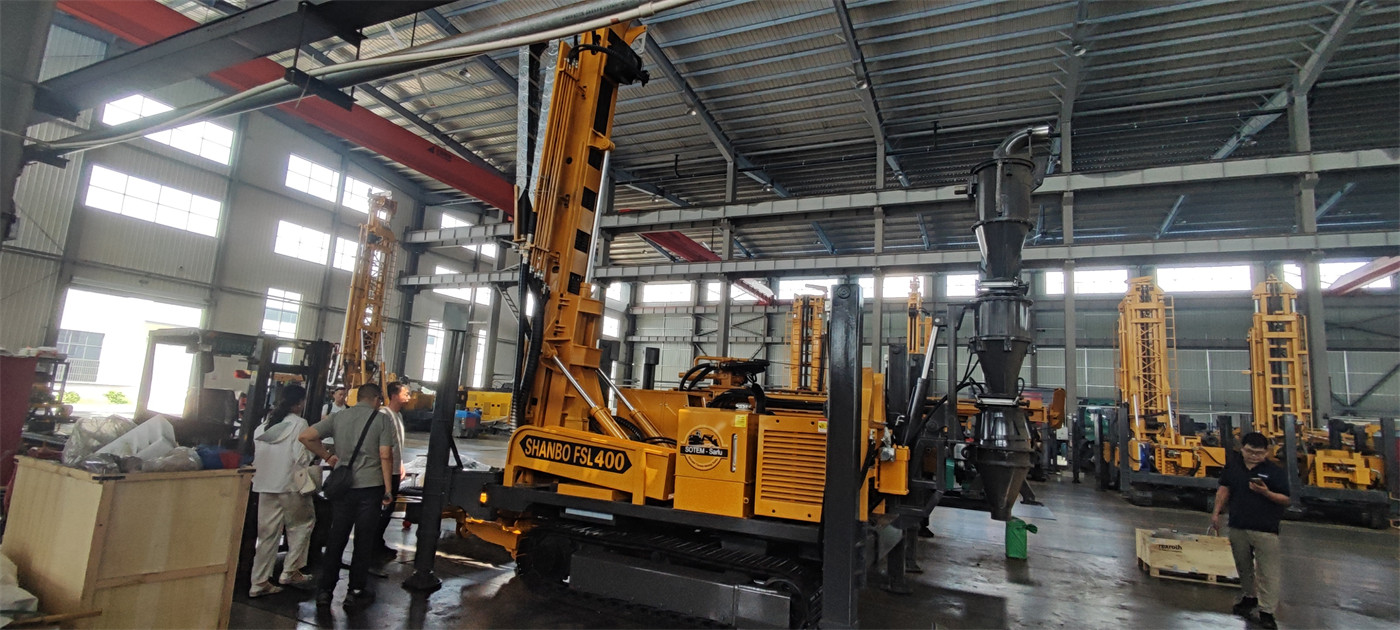
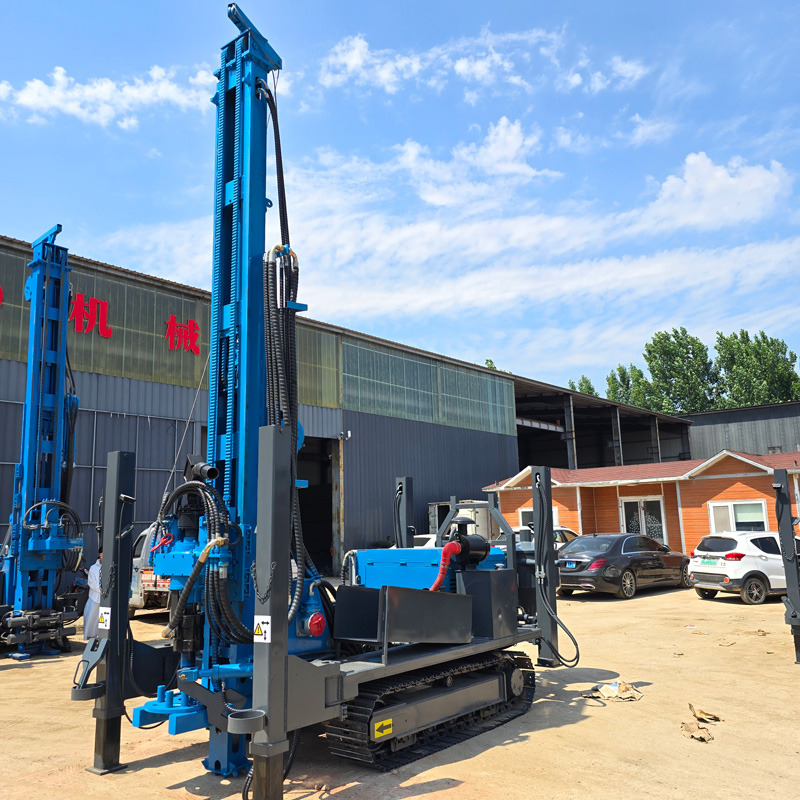
Taking the RC500E associated with this article as an example, the published data give a recommended working air pressure of 1.7–3.5 MPa and an air consumption of 17–42 m³/min. These two figures need to be considered together with the actual output of the air compressor, not one value in isolation. When the hole diameter varies within the 140–400 mm range, the required air volume is not the same; demand also differs between deep-hole sections and shallow-hole sections. When selecting an air compressor, both the air used by the down-the-hole hammer and the air used for reverse circulation cuttings return should be considered; it should not be estimated for a single purpose.
Air-leaking formations change cuttings removal results
Open fractures, karst caves, and high-permeability formations may cause severe air leakage. In such cases, even if the air compressor parameters meet the specification, a large amount of airflow may enter the formation rather than return through the inner pipe. The handling directions given in the data include increasing flow rate, using foam, running casing, or adjusting the drilling method, but the specific choice still depends on the degree of loss and the borehole wall condition and requires on-site judgment.
Drill pipe sealing and the inner pipe channel determine whether return flow can be established
The return flow of air-lift reverse circulation travels inside the drill pipe. Once joint sealing fails, airflow short-circuits and cuttings cannot be carried out. Therefore, drill pipe specifications, joint type, and sealing condition are necessary conditions for the process to work.
The RC500E supports 1.5 / 2 / 3 / 6 m drill pipe configurations, with a feed stroke of 3.3 m or 6.6 m. The 6.6 m long stroke is suitable for reducing the number of pipe connections and improving continuous drilling efficiency; the 3.3 m configuration is more conducive to controlling the overall working height and site adaptability. Fewer pipe connections mean fewer sealing points, but this is only one consideration; the final choice should still be determined in combination with transport, hole spacing, and main drill pipe length.
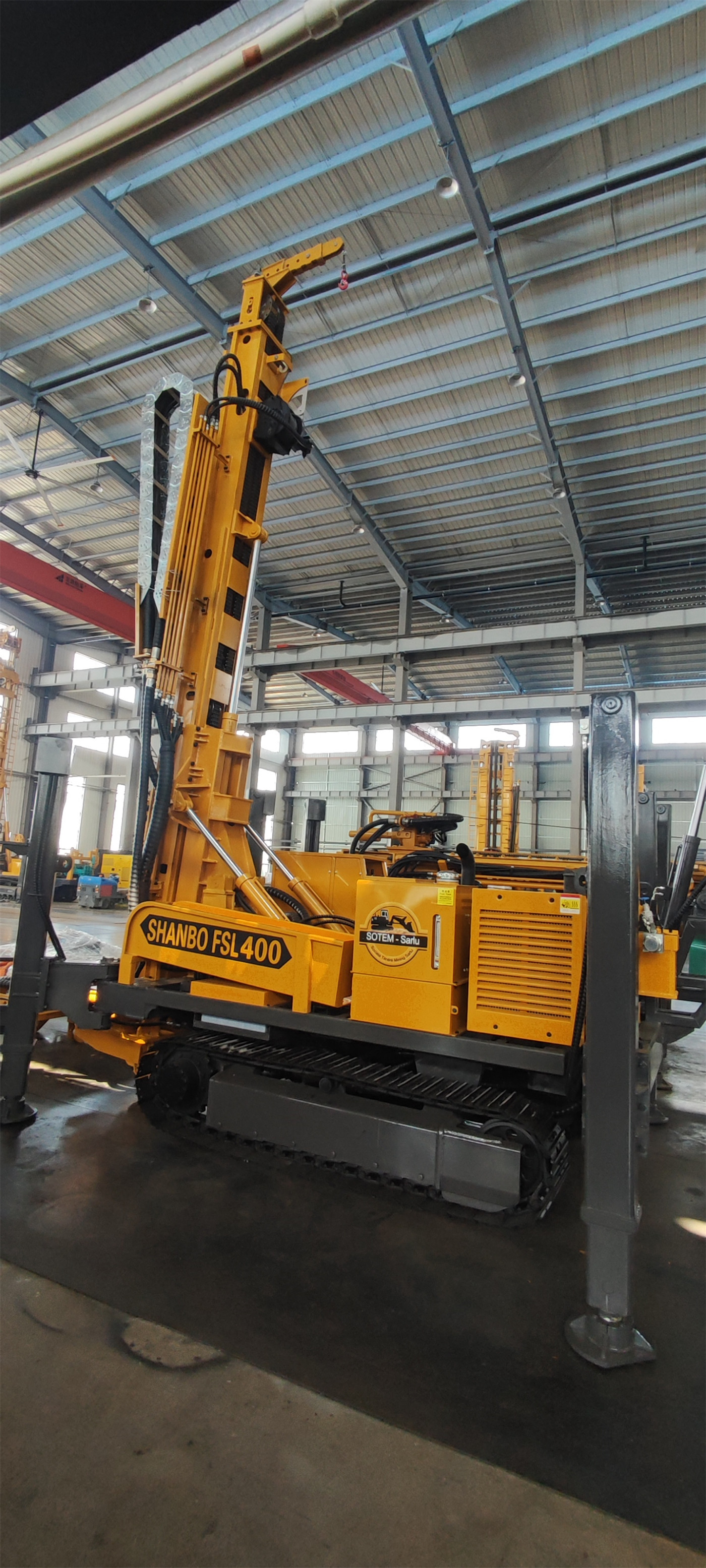
During construction, cuttings return, water return, and changes in air pressure should be continuously observed. A sudden drop in cuttings return or abnormal air pressure may indicate seal failure or blockage of the in-hole channel, requiring shutdown and inspection rather than continuing to increase feed.
Borehole wall stability and formation conditions also constrain the process
Air-lift reverse circulation solves the problem of the cuttings removal path; it does not solve the problem of borehole wall stability. In upper loose overburden, sand layers, gravel, and strongly weathered sections, the difficulty is often not "failure to drill" but the tendency of the borehole wall to become unstable. The data recommend first using casing, mud, or other wall-stabilizing methods to establish a stable hole section, then entering relatively intact rock formations for pneumatic reverse circulation drilling.
After entering the main aquifer, groundwater will change the in-hole cuttings return and the working state of the down-the-hole hammer. The depth of the main water-producing zones should be recorded, and air supply, hole cleaning, and casing methods should be adjusted according to water inflow. At the well completion stage, screen pipes and water-stop sections also need to be arranged according to aquifer positions; these are part of well completion design and cannot be replaced by the cuttings removal process.
How equipment capabilities correspond to the above conditions
Several sets of parameters in the RC500E data are directly related to the aforementioned conditions and can be understood together:
| Condition | Corresponding item in the data | Still to be confirmed |
|---|---|---|
| Air volume required for return flow | Working air pressure 1.7–3.5 MPa, air consumption 17–42 m³/min | Actual air compressor displacement, altitude and hole diameter corrections |
| Deep-hole drill string handling | Lifting force 300 kN, feed force 150 kN | Drill pipe weight, borehole wall friction, casing weight |
| Hard-rock and large-diameter rotation | Rotary torque 8000–12000 N·m, rotation speed 40–160 r/min | Formation integrity, bit type and weight-on-bit matching |
| Pipe connections and sealing points | Supports 1.5 / 2 / 3 / 6 m drill pipe, stroke 3.3 m or 6.6 m | Joint sealing form and on-site maintenance conditions |
| Site access and positioning | Overall machine approx. 12 T, travel speed approx. 2.5 km/h, gradeability 30° | Ground bearing capacity, road height limits and mast erection space |
It should be noted that 500 m is the maximum drilling depth marked in the data and should not be understood as the actual hole-making capability in any formation and at any hole diameter. The final well depth should still be determined by hydrogeological data and the actual water-producing zones.
When the process route should be re-evaluated
If the hole section is dominated by loose layers, has severe air leakage, or the borehole wall continuously caves, air-lift reverse circulation alone may not be able to establish stable return flow. In such cases, consideration may be given to first running casing to establish the hole section, switching to foam assistance, or using other circulation methods in shallow sections. The handling directions mentioned in the data are conditional; whether they are feasible for a specific project needs to be judged in combination with the formation column, borehole wall stability, and air compressor configuration.
Another easily overlooked boundary is equipment positioning. The RC500E is intended for deep water wells, agricultural irrigation, mining area water supply, and dewatering holes, and has a division of labor with reverse circulation models intended for mineral sampling. Directly using water well hole-making equipment for cuttings sampling, or using sampling equipment for well completion, may deviate from their respective matching conditions.
Items to confirm with the supplier before purchase
- Drilling purpose: deep water well, irrigation well, mining area water supply, or dewatering hole; well completion diameter and well casing plan.
- Formation data: overburden thickness, lithology, depth of main aquifers, and whether karst caves or severe loss zones exist.
- Target hole depth and diameter: whether within the 140–400 mm range, and how deep and shallow sections are designed in stages.
- Air supply matching: displacement and pressure of the proposed air compressor, and whether it can cover the 17–42 m³/min air consumption range.
- Drilling tools and accessories: drill pipe specifications, joint type, down-the-hole hammer and bit type, and whether a foam system is needed.
- Site access conditions: transport dimensions approx. 6300 × 2100 × 2500 mm, overall machine approx. 12 T, road height limits, ground bearing, and mast erection space.
- Power and site conditions: 132 kW diesel power, rated speed 2400 r/min, fuel supply and cooling ventilation conditions.
Whether the cuttings removal advantage of air-lift reverse circulation holds ultimately comes down to the four sets of conditions: air supply, sealing, formation, and borehole wall. Equipment parameters provide the capability boundary; site conditions determine whether these capabilities can be realized. When requesting a quotation, explain the purpose, formation, hole depth and diameter, drilling method, site access and transport, and air supply conditions together so that the supplier can provide a well-founded matching recommendation.