


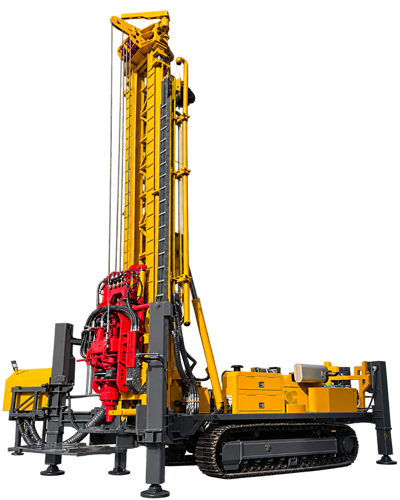
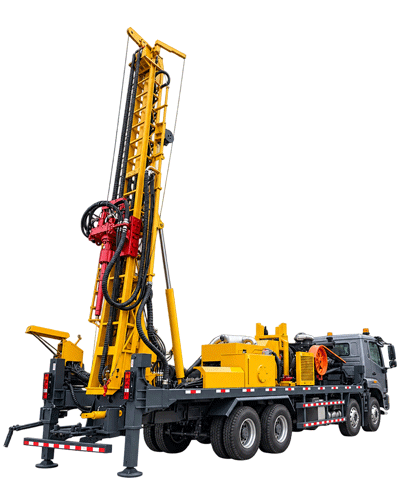
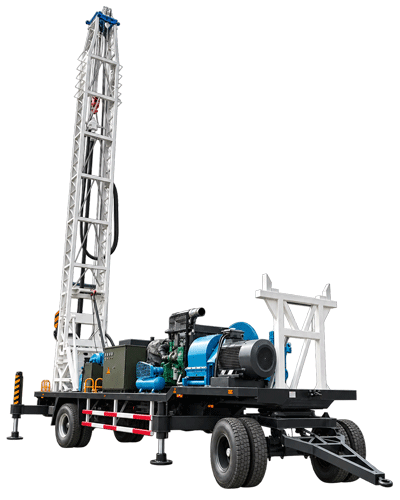
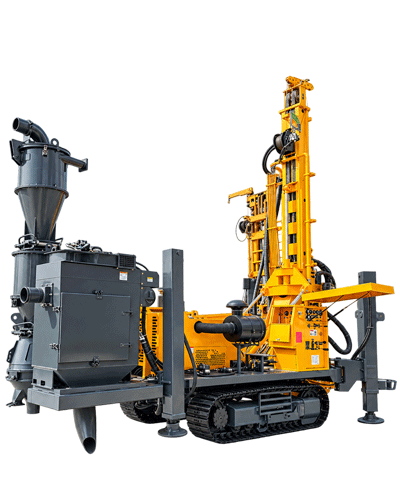
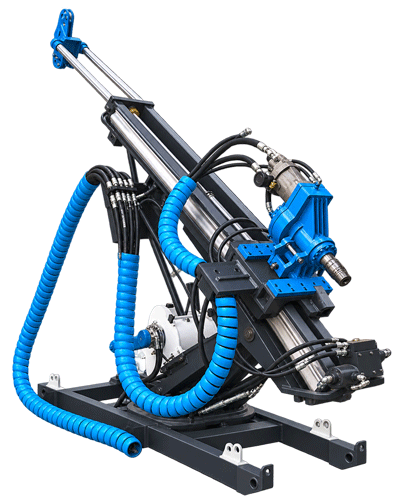
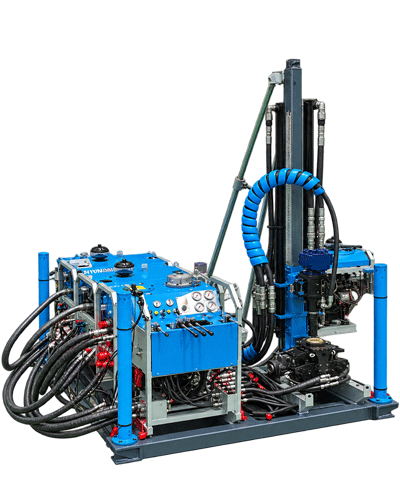
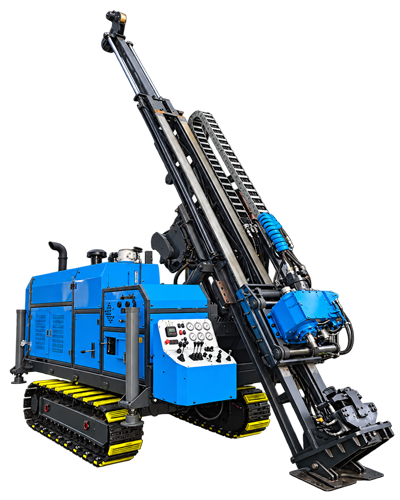
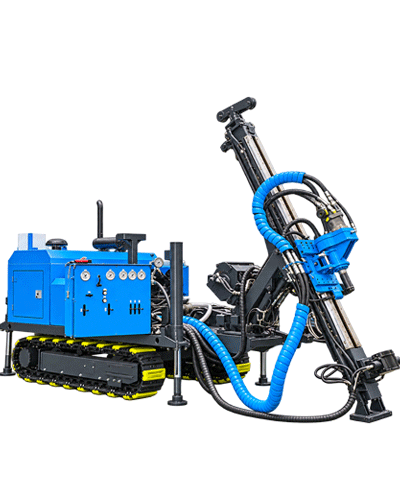
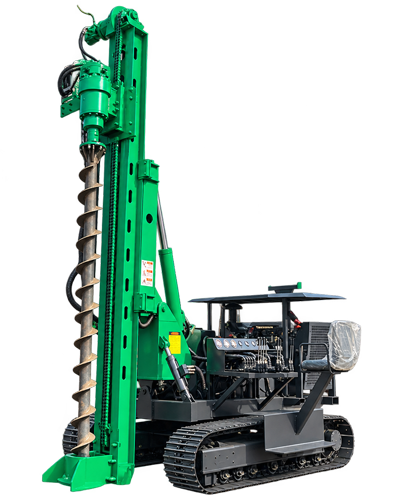
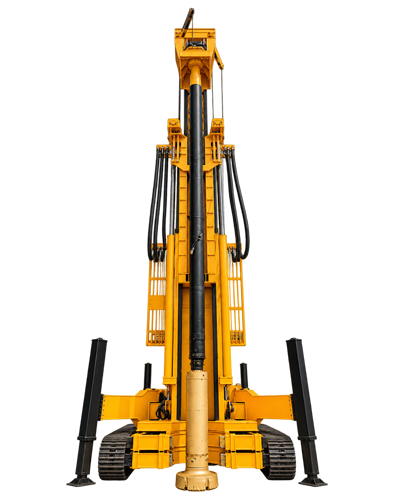
In the specification sheet of a solar pile driver, 13000 N·m is the rated maximum reducer torque of the PV390R, with paired parameters of 90 r/min drill rod speed, 80–600 mm drilling diameter, and 0–6 m drilling depth. To understand this figure, first look at where it acts: it describes the rotary system's rotational capability output to the drilling tool. It is an upper limit of equipment capability, not the bearing capacity of a solar pile foundation, nor a promise of drilling efficiency in any particular ground condition.
Where torque sits in the pile driver's power chain
As the drilling tool rotates, cuts, or impacts rock inside the hole, it must overcome three types of resistance: cutting resistance between the drill bit's cutting edges and the soil or rock, friction between the drill rod and the hole wall, and additional resistance from the tool becoming wrapped when cuttings are not discharged smoothly. The reducer provides the rotational capability to overcome these resistances, measured in N·m. According to PV390R materials, hydraulic power is provided by an 85 kW Yuchai four-cylinder engine, and travel, rotation, chain feed, mast attitude adjustment, and 360° rotation all draw from the same power distribution. Torque is only the output limit in the rotation link.
Therefore this value cannot be read in isolation. The paired 90 r/min drill rod speed indicates the order of magnitude of rotational speed, and chain feed indicates the feed method. Only by putting torque, speed, and feed method together do you get a description of the rotary drilling process; looking at torque alone cannot determine whether a given ground condition can be drilled.
The relationship between 13000 N·m, hole diameter, and ground conditions
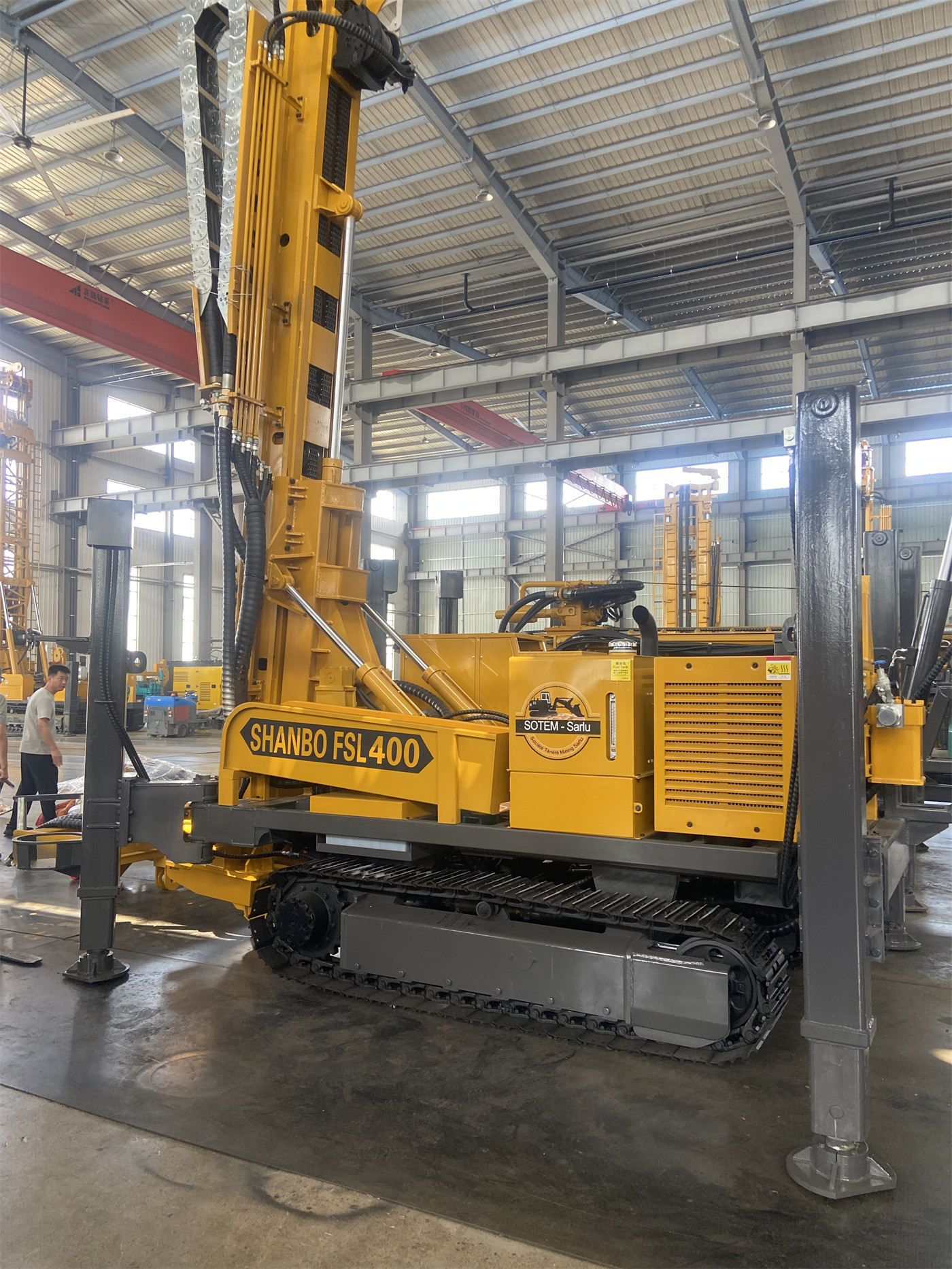
The demand for rotary torque rises as the drill bit diameter increases. For the same drill bit, when the hole diameter expands from 80 mm to 600 mm, both the cutting contact perimeter and the area involved in cutting increase, and the required rotational capability also increases. The materials here list the PV390R's drilling diameter as 80–600 mm and torque as 13000 N·m; the two are parallel rated capabilities. The materials themselves do not give the torque demand or corresponding relationship for each hole diameter, nor do they give the penetration performance of each hole diameter in specific ground conditions.
Regarding ground conditions, the materials clearly distinguish two categories. Soil and loess are common solar foundation strata, and the materials note that moisture content and density affect hole wall stability; clay requires attention to bit balling and cuttings discharge; pebble sand, gravel, and backfill waste layers have uneven particle composition and are prone to bit jumping, hole deviation, jamming, and localized voids. The materials recommend promptly pulling the drill to inspect when rotary load surges or abnormal impacts occur, and do not recommend continuously forcing feed. These descriptions all point to changes in rotary load, but none give specific torque value ranges.
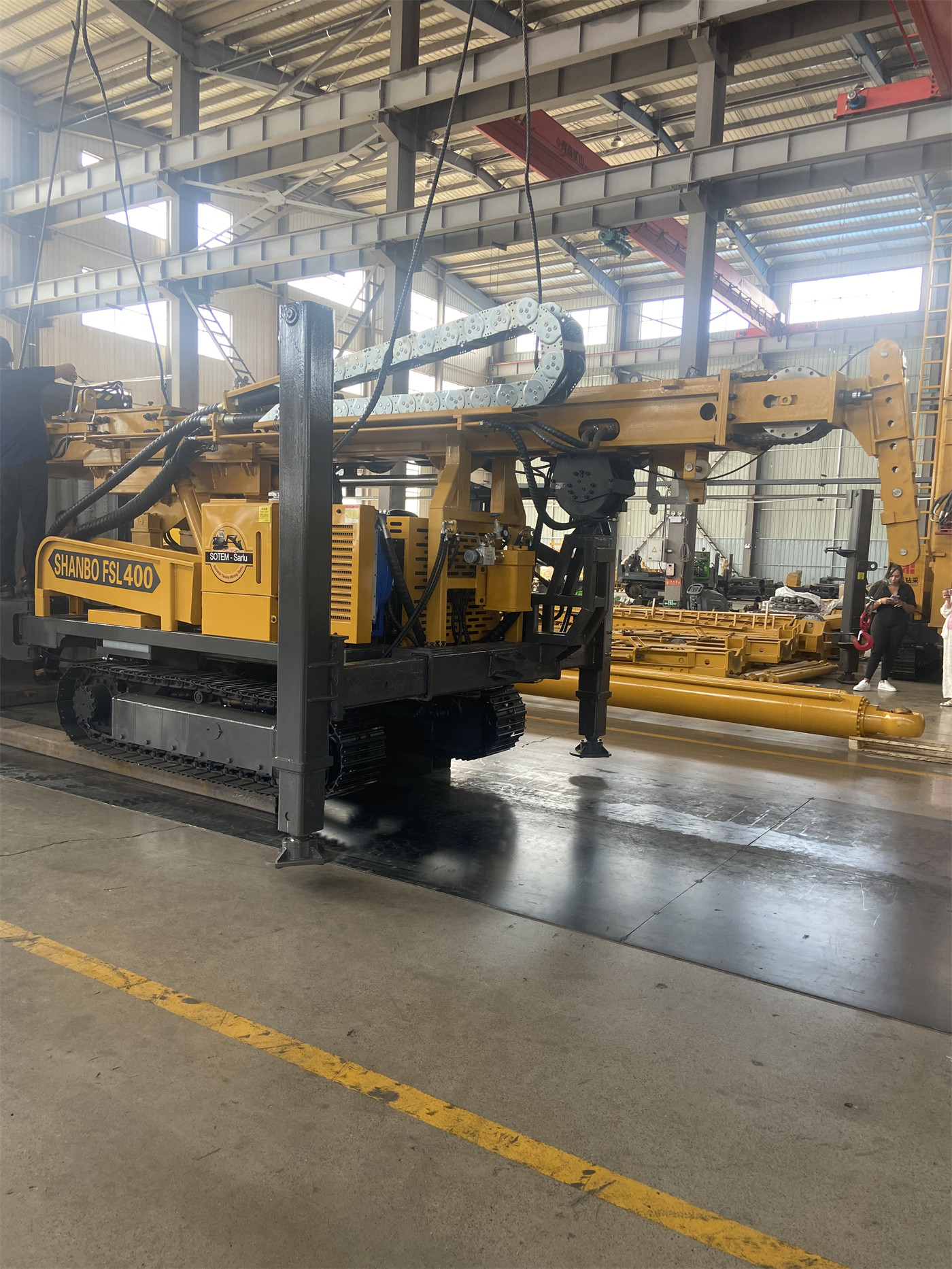
Strongly weathered rock and rock layers are another category. The materials clearly state that after replacing the drilling tool with an impact tool, the PV390R can be used for strongly weathered rock and rock layers, while also stating that the original materials do not provide the impact hammer model or impact energy, and therefore no additional commitment is made regarding specific hard rock efficiency. This means that under hard rock conditions, 13000 N·m is the rated upper limit of the original rotary system, and the capability of the impact link is not covered by this figure.
What this figure should not be read as
- It cannot be read as pile bearing capacity. 13000 N·m is the upper limit of the drilling tool's rotational capability, which belongs to a different set of indicators from the design bearing capacity of a solar mounting foundation; the latter is determined by the project foundation design.
- It cannot be read as drilling depth. The PV390R's maximum drilling depth of 6 m is another parameter, determined jointly by feed stroke, drilling tool configuration, and construction organization, and has no conversion relationship with the torque value.
- It cannot be read as an efficiency promise. The actual drilling pace of the same machine varies across different ground conditions, different drilling tools, and different hole diameters. The materials also state that final drilling efficiency, hole quality, and piling results should be based on on-site conditions and the project foundation design.
- It cannot be read as piling impact force. The materials show that the PV390R is solar and engineering piling and drilling equipment, whose core value lies in shallow, high-frequency pile position construction, multi-angle operation, and adaptability to complex sites. The materials do not describe it as equipment that achieves pile sinking through torque.
To judge whether this torque is sufficient, what can and cannot be checked in the materials
The parameters directly listed alongside torque in the materials here and available for verification include: drilling diameter 80–600 mm, drilling depth 0–6 m, reducer type five-star reducer, drill rod speed 90 r/min, and chain feed. What can be confirmed ends there: these are the equipment's rated capabilities, indicating the design range of the rotary system.
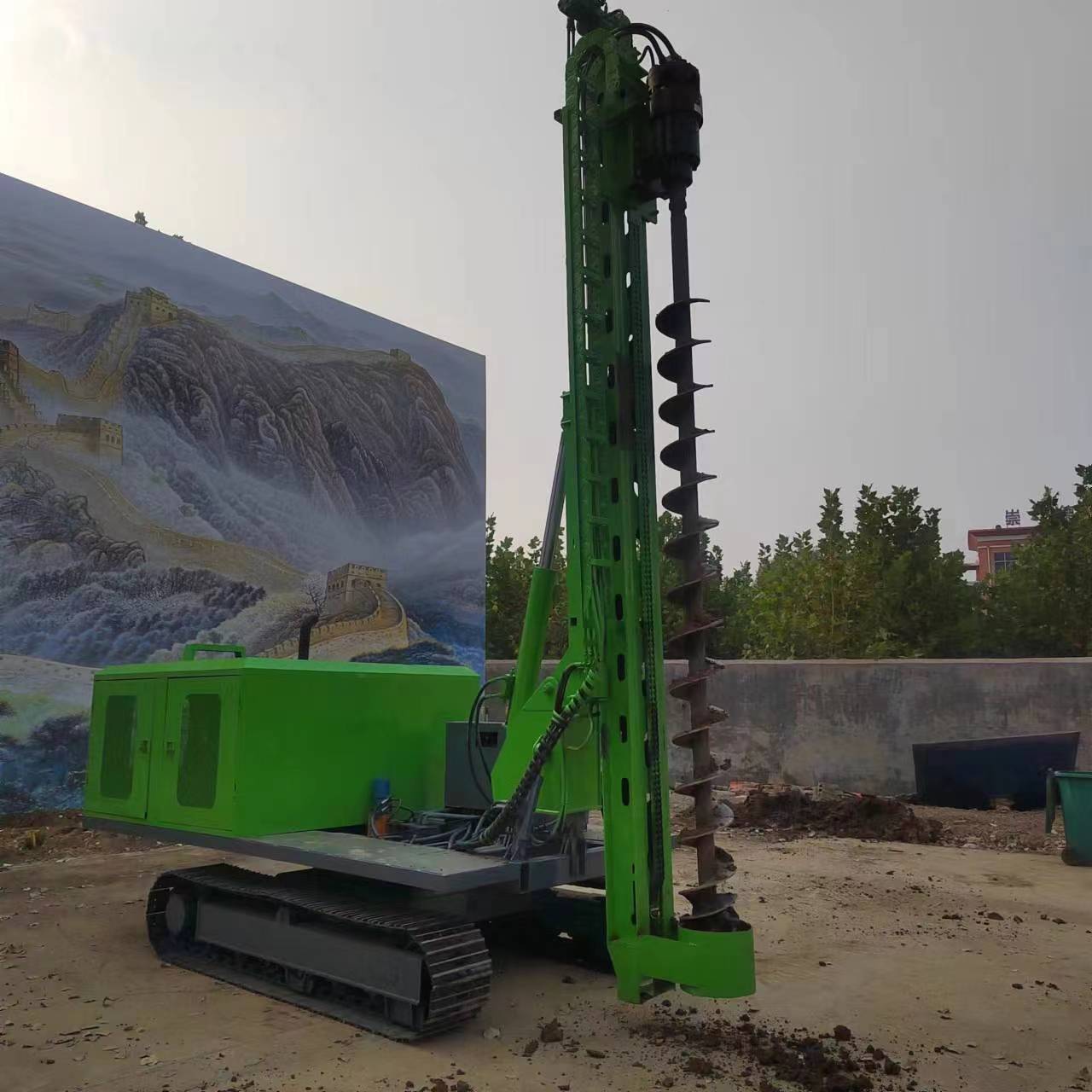
What needs written confirmation from the project party or manufacturer is greater: the actual rotary load of a given ground condition at the target hole diameter, the corresponding drilling tool form, whether impact drilling tools are needed, and whether the torque has adjustment margin at that hole diameter. The materials do not provide curves of torque varying with hole diameter or ground condition, nor do they provide the available torque at each gear, so it is not possible to directly infer from 13000 N·m whether a certain hole diameter is feasible in a certain type of ground. If the project ground is mainly pebble sand, backfill layers, or strongly weathered rock, it is advisable to provide the ground description, target hole diameter, drilling tool form, and cuttings discharge conditions to the manufacturer and obtain written opinion from them.
Besides torque, the items in the same parameter set that should be read together
| Parameter item | PV390R parameter value | Relationship with torque |
|---|---|---|
| Reducer torque | 13000 N·m | Upper limit of rotary output capability |
| Drill rod speed | 90 r/min | Order of magnitude of rotational speed; belongs to the same rotary system as torque |
| Drilling diameter | 80–600 mm | Larger hole diameter increases required rotary resistance |
| Drilling depth | 0–6 m | Shallow-hole positioning; not converted from torque |
| Feed method | Chain feed | Feed force and rotation together affect drilling tool load |
| Engine power | 85 kW Yuchai four-cylinder | Provides hydraulic power for multiple actions including rotation |
Putting these items together, the positioning of 13000 N·m becomes relatively clear: it is a rated upper limit of the PV390R's rotary capability, serving pre-drilling of shallow solar pile positions at 80–600 mm diameter and 0–6 m depth. It answers "how much rotational capability the rotary system can provide," but does not answer "whether this hole can be drilled in a given ground condition and at a given hole diameter." The latter must be determined by on-site conditions and the project foundation design. Areas lacking sufficient materials should be clearly listed as items to be confirmed, rather than inferred from the specification sheet alone.