

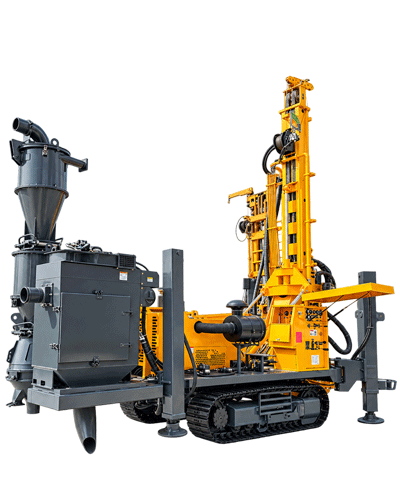
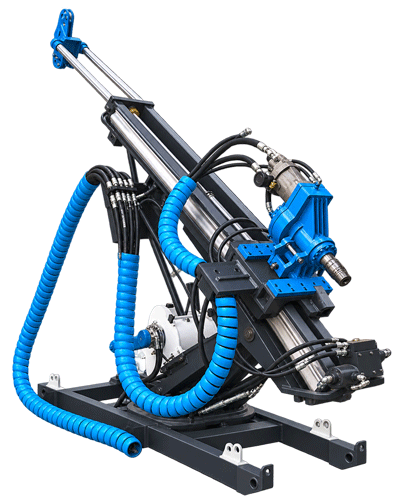
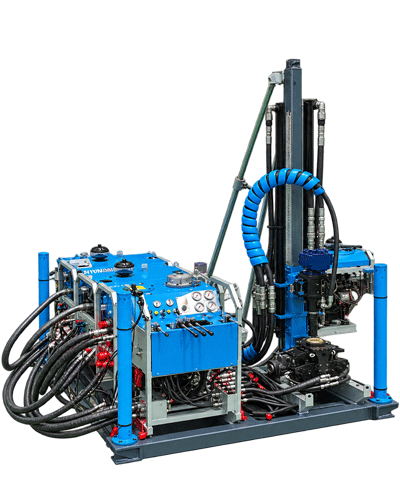
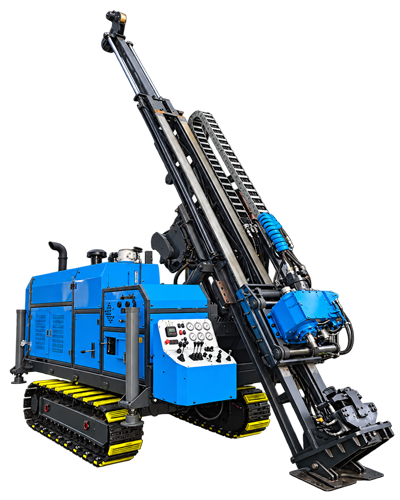
When purchasing an 800 m-class portable modular core drill such as the CR800P, whether the pull force is "sufficient" cannot be judged by a single number alone. The CR800P parameters published on this site are: feed force 67 kN, pull force 130 kN, reference drilling depth 800 m for NQ, 920 m for BQ and 380 m for HQ, feed stroke 1.8 m, maximum power head torque 980 N·m, maximum rotation speed 1200 rpm, and wireline winch rope capacity 1000 m (6 mm wire rope). These data indicate the nominal capability range of the equipment, but how much margin remains when deep-hole friction increases depends on the drill string assembly, hole diameter, hole angle and downhole conditions, and must be checked item by item before procurement.
First distinguish what feed force and pull force each handle
In wireline coring drilling, the feed system performs two directional actions: pushing the bit downward to cut rock, and pulling the drill string upward to complete tripping and handle downhole anomalies. The CR800P's 67 kN feed force and 130 kN pull force are not symmetrically configured; the pull force is clearly greater than the feed force, which is related to the continuously accumulating drill rod weight and borehole wall friction in deep holes.
The deeper the hole, the heavier the drill string; borehole wall friction is also affected by formation integrity, hole deviation, residual cuttings and mud lubrication. The total resistance to overcome during pulling is usually greater than the bit weight required during lowering, so procurement should focus more on matching pull force with hole depth and drill string specifications, rather than simply adding or subtracting the two numbers.
How to understand the margin of the 130 kN pull force in deep holes
The description of the CR800P pull force on this site is: as hole depth increases, drill rod weight and borehole wall friction gradually rise, and the pull capacity is not only used for normal tripping but also provides a certain margin for drill string handling in deeper hole sections. No "margin percentage" or calculated value for specific formations is given here, and buyers should not apply a fixed coefficient on their own.
The boundaries that can be confirmed are: the CR800P's reference drilling depth is 800 m for NQ and 380 m for HQ. HQ drill string has greater weight per unit length and annular area than NQ, so the hole depth it can support under the same pull force is smaller, which is consistent with its lower HQ drilling depth parameter. During procurement, the planned drill string specifications, hole depth and hole angle should be confirmed item by item with the manufacturer, rather than summarizing all diameters simply as an "800 m drill."
Abnormal resistance should be investigated first rather than forced pulling
The data clearly warns: if abnormal resistance occurs, first check the borehole wall and circulation status rather than continuously forcing the pull. This point is worth verifying with the manufacturer as an operating boundary during procurement communication, including whether the maximum chuck holding force of 130 kN and the through-hole capacity of 54–127 mm match the drill string used, and the standard handling procedure for stuck pipes.
Coordination of 67 kN feed force and 980 N·m torque
Feed force determines the axial load applied by the bit to the hole bottom, while torque determines rotary cutting capability. The CR800P power head has a maximum torque of 980 N·m, a maximum rotation speed of 1200 rpm, a feed stroke of 1.8 m, is suitable for drill rod lengths of 1 m or 1.5 m, and has a maximum applicable drill rod diameter of 114 mm.
The adjustment approach given in the data is: in intact hard rock, maintain diamond bit cutting efficiency through reasonable rotation speed and bit pressure; after entering fractured, strongly weathered or high-friction hole sections, appropriately reduce rotation speed and feed to prevent bit clogging or downhole sticking. This shows that the 67 kN feed force is not a fixed value to be used at the upper limit in all formations, and procurement should confirm whether the equipment has on-site adjustable rotation speed and feed control methods. The CR800P control method is manual direct control.
Impact of wireline winch and mud parameters on deep-hole continuity
The deep-hole efficiency of wireline coring is directly related to inner tube lifting capability. The CR800P wireline winch has a rope capacity of 1000 m (6 mm wire rope), a lifting speed of 116 m/min, an empty drum lifting force of 11.5 kN and a full drum lifting force of 5.6 kN. For an 800 m-class hole depth, the 1000 m rope capacity provides a certain margin and can reduce limitations during deep-hole inner tube lifting. The data also reminds that before daily construction, focus should be placed on checking the rope end connection and wire rope damage; during procurement, the wire rope specifications and replacement cycle recommendations can be confirmed with the manufacturer.
Regarding the mud unit, the CR800P mud pump is a plunger high-pressure pump, hydraulically driven, with a mud flow rate of 100 L/min and pressure of 7 MPa, and a agitator speed of 1500 rpm and mixing capacity of 1.2 m³/min. For situations with developed fractures, unstable return water or long cuttings transport distances in medium-deep holes, higher mud pressure helps maintain circulation; however, actual construction should still be adjusted according to hole diameter, lithology and loss conditions. The data does not give specific pump pressure recommendations for specific formations, and this part needs to be confirmed in combination with on-site conditions.
Checkpoints for hole angle, drill rod length and modular transport
The CR800P supports 45°–90° drilling angles. In scenarios such as mountain gold mines and lithium mines where ore bodies have dip angles, adjusting the hole angle can improve ore intersection effectiveness. It should be noted that inclined holes change the force and friction distribution of the drill string in the hole, and during procurement the planned hole angle range and the hole angle at the deepest point should be confirmed with the manufacturer, rather than assuming that vertical hole parameters can be directly applied to inclined holes.
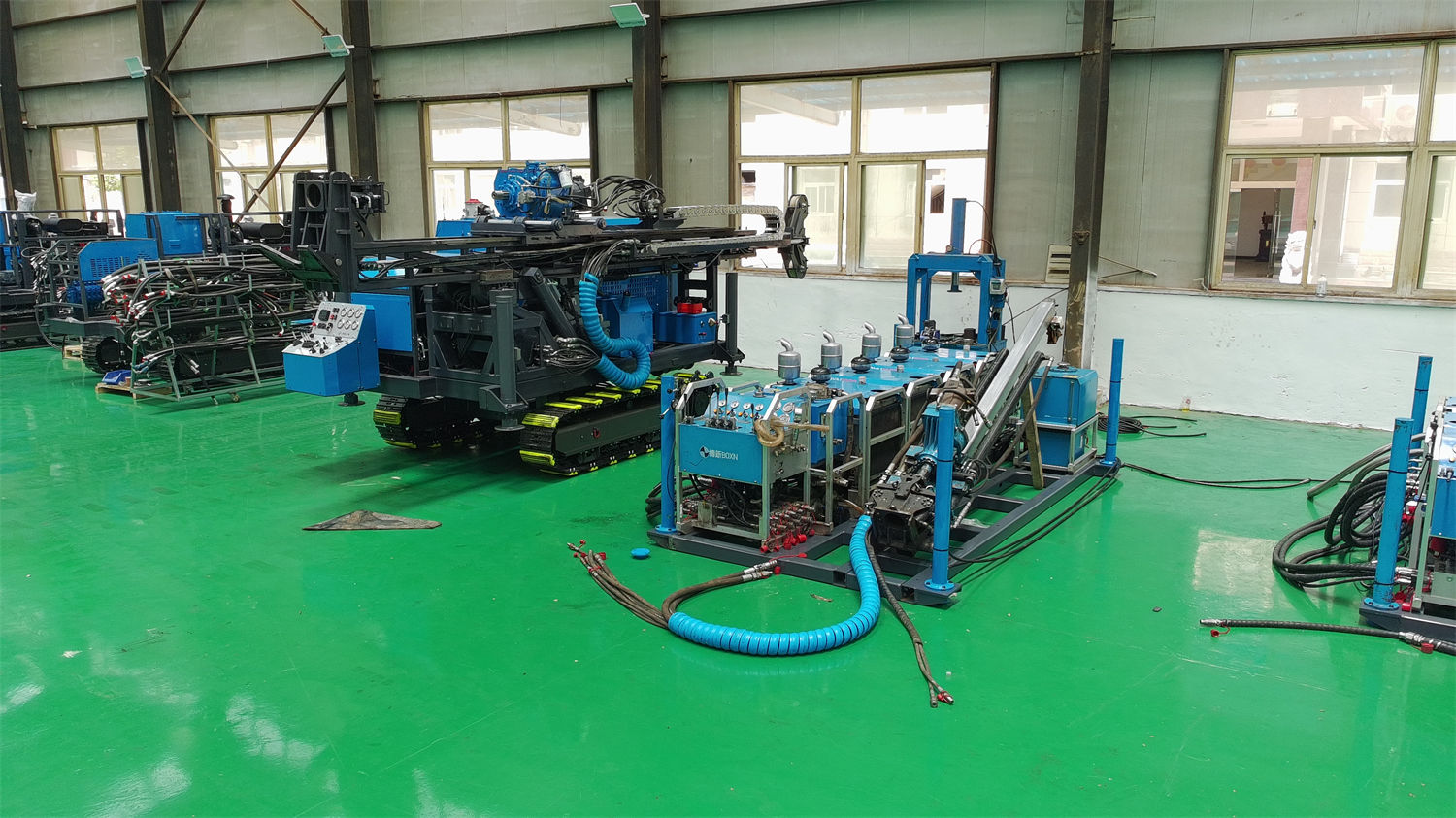
The applicable drill rod lengths are 1 m or 1.5 m, indicating that the machine is configured with short drill rods based on the modular portable concept. The deeper the hole, the more rod connections and disconnections are required, and the proportion of auxiliary time increases. Buyers need to evaluate the designed depth of a single hole, planned daily footage and rod connection method together, and confirm drill rod inventory and recommended matching quantities with the manufacturer.
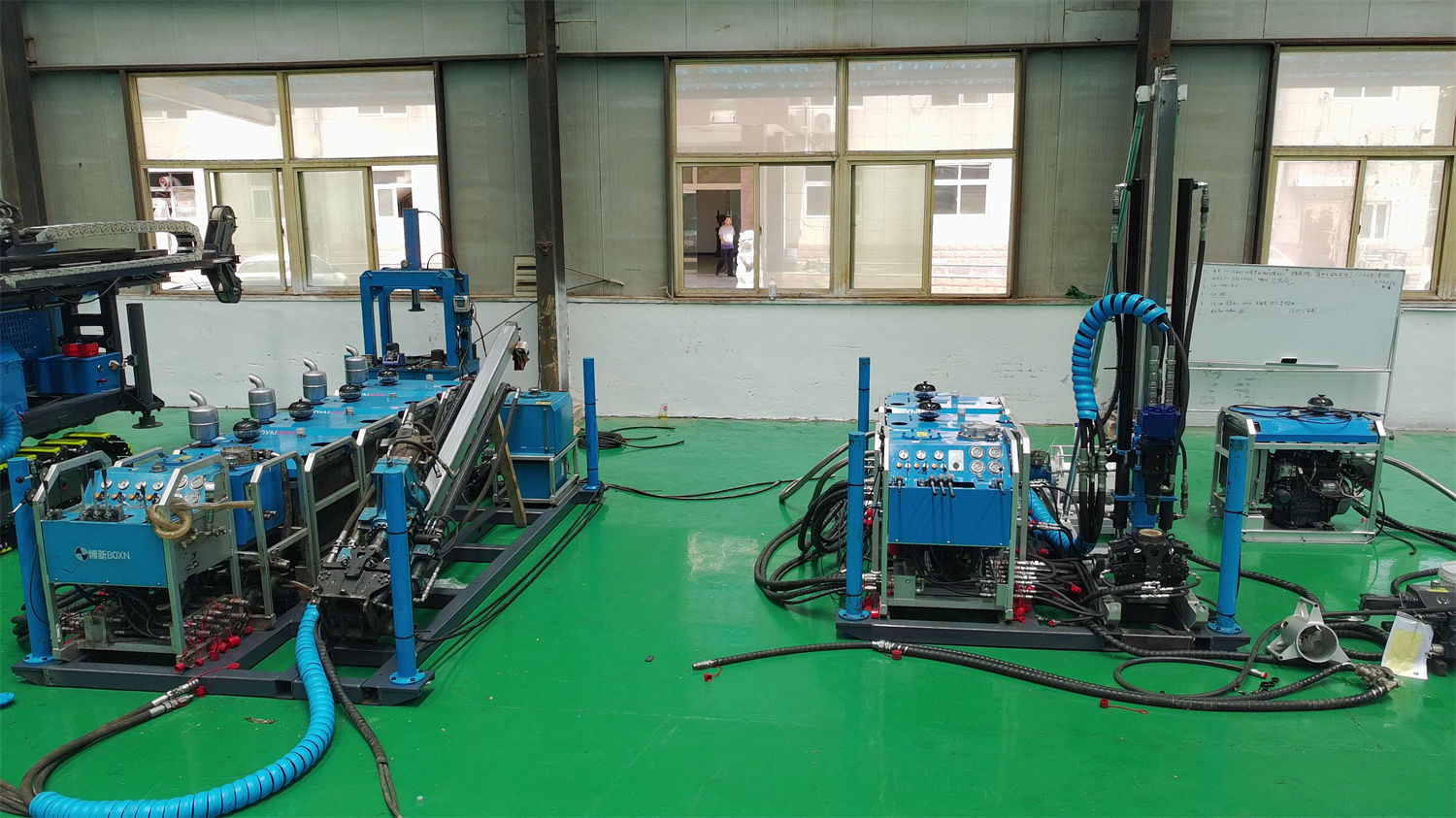
The reference module weights of the modular structure are: power unit 180–260 kg, control unit 140 kg, hydraulic oil unit (including oil) 160 kg, mud unit 95 kg, with a total weight of 1380 kg. These data can be used to judge mountain transport and disassembly/assembly organization methods, but the data does not give on-site assembly time and personnel requirements, which are items that need to be verified.
Matching power configuration with site conditions
The CR800P power form is diesel or electric. The diesel engine power requirement is ≥99 kW, and diesel engine brands Kubota, Cummins, Yunnei and Yuchai are optional; the electric motor configuration is 22 kW × 3, with motor speeds of 3000 / 1450 rpm. Remote mountainous areas need to consider fuel transport, power generation conditions and maintenance resources; if a fixed mine platform has stable power supply, the electric option can be evaluated to reduce engine maintenance and fuel storage and transport pressure.
The hydraulic system parameters are: main pump flow 160 L/min, main pump pressure 25 MPa, auxiliary pump flow 10 L/min, auxiliary pump pressure 17 MPa, main oil tank capacity 180 L, cooling method water-cooled or air-cooled. During long-term construction, hydraulic oil temperature and heat dissipation system should be observed, and the radiator should be cleaned in time according to on-site dust conditions.
Items recommended to be listed as a checklist before procurement
| Check item | Published parameters | Content to confirm with manufacturer |
|---|---|---|
| Drilling depth and diameter | BQ 920 m / NQ 800 m / HQ 380 m | Actual configuration recommendations for planned drill string specifications, hole angle and final hole depth |
| Feed system | Feed force 67 kN, pull force 130 kN, stroke 1.8 m | Drill string assembly and operating boundaries under target hole depth and formation |
| Rotation system | Maximum torque 980 N·m, maximum speed 1200 rpm, maximum drill rod diameter 114 mm | Principles for adjusting rotation speed and bit pressure under different lithologies |
| Wireline winch | Rope capacity 1000 m (6 mm), lifting speed 116 m/min, empty drum 11.5 kN, full drum 5.6 kN | Wire rope inspection cycle and replacement standards |
| Mud system | Flow 100 L/min, pressure 7 MPa, mixing capacity 1.2 m³/min | Recommendations for adjusting pump flow and pressure in fractured and loss formations |
| Power configuration | Diesel ≥99 kW or 22 kW×3 electric | Selection under project site fuel, power supply and maintenance resource conditions |
| Transport and assembly | Modular module weights 180–260 kg, 140 kg, 160 kg, 95 kg, total weight 1380 kg | Estimation of access road, platform conditions and disassembly/assembly personnel and time |
Due to differences in actual geological conditions, downhole tools, drilling angles and operating methods, the final drilling efficiency, drilling depth and core recovery results should be based on on-site conditions. The parameters listed in this article all come from the CR800P data on this site and do not involve specific customer cases or transaction data; before procurement decisions, the items to be confirmed in the above table should be communicated item by item with the manufacturer in combination with the project exploration design.