












Shallow-to-medium hole construction in hard rock engineering often presents a judgment challenge: the holes are not deep, but the rock is intact and hard, and the drilling orientation must be adjusted according to the design hole direction. When reviewing equipment specifications, torque is often the first value noticed, yet it is also the easiest to interpret in isolation. Based on verified information for the 30-meter-class crawler hydraulic DTH drill rig DTH30C, this article explains which part of DTH drilling the maximum rotary torque of 3500 N·m corresponds to, what conditions would make this value lose its reference value, and what else needs to be confirmed before purchase.
In DTH drilling, torque governs rotation, not impact
DTH drilling is accomplished through the combined actions of impact, rotation, feed, and flushing. The maximum rotary torque of 3500 N·m given in the specifications constrains the ability of the rotary system to drive the drill string to overcome friction and cuttings resistance in the hole; impact energy is provided by the DTH hammer and compressed air, while feed is handled by the feed system. These three cannot substitute for one another. Therefore, torque alone can neither infer the penetration rate at a given diameter nor indicate whether the hole wall is stable.
This is particularly evident in engineering holes such as slope anchoring holes, anchor cable holes, drainage holes, foundation pre-drilled holes, and short quarry holes: hole depths typically fall within 30 m, and constraints come more from rock hardness, hole diameter, and orientation adjustment rather than from the combination of drill string length and lifting capacity typical of deep-hole equipment.
The 3500 N·m value must be understood within the 76–280 mm hole diameter range
The specifications state a drilling diameter range of 76–280 mm, a maximum drilling depth of 30 m, and rock hardness of approximately f = 8–24, covering medium-to-high hardness rocks such as limestone, granite, sandstone, and basalt. The torque value is only meaningful within this diameter range: the same 3500 N·m corresponds to very different rotational resistance at a small diameter of 76 mm versus a large diameter of 280 mm, and the required DTH hammer specifications, air supply volume, and feed parameters also differ.
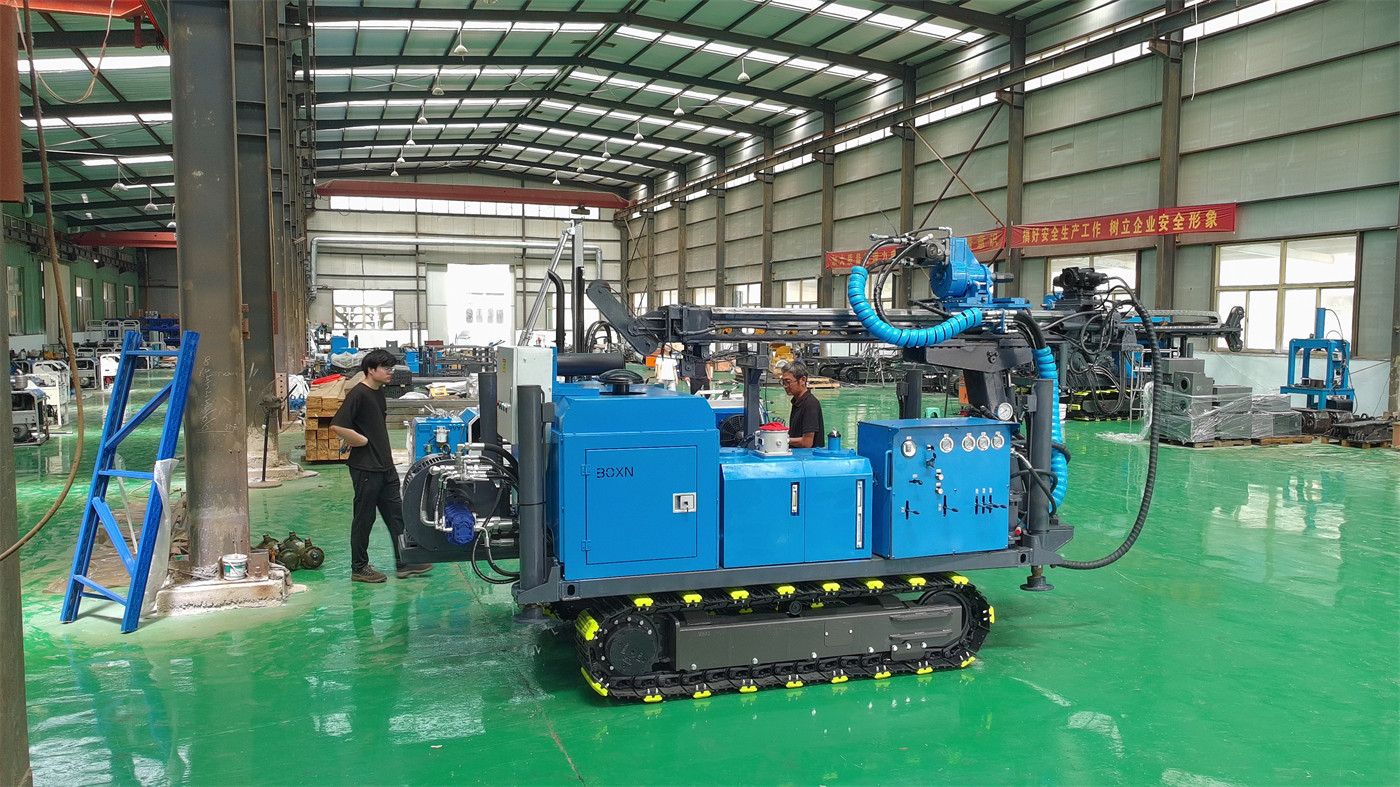
The specifications do not provide recommended DTH hammer specifications or corresponding torque settings for each hole diameter, so 3500 N·m should not be understood as a value that can be used at full load for any diameter. In actual operation, if rotational resistance continues to increase, return cuttings decrease, or the drill bit jumps noticeably, parameters should be adjusted promptly and the hole cleaned as indicated in the specifications, rather than continuing to increase rotation or feed.
Air supply conditions are the other half of the constraint beyond torque
The DTH hammer is driven by compressed air and discharges cuttings; the reference air consumption in the specifications is approximately 8 m³/min. The original table lists 8 m²/min, which is understood as m³/min according to the common unit for compressed air flow, and the final value should be confirmed in official technical documentation. When air supply is insufficient, both impact energy and flushing capacity decrease, and the rotary system instead bears more resistance from repeated grinding of cuttings; at this point, a higher torque value cannot compensate for the air volume shortfall.
- Air supply pressure and flow must match the selected DTH hammer and drill bit specifications; the specifications do not provide the pressure value for the hammer, which is an item to be confirmed;
- High-pressure air hoses and oil mist lubricators are ancillary components; lubrication status affects DTH hammer life, and the specifications do not provide a lubrication interval;
- Dust is significant in dry hard rock; a dust collector or water mist suppression device can be configured according to project requirements.
Orientation adjustment and carrier conditions determine whether torque can be applied at the design hole direction
The specifications give a swing angle range of 18–180° and note that tilt adjustment is available, but do not provide the specific tilt angle range. Slope anchoring and some lateral hole construction require maintaining rotational stability at different hole orientations; after orientation adjustment is in place, whether torque can be effectively transmitted also depends on the condition of the slide frame and feed system: the slide frame stroke is 3.2 m with an effective stroke of 2.2 m, suitable for medium-short drill rods and short pile construction cycles.
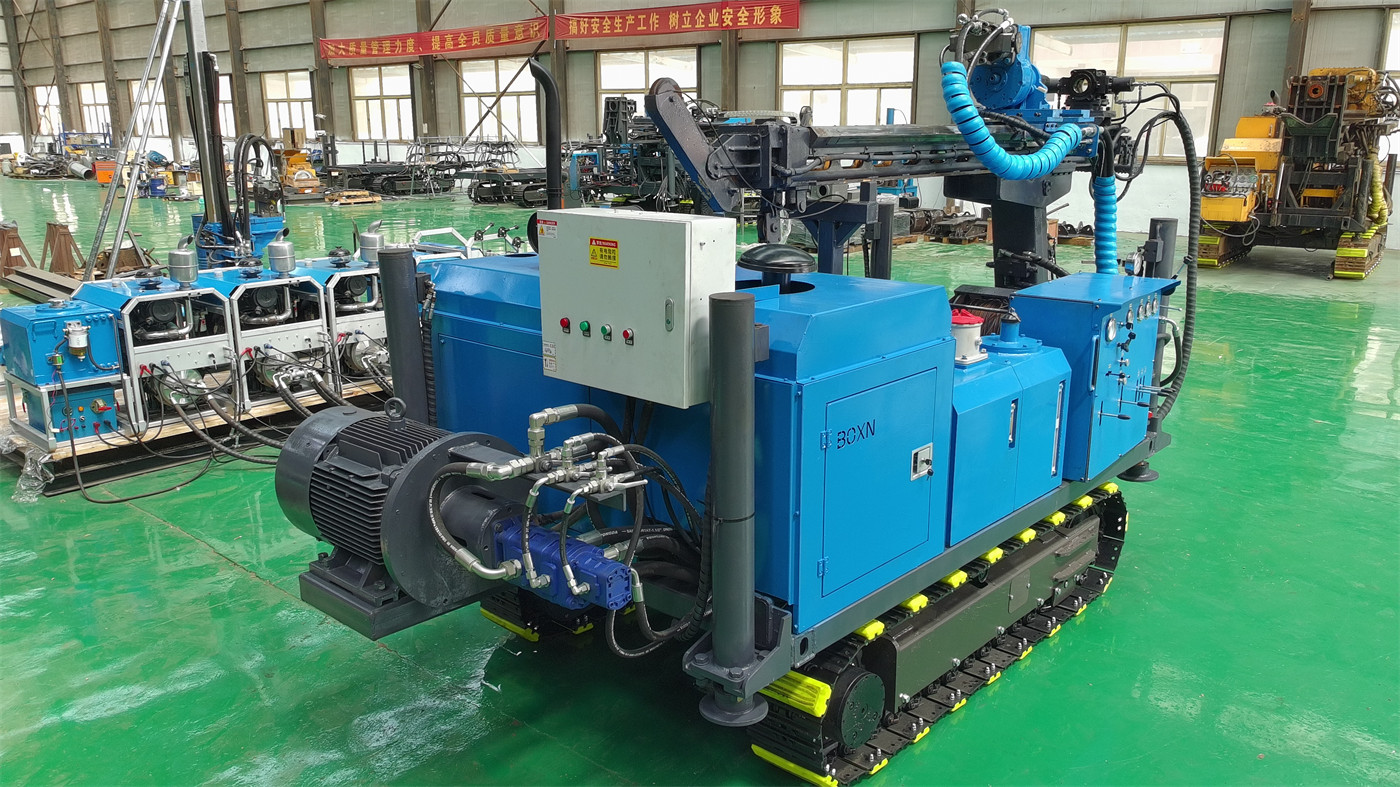
The overall dimensions are approximately 3200 × 1200 × 1850 mm, and the overall weight is approximately 2500 kg, using an engineering rubber track chassis. These compact dimensions correspond to access requirements for restricted sites such as factory areas, enclosed construction sites, and access roads, rather than the long drill string operations of deep well equipment. The 53 m/min figure in the specifications is the rapid travel speed of the feed mechanism, used for non-drilling actions such as power head return and drill rod handling, and should not be taken as the actual penetration rate in rock.
Translating the values into a pre-purchase checklist
| Check item | Information provided in specifications | Items still to be confirmed |
|---|---|---|
| Hole diameter and depth | 76–280 mm, maximum drilling depth 30 m | Whether target hole depth and diameter fall within the range, and whether staged drilling is required |
| Rock conditions | Medium-to-high hardness rock of approximately f = 8–24 | On-site rock integrity, abrasiveness, and proportion of fractured zones and overburden |
| Rotary capability | Maximum rotary torque 3500 N·m | Torque settings corresponding to the selected DTH hammer and drill bit; the specifications do not provide tiered values |
| Air supply matching | Reference air consumption approximately 8 m³/min | Actual air compressor displacement and pressure, pipeline length losses; units subject to official documentation |
| Orientation and site | Swing angle 18–180°, tilt adjustment available | Specific tilt range, platform bearing capacity, underground utilities and surrounding interference |
| Transport and relocation | Overall weight approximately 2500 kg, rubber track chassis | Transport vehicle load capacity and tie-down points, loading ramp bearing capacity, on-site turning space |
From this table, it can be seen that 3500 N·m is more about answering "what diameter and rock hardness of shallow-to-medium holes the rotary system can provide rotational capability for," rather than "how fast or how deep this machine can drill." Only by considering hole diameter, rock formation, DTH hammer, and air source together does the torque value have reference significance for selection.
Application boundaries and unsuitable cases
The specifications clearly state that this 30-meter-class engineering DTH drill rig should not be used for deep water well construction of 200 m or 300 m and above; deep wells should use dedicated water well drilling rigs. Similarly, tasks aimed at obtaining sample information, such as core sampling and reverse circulation sampling, should not be interchanged with DTH drilling, which aims at hole completion and rock breaking, merely because of similar names.
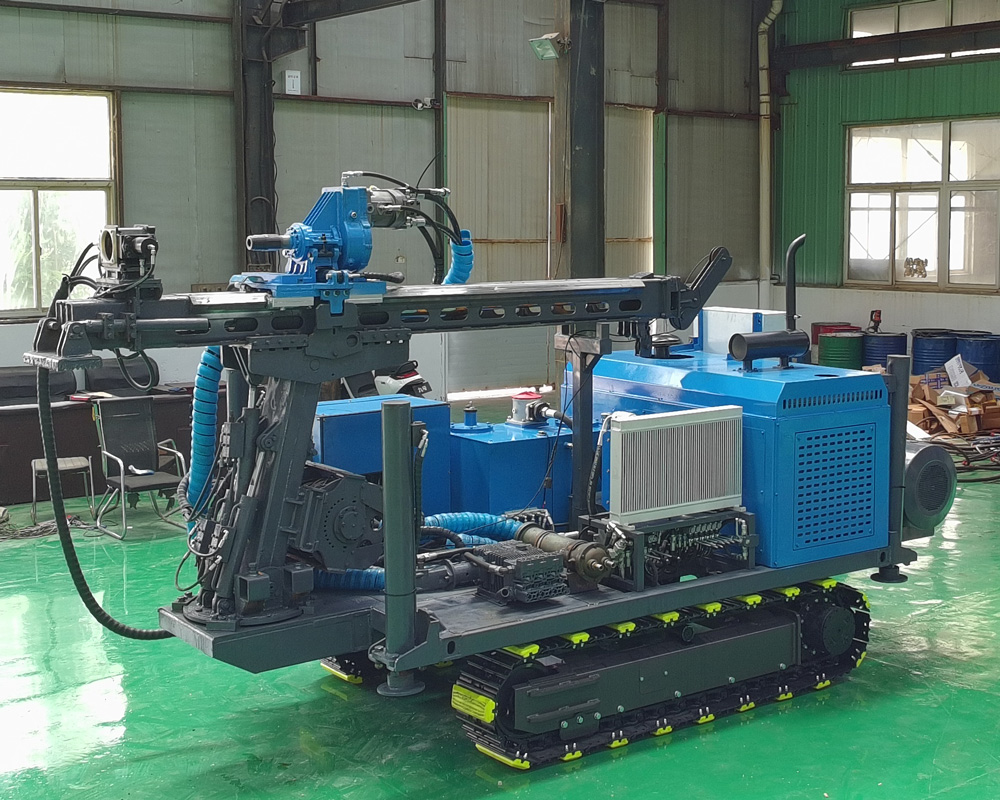
In addition, weathered rock, soil-rock mixed layers, and upper loose overburden are prone to hole wall instability; the specifications recommend reducing feed speed and using casing or starting drill tools as needed; in fractured zones, excessive feed should be reduced and continuous hole cleaning maintained; if high-pressure air line pressure is abnormal or return cuttings suddenly stop, drilling should be stopped first for inspection. These fall within the scope of operational organization and are not directly substitutable by the magnitude of the torque value.
Information to provide when requesting a quotation
If the project is preliminarily judged to fall within the above shallow-to-medium hole hard rock range, the following can be provided together when requesting a quotation: drilling purpose (slope anchoring, foundation pre-drilling, short quarry holes, etc.), target hole depth and diameter, rock description and hardness estimate, design hole direction and tilt requirements, access road and site dimensions, available air compressor capacity and pressure, proposed DTH hammer and drill bit specifications, and whether dust collection or water mist suppression configuration is required. The specific tilt range, torque settings for each hole diameter, and lubrication maintenance intervals not covered in the specifications should be confirmed item by item in technical confirmation documents and should not be inferred solely from this article or the model name.