












When selecting equipment for medium-deep water supply well projects, a boundary question often arises: the well depth already exceeds the conventional range of shallow-to-medium equipment, but may not require an ultra-deep well configuration. Telescopic mast rigs are discussed because they can directly use 6 m drill pipes, reducing the number of pipe connections, while the mast can be retracted during transport to reduce the overall profile. However, "retractable mast" alone is not a reason for selection; the project must first be confirmed to meet several prerequisites.
Prerequisite 1: Well depth and borehole diameter fall within the equipment's design range
Taking the WR600S referenced in this article as an example, the data gives a maximum drilling depth of 600 m and a borehole diameter of 105–400 mm. This range means it is intended for medium-deep water supply wells, not a promise of completing a 600 m well under any formation conditions. The actual well depth should be determined by local hydrogeological conditions and aquifer position; the maximum drilling depth should not be treated as a fixed target for every project.
The borehole diameter must also be determined in advance. Irrigation wells, village water supply wells and industrial water supply wells use different well casings, filter pipes and pump types, so the borehole diameter will vary accordingly. The 105–400 mm coverage is relatively wide, but the large-diameter range places higher demands on rotary torque, cuttings discharge air volume and drilling tools; the upper limit figure alone does not mean any diameter can be completed easily.
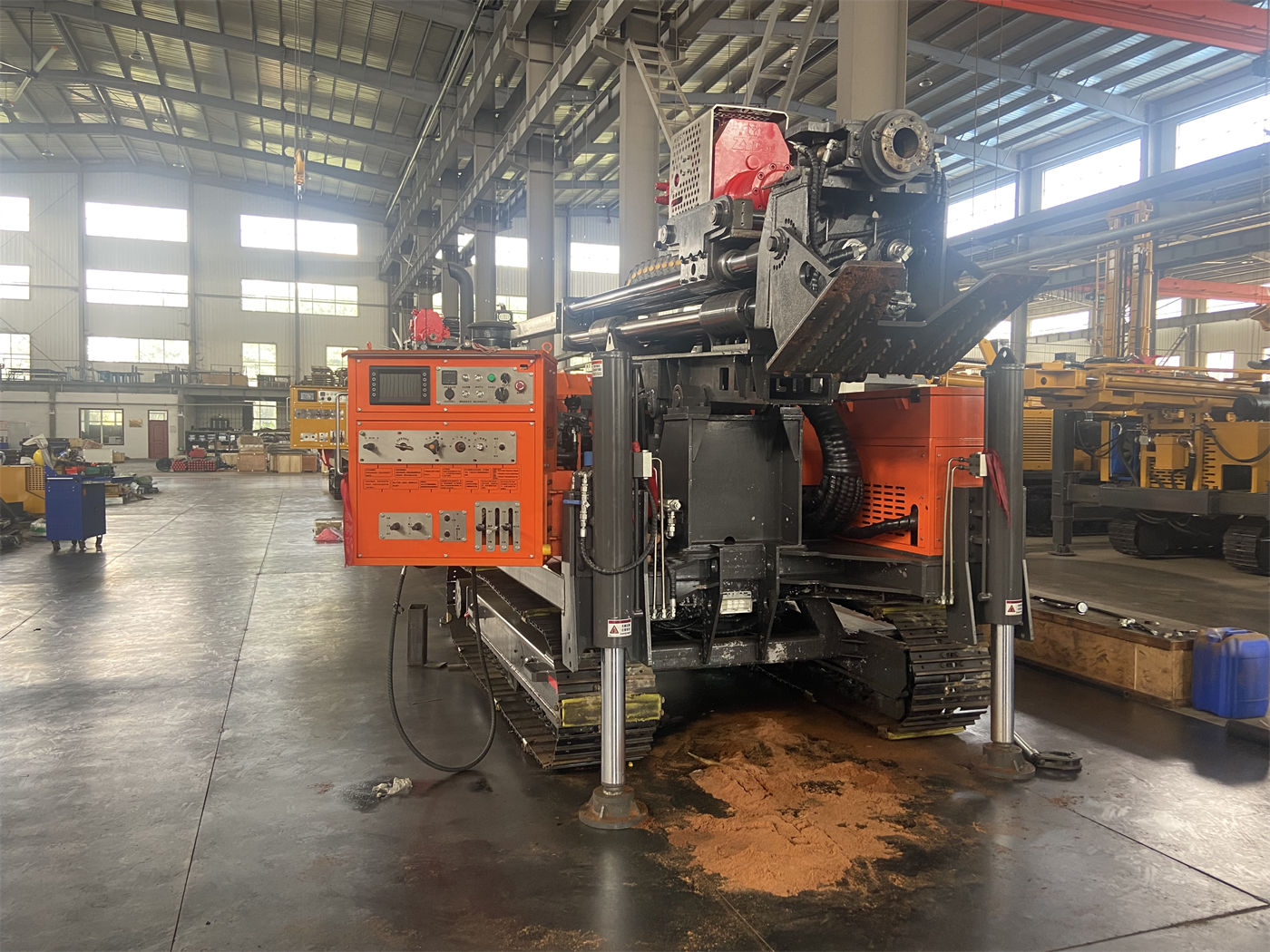
Prerequisite 2: Drill pipe handling method matches the mast form
The value of the telescopic mast is concentrated in the drill pipe handling process. A 600 m class borehole requires many pipe connections; using 6 m drill pipes reduces auxiliary time, while the telescopic mast improves the transport profile for easier loading and relocation. The data recommends drill pipe diameters of 89 mm or 102 mm and a length of 6 m.
It is necessary to confirm whether the drill pipe material, thread strength and connection method match the intended DTH hammer and main borehole diameter. In deep holes, the drill string weight, thread load and borehole wall friction all increase significantly; diameter and length alone cannot determine whether the entire drill string is suitable. Thread wear and drill pipe bending should also be included in routine inspection.
Prerequisite 3: The site can bear the complete machine weight and outrigger loads
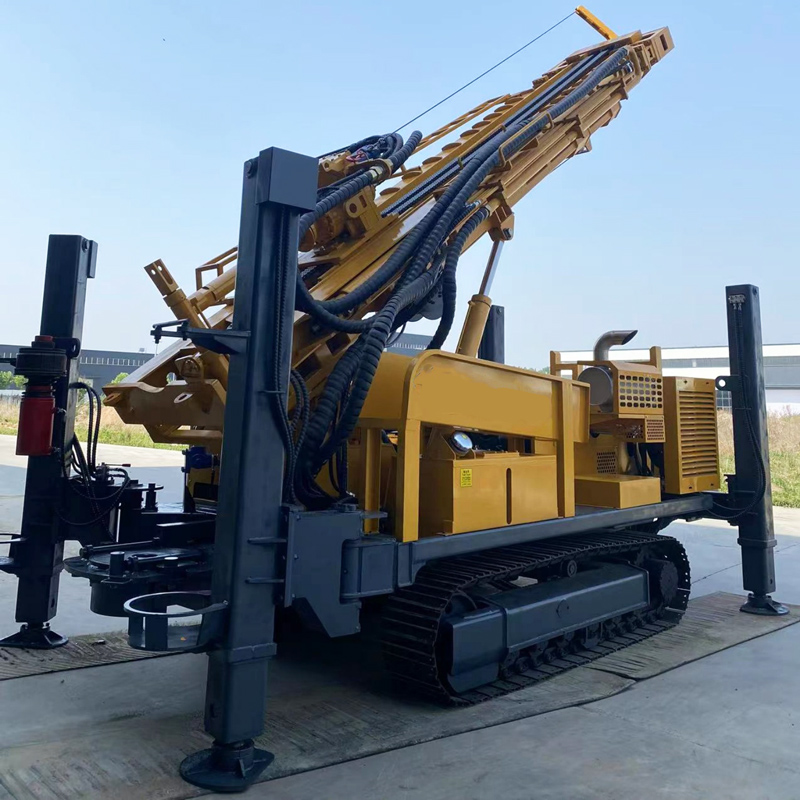
The complete machine weighs approximately 12.5 T, has overall dimensions of approximately 6.73×2.1×2.63 m, a travel speed of approximately 3 km/h and a maximum climbing angle reference of 21°. These conditions mean road bearing capacity, width and height limits and on-site ground conditions must be checked before entry.
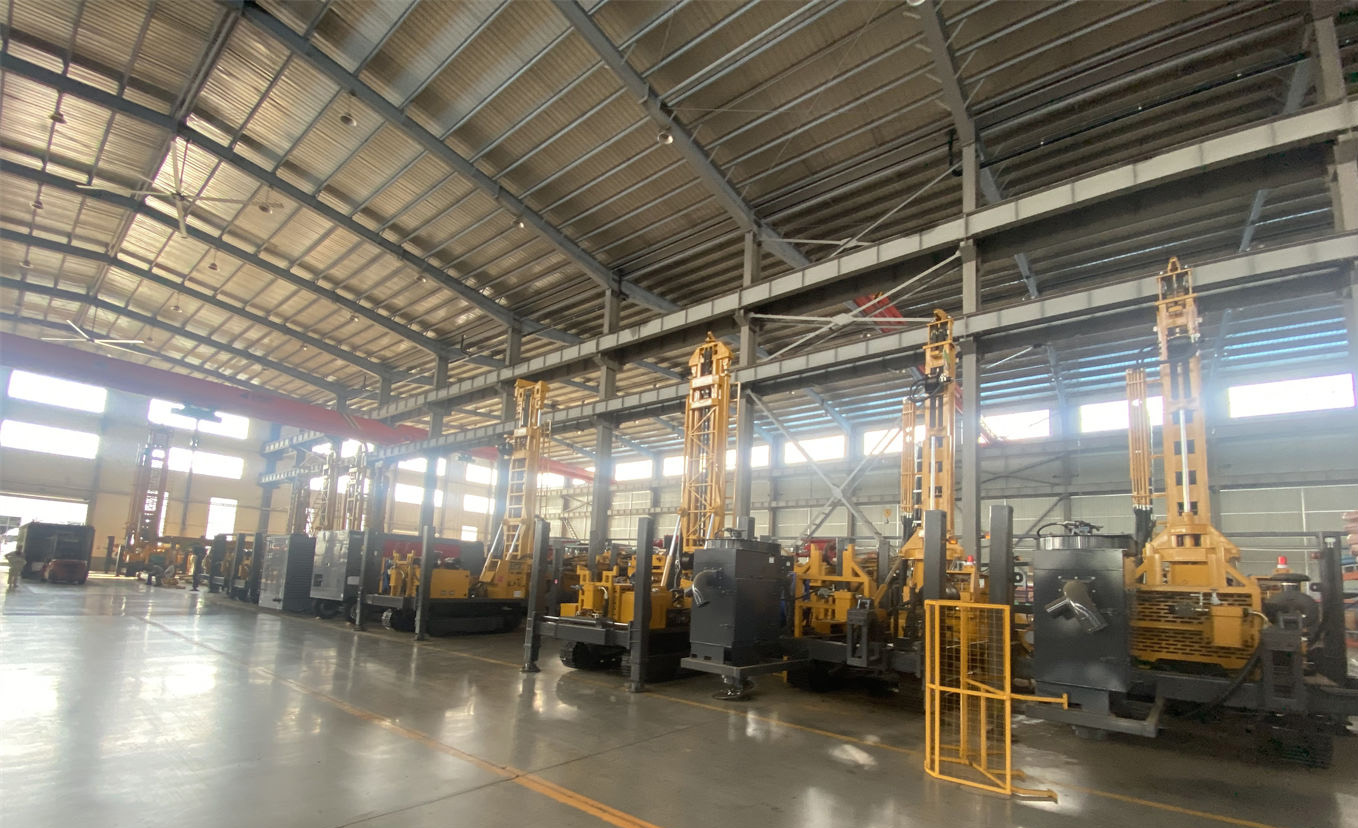
The hydraulic outrigger stroke is 1.6 m, used for leveling and stable support. On soft ground, bearing pads should be used to avoid outrigger settlement after prolonged operation. Deep hole construction takes a long time, and complete machine stability directly affects mast loading and borehole deviation control; site leveling and bearing capacity are not preparation items that can be omitted.
Prerequisite 4: Air supply, wall protection and well completion support are implemented together
The data gives a recommended working air pressure of 1.2–3.5 MPa and an air consumption of 16–55 m³/min for DTH drilling. As hole depth increases, borehole diameter becomes larger, rock becomes harder or altitude rises, the actual required displacement may increase; the air compressor must be matched separately for the project and cannot simply use the lower end of the range.
Regarding formations, intact hard rock can be matched with a medium-to-high pressure DTH hammer; weathered rock and alternating soft-hard formations require attention to block falling, hole shrinkage and torque fluctuation; soil, clay, sand and gravel overburden can use mud rotary drilling, with casing or other wall protection methods considered. After entering the main aquifer, the depth of the water-bearing zone should be recorded, and air supply, hole cleaning and casing methods adjusted accordingly. These process choices are part of project design; equipment data can only indicate which drilling methods are supported.
Applicable boundaries and items to be confirmed
- 600 m is the nominal maximum drilling depth, not the actual completed well depth achievable in any formation and at any borehole diameter.
- The 132 kW engine provides power for rotation, feed, travel and auxiliary hydraulic systems, but for high-dust projects the radiator and filter cleaning frequency must be scheduled according to site conditions.
- The 35 T lifting force provides margin for deep-hole drill strings and some casing operations; when pulling resistance is abnormal, the hole should first be cleaned to assess borehole wall conditions rather than directly relying on maximum lifting force to force handling.
- The 12000/6000 N·m dual-condition torque corresponds to maximum speeds of 90/180 r/min; the actual gear should be adjusted according to the bit, DTH hammer, cuttings return and rotary load.
- Mud pumps, centrifugal pumps, generators and foam pumps are optional configurations; whether to select them depends on the formation and wall protection plan and should be confirmed item by item before purchase.
Project information recommended before inquiry
Only by stating the purpose (rural water supply, irrigation, industrial or mining area water supply), expected well depth and borehole diameter, main formations and aquifer depth, intended drilling method, drill pipe and DTH hammer specifications, air compressor supply conditions, access roads and site bearing conditions, and water and power conditions together can it be judged whether this model falls within a reasonable range. When formation and hydrological data are lacking, drilling depth and borehole diameter can only serve as a starting point for plan discussion, not as a well completion conclusion.