












The question "Should we upgrade to a larger rig?" often arises after a project enters the deep stage, but the person asking usually has only a new hole design document and a model comparison table. Comparing the drilling depth figures in the two materials seems to give an answer. What really needs to be judged is not which number is larger, but at which specific point the existing equipment begins to be insufficient.
The CR1600I information on this site gives reference drilling depths of 2000 m for B-size, 1500 m for N-size, and 850 m for H-size, a maximum torque of 4800 N·m, 31 MPa main pump pressure, 250 L/min mud flow, 1800 m rope capacity, and 185 kN pull-up force. The following expands along an actionable judgment path, and each step can be checked against the existing materials and project design data.
Step 1: Translate "design depth" into the specification corresponding to the existing equipment
Drilling depth is never an isolated number. The CR1600I's three reference drilling depths correspond to B, N, and H specifications, and the capability difference of the same machine under different drill string specifications is nearly twofold. Therefore, to judge whether an upgrade is needed, the first action is to convert the new hole's design depth and hole diameter into a specific specification, then compare it with the corresponding tier of the existing equipment.
If the existing equipment is rated at 2000 m and the new hole is a 1500 m-class N-size hole, the depth itself does not constitute a reason for upgrading. Conversely, if the new hole is designed to more than 900 m under H-size while the existing equipment's H-size reference drilling depth is only 850 m, that is a clear boundary touch.
This step should also divide the hole depth interval into several segments: the shallow normal coring section, the middle-deep section where friction rises, and the possible complex section near the hole bottom. The upgrade decision is usually determined by the deepest segment, not by the average hole depth.
Step 2: See whether the deep-hole stage begins to consume load margin
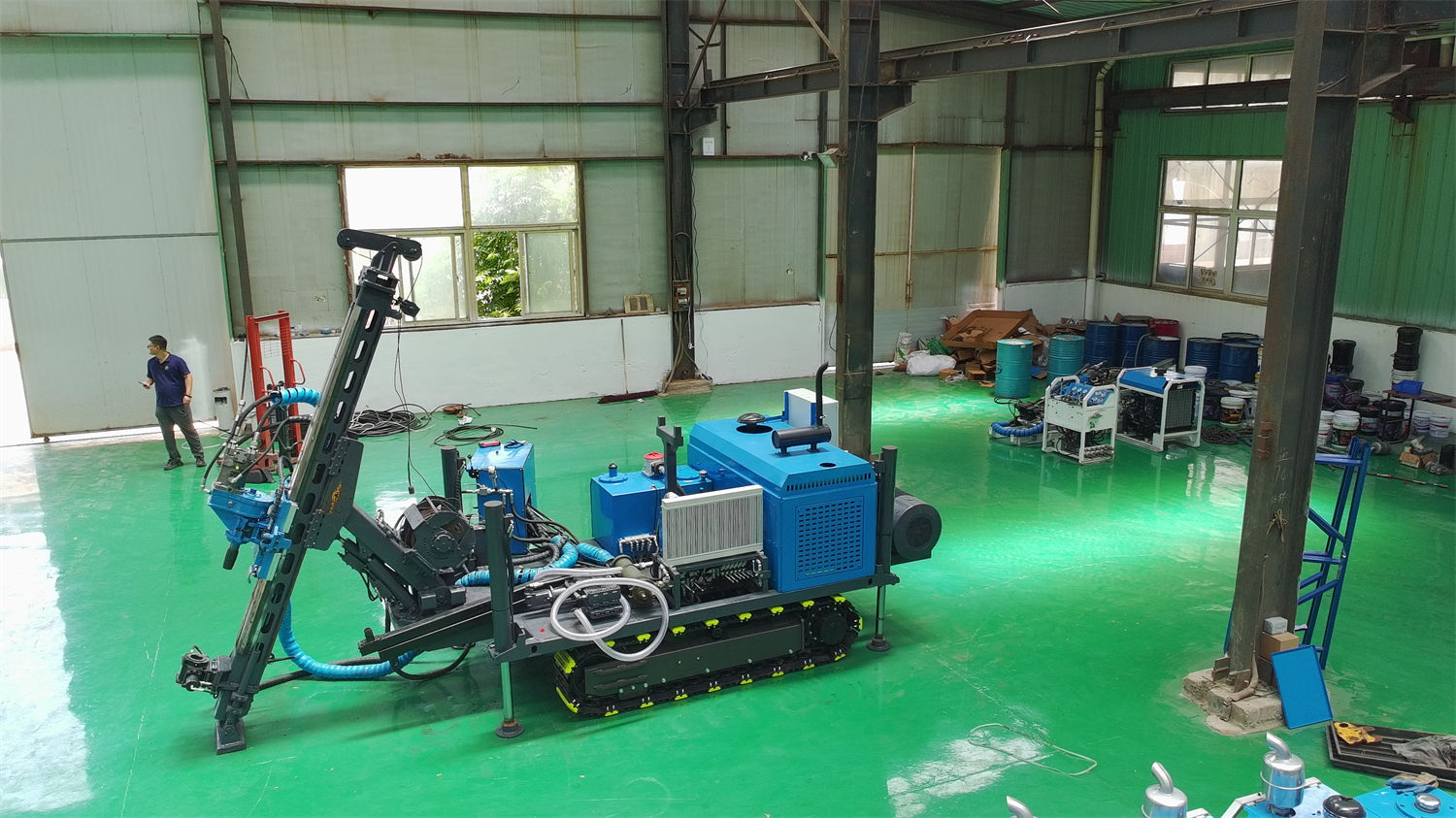
As the borehole deepens, the drill string weight and in-hole friction continue to rise, and the actual load borne by the power head is much higher than in the shallow-hole stage. The CR1600I's 4800 N·m maximum torque, 63 kN feed force, and 185 kN pull-up force are several anchors for judging whether the existing equipment still has margin.
Check in the following order:
- Whether the power head frequently approaches stall or the rotation speed drops noticeably in the deep-hole section;
- Whether the pull-up force is repeatedly used at a high proportion when sticking or hole narrowing occurs;
- Whether the proportion of time spent handling in-hole incidents in a single-hole cycle rises noticeably;
- Whether, under the same hole diameter and rock formation conditions, the hydraulic temperature rise per unit footage is faster than in the shallow-hole stage.
These phenomena do not by themselves mean the rig must be replaced, but they indicate that the existing equipment's load adaptation space in the deep-hole section is narrowing. The torque, feed force, and pull-up force given in the materials are design capability values; the actual usable margin depends on the formation, drill string assembly, and operating method, and must be judged in combination with on-site records rather than inferred solely from the specification table.
Step 3: Check whether linked systems become the shortcoming first
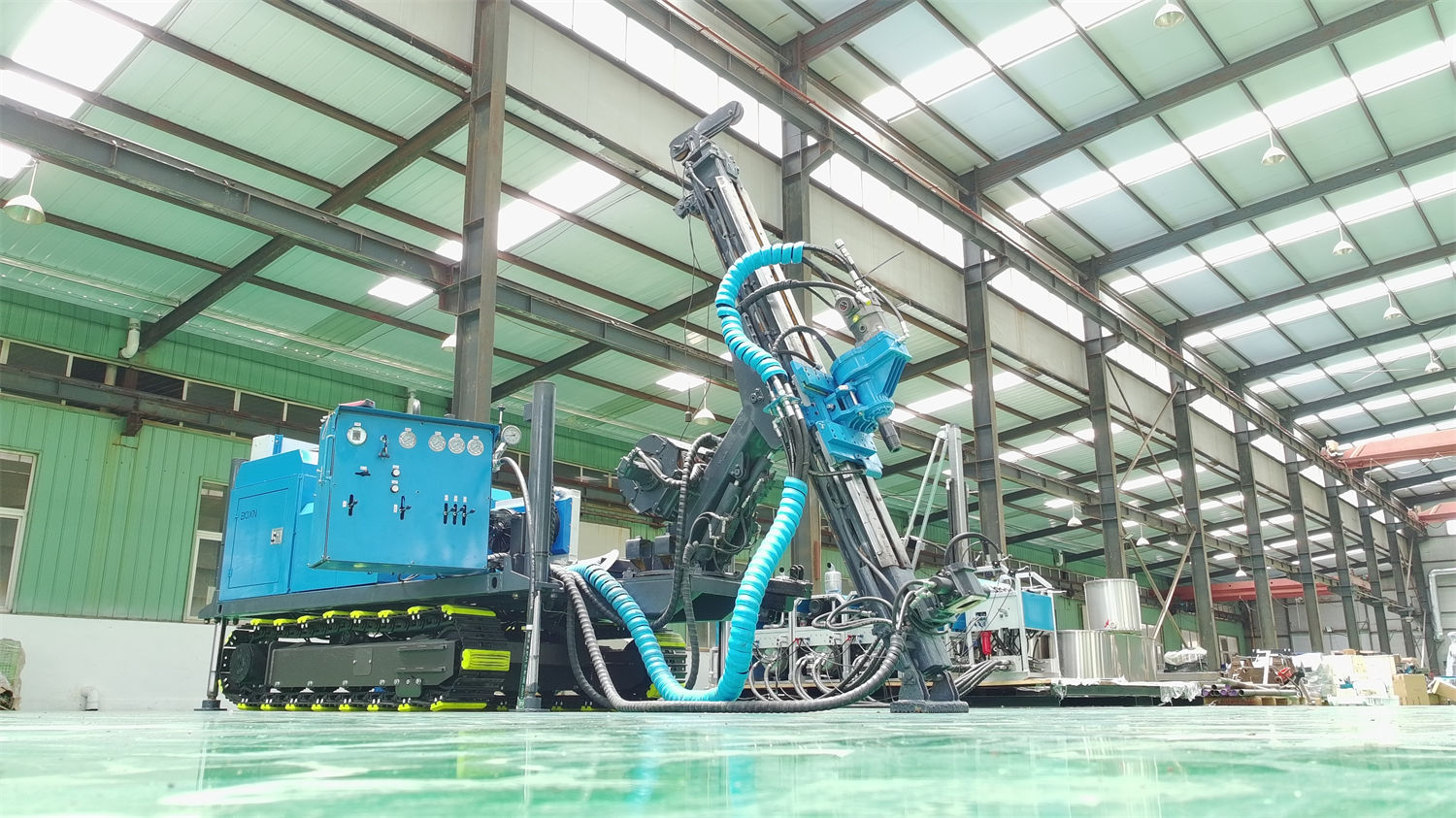
Constraints in the deep-hole section rarely appear only at the power head. The CR1600I's supporting parameters can provide a set of references: main pump flow 320 L/min at 31 MPa, auxiliary pump 160 L/min at 23 MPa, mud system 250 L/min at 7 MPa, hoist with 6 mm wire rope, 1800 m rope capacity, and 118 m/min lifting speed.
A common situation in upgrade judgments is: the power head torque still has margin, but one of the following reaches its limit first.
| Item | CR1600I parameter | Related issue in the deep-hole stage |
|---|---|---|
| Hydraulic system | Main pump 320 L/min, 31 MPa | Flow and temperature rise during coordinated high-load operation of multiple actuators |
| Mud system | 250 L/min, 7 MPa | Cuttings carrying over long hole intervals, hole wall stability, and loss treatment |
| Hoist | 6 mm rope, 1800 m capacity, 118 m/min | Wireline inner tube retrieval distance and auxiliary time per run |
| Clamping and through-hole | 150 mm through-hole, NQ/HQ/PQ/NTW/HTW | Drill string system compatibility and clamping stability |
If the existing equipment first becomes insufficient in mud flow or hoist rope capacity while the power head still has margin, then the necessity of upgrading the model depends on where the shortcomings are concentrated, not on the whole machine's rated drilling depth.
Step 4: Distinguish three types of upgrade demands
After gathering the information from the previous steps, upgrade demands generally fall into three types of situations, and the corresponding handling methods are not the same.
Type 1: Depth or specification truly exceeds the design range
The new hole's design depth under the corresponding specification exceeds the existing equipment's reference drilling depth, and the project requires continuous coring. In such cases, the premise of continuing to use the existing equipment needs to be reassessed, including possible staged construction, adjusted hole diameter design, or changed hole location layout.
Type 2: Depth is within range, but the deep-hole section margin is low
At this point, first check whether there is still room for optimization in the drill string assembly, mud system, and run arrangement. The CR1600I materials' guidance for deep-hole formations is: complete hard rock sections require stable rotation speed and reasonable bit pressure; fractured zones should emphasize run control and flushing fluid wall protection; water-bearing fracture sections require observation of return water volume and pressure changes; and when loss is severe, plugging, casing, or staged treatment should be adopted. These adjustments may change the margin judgment.
Type 3: Demand brought by changes in operating mode
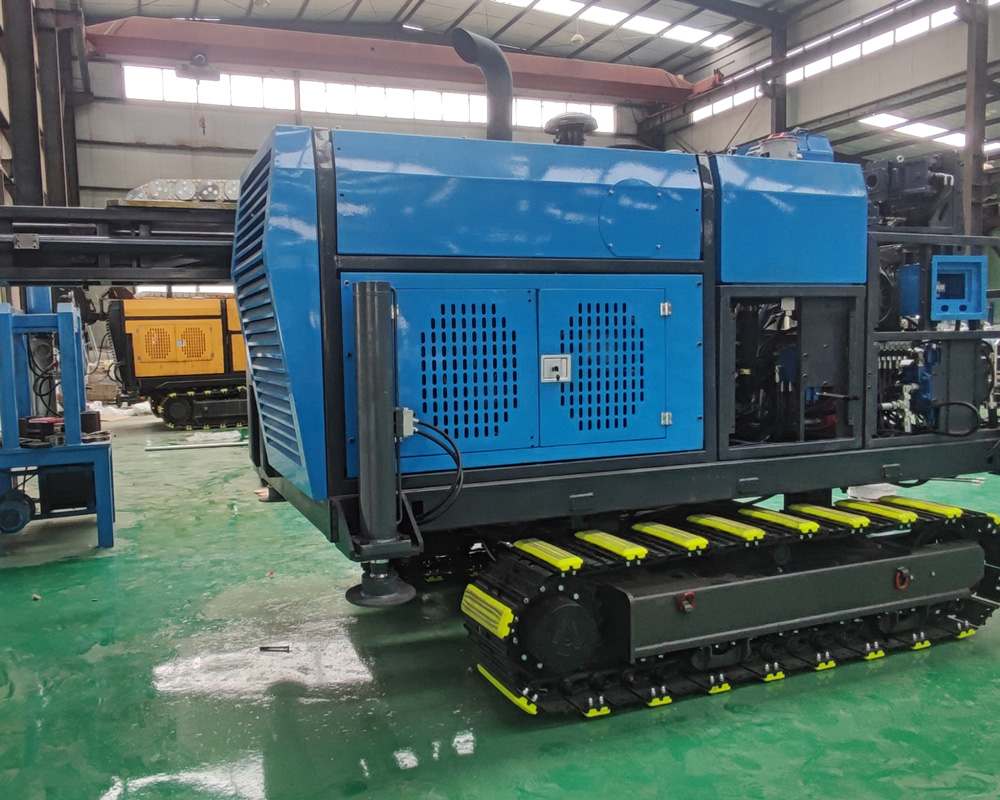
For example, shifting from single-hole verification to long-duration continuous construction, from vertical holes to multi-directional inclined hole layout, or requiring frequent short-distance hole position adjustments within a mining area. The CR1600I supports 45°–90° drilling angles and uses an integrated crawler structure, which can reduce repeated connections between equipment modules. If the existing equipment becomes the main bottleneck in relocation, angle adjustment, or continuous on-site organization, the upgrade reason is unrelated to depth.
Step 5: List a checklist of items to confirm for the upgrade decision
Before making a rig replacement judgment, the following information is not provided in the materials and needs to be verified with the manufacturer and on site:
- The actual drill string assembly and drill pipe length for the new hole under the corresponding specification;
- The completeness of the target formation at depth, fractured zone thickness, and water-bearing conditions;
- On-site maintenance capability for hydraulic oil cleanliness, filter pressure differential, and cooling conditions;
- Records of actual sticking frequency and handling time in the deep-hole stage;
- Whether the existing equipment's hoist wire rope wear state and rope capacity still meet design values;
- Whether the upgraded equipment's access roads, lifting, and site conditions are satisfactory.
The CR1600I materials mention that the last column of the PDF powertrain table shows the model title "BX1500T," while other parameter tables on the same page correspond to BX1600T. This page only organizes the power parameters provided in that column, such as 6CTA8.3, 153 kW, and 8.3 L, and does not make additional inferences about the model title discrepancy in the original materials. Similar discrepancies in material wording should be raised as items to confirm in an upgrade decision, rather than completing the conclusion on one's own.
Drilling depth, torque, and pull-up force are the entry points for judging an upgrade, not the end point. Convert the design depth to the corresponding specification, check the load margin in the deep-hole section, confirm which system the shortcoming appears in, and then distinguish depth demand, margin demand, and operating mode demand, so that the question "to replace or not" can rest on specific grounds. Actual drilling efficiency, achievable drilling depth, and core recovery results should still be based on on-site conditions.