












2200 N·m is listed in the CR1200I technical specifications and refers to the maximum rotational torque the power head can output. This value itself does not answer "how deep can it drill"; it answers a different type of question: when the rotational resistance of the drill string rises, how much margin does the power head still have to transmit torque downward? In deep-hole coring, what actually stops penetration is often not reaching the drilling depth limit, but rotational resistance first exceeding the available torque. The following content is based on the publicly available CR1200I specifications on this site, with items not provided listed separately.
First, confirm which component this value describes
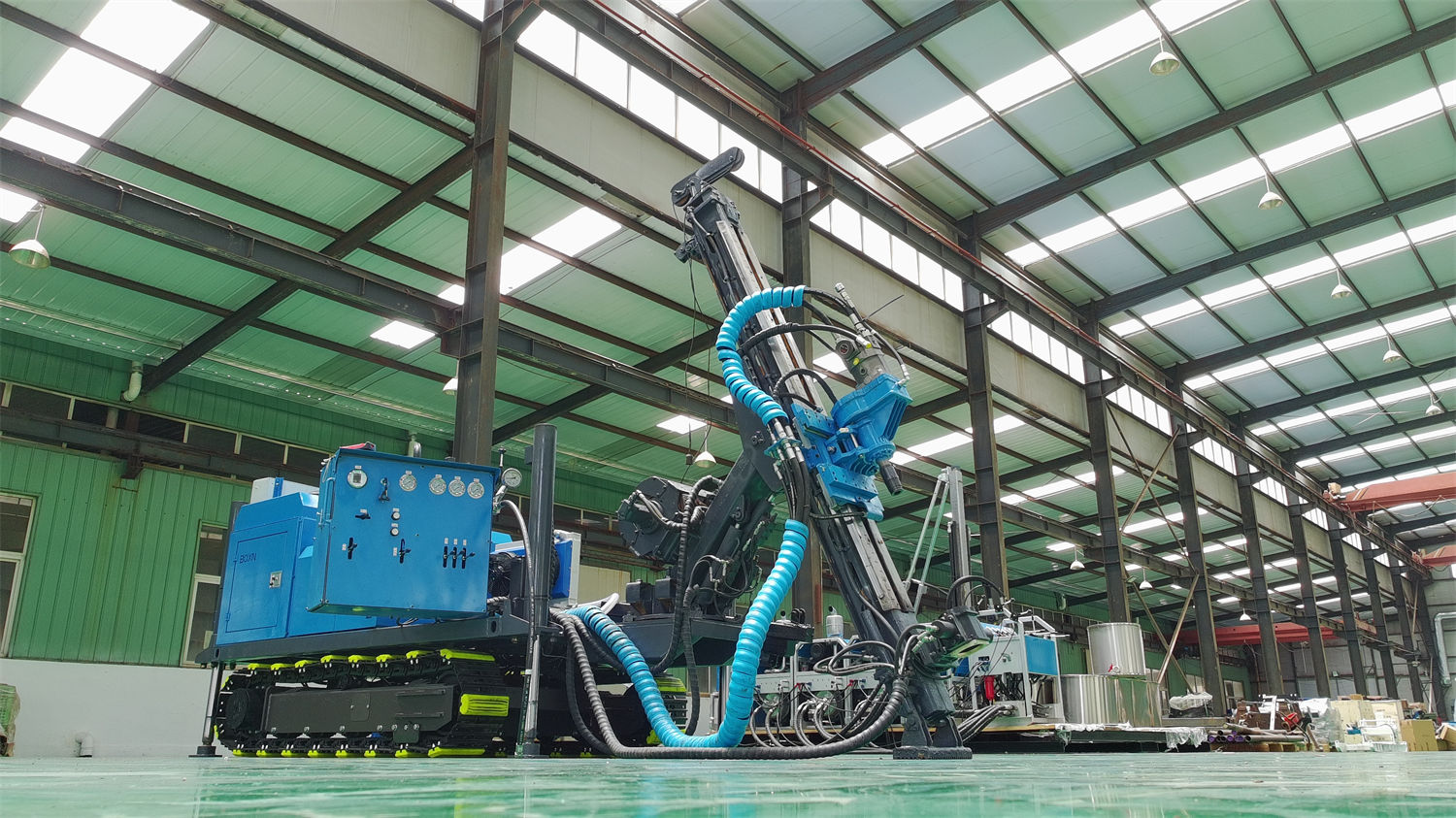
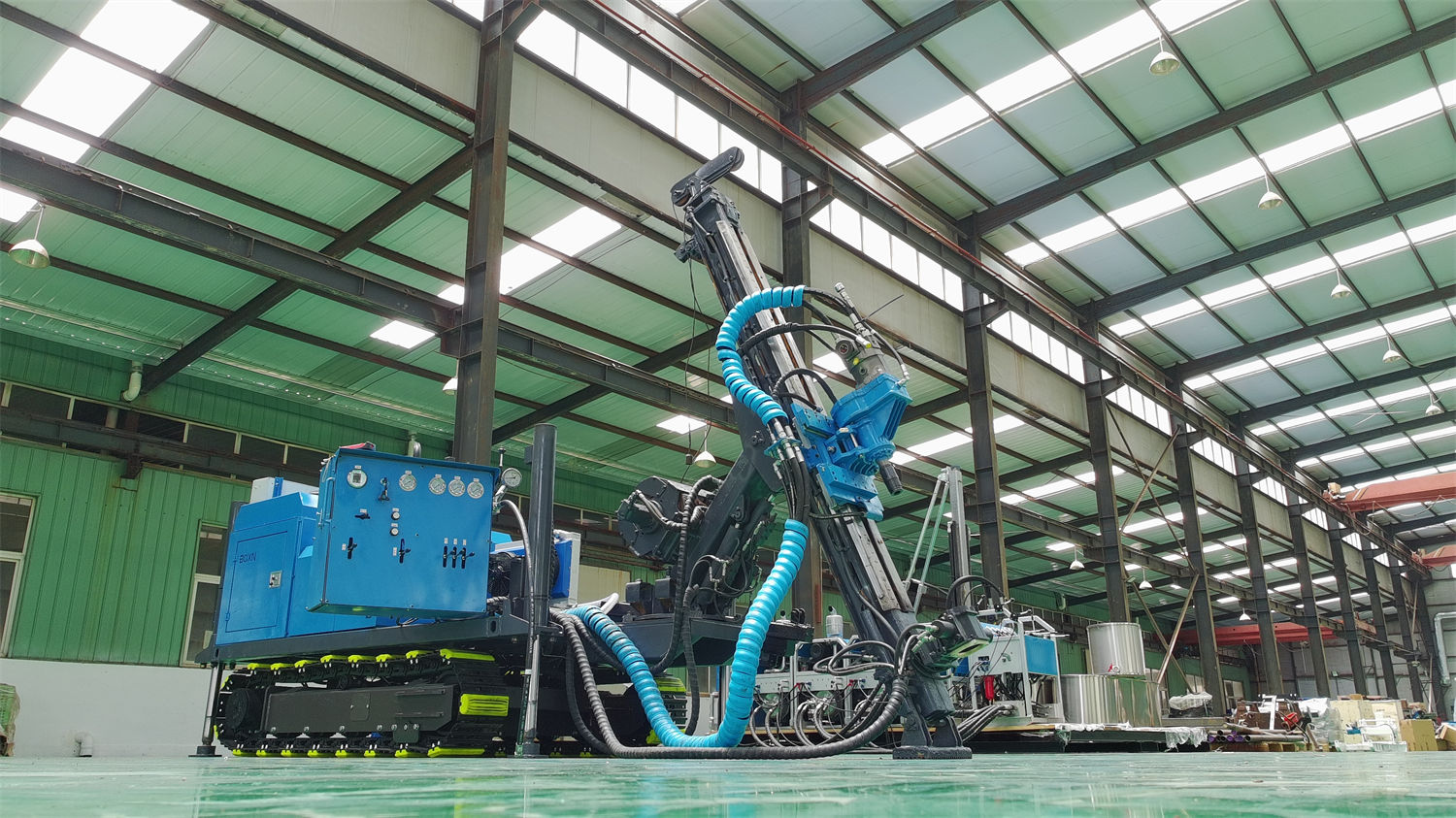
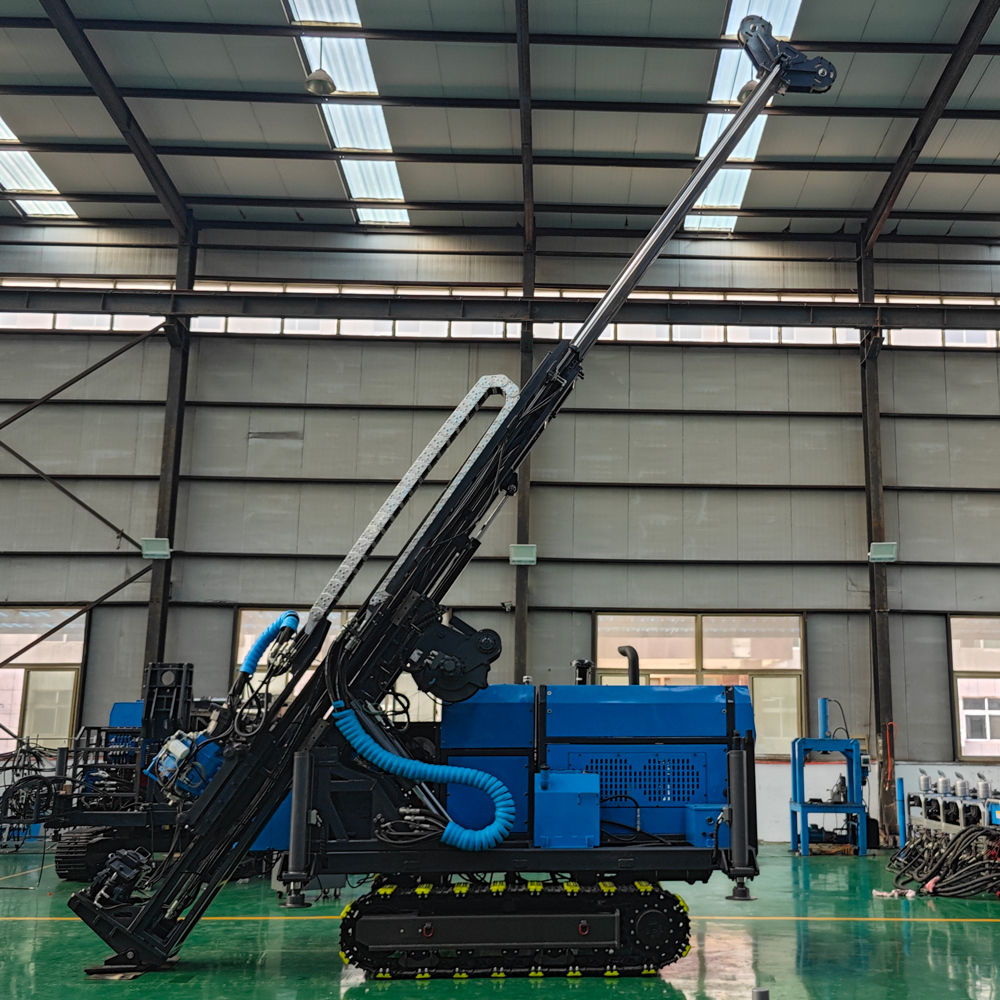
The CR1200I is a fully hydraulic integrated core drilling rig. Its power head uses gear transmission, with a maximum torque of 2200 N·m, a maximum speed of 1500 rpm, and two gear ratio sets of 1:2.2 and 1:3.3. Torque belongs to the power head, the rotational component, not to the winch, chuck, or mud pump.
The other items listed in the specification table belong to different actions from torque: a feed force of 55 kN and a pull-up force of 160 kN belong to the feed system; a winch lifting force of 13.5 kN, a lifting speed of 116 m/min, and a rope capacity of 1200 m belong to the wireline winch; a mud system flow rate of 150 L/min and pressure of 7 MPa belong to the circulation system. These values cannot be substituted for one another, nor can one be used to infer another.
Maximum torque and gear ratio are not the same number
The specification table gives "maximum torque 2200 N·m" and also gives two gear ratio sets, 1:2.2 and 1:3.3. The information does not specify the torque values and speed ranges corresponding to each gear ratio, so 2200 N·m cannot be directly substituted into a particular gear for calculation. What can be confirmed is: torque and rotational speed change as a pair on the same power head, and the role of gear ratio is to adjust the balance between the two.
| Parameter Item | Parameter Value |
|---|---|
| Power head transmission type | Gear transmission |
| Maximum torque | 2200 N·m |
| Maximum speed | 1500 rpm |
| Gear ratio | 1:2.2 / 1:3.3 |
These three rows should be read together: 2200 N·m and 1500 rpm are the two endpoints of the power head's capability, and gear ratio is the intermediate link connecting the two endpoints. Taking only one of these values to judge applicability will miss the other half of the constraint.
In deep-hole coring, what does torque margin correspond to?
The composition of torque consumption during the deep-hole stage changes with hole depth and rock formation. According to the information, the CR1200I's high-speed power head and 2200 N·m maximum torque are intended to adjust the drilling state within different lithological intervals, balancing the operational requirements of intact hard rock and locally fractured zones. This statement indicates that torque is meant to adapt to alternating lithology, rather than being an independent drilling depth indicator.
The information also requires that after entering hole sections above 1000 m, greater attention should be paid to hole deviation control, drill rod wear, wireline condition, mud performance, and changes in downhole resistance; if there is a decrease in return water, abnormal torque, increased pull-up resistance, or changes in return water sand content, it should be promptly judged whether there is a risk of loss, hole collapse, diameter reduction, or sticking. Here, "abnormal torque" is listed as one of the observation signals, indicating that in actual construction, torque readings are a process monitoring object, not a fixed capability that no longer changes after factory calibration.
- Torque and rotational speed: the two correspond to each other on the power head, and adjusting one gear affects the other.
- Torque and pull-up force: the 160 kN pull-up force is used for tripping out and tool recovery, and belongs to a separate set of actions from rotational torque.
- Torque and mud: the mud system has a flow rate of 150 L/min and pressure of 7 MPa. When facing developed fractures, unstable return water, and local loss, viscosity, fluid loss, and circulation parameters need to be adjusted.
- Torque and downhole conditions: abnormal torque must be judged together with return water volume, pull-up resistance, and sand content in return water.
Beyond the torque upper limit, what other conditions are acting simultaneously?
The CR1200I has a reference drilling depth of 1200 m for N size, 1600 m for B size, and 700 m for H size. The same equipment corresponds to different reference drilling depths under different coring specifications, indicating that the coring specification itself is a constraint condition. Whether torque can cover a certain hole section depends on the drill string assembly, hole diameter, and rock formation combination under that specification, not merely on the 2200 N·m upper limit.
As hole depth increases, the proportion of time spent on wireline winching rises. A rope capacity of 1200 m and a lifting speed of 116 m/min correspond to the inner tube retrieval step and are not directly converted from rotational torque, but they determine the auxiliary time per run in deep holes. The information also mentions that the 150 mm chuck through-hole is compatible with common drill rod systems such as NQ, HQ, PQ, NTW, and HTW, and uses hydraulic clamping plus a wooden-horse wedge self-weight anti-drop structure. The choice of drill rod system changes the drill string assembly, thereby changing rotational resistance, a relationship that is not directly marked in the specification table.
Handling requirements for deep-hole faults and fractured zones
The information points out that fault gouge, breccia, fractured rock zones, and densely fissured areas are often more difficult to handle than purely hard rock. In such cases, the length of a single run should be reduced, pump pressure and return water changes should be observed promptly, and flushing fluid, casing, and drilling parameters should be adjusted according to hole wall stability. The 160 kN pull-up force provides margin for tripping out and tool recovery in complex hole sections. This passage indicates that in complex hole sections, torque is not solved by continuing to apply pressure; what the information gives is adjusting run length and observing downhole feedback.
Parts not provided by the information
The following items are not specified in the CR1200I information on this site and should be separately confirmed before purchase or use, and should not be inferred on one's own:
- The torque values and speed ranges corresponding to the two gear ratio sets of 1:2.2 and 1:3.3;
- Reference torque consumption values for different coring specifications (NQ, HQ, PQ, BQ, and NTW, HTW, etc.) under specific rock formations;
- The recommended matching ranges among torque, feed force, and rotational speed;
- Specific judgment thresholds for torque margin after hole depth exceeds 1000 m.
The end of the information already states that due to differences in actual geological conditions, downhole tools, drilling angle, and operating methods, the final drilling efficiency, drilling depth, and core recovery results should be based on on-site conditions. Therefore, 2200 N·m is better understood as a description of the upper limit of a machine's rotational capability, rather than a promise of drilling results for a particular hole. To judge whether a project is applicable, coring specifications, rock formation combinations, hole depth, and downhole feedback must all be taken into account, rather than comparing only a single torque number.