












In shallow hard-rock operations such as slope anchoring and foundation pre-drilling, people often first ask "how much torque" and then judge whether the equipment can do the job. The question itself is easily misdirected: rotary torque is not an isolated upper limit of capability. It is only responsible for the drill string rotation stage; percussion is performed by the DTH hammer and compressed air, and feed is performed by the feed mechanism. Only by placing torque within the process can we determine where it plays a role and where it does not.
First distinguish three actions: rotation, percussion, feed
DTH drilling combines three actions: the DTH hammer impacts and breaks rock at the hole bottom, compressed air removes cuttings, the power head drives the drill string in rotation, and the feed mechanism provides feed force. Rotation must overcome the friction resistance between the drill bit and the rock at the hole bottom, the friction of the hole wall, and the rotation resistance caused by the self-weight of the drill pipe string. The deeper the hole, the longer the drill pipe string, and the larger the hole diameter, the more pronounced this resistance becomes; the harder and more fractured the rock, the more easily jumping and jamming during rotation increase.
Therefore, the torque specification answers "whether the power head can drive this drill string to rotate," not "how many meters this machine can drill per day." Treating torque as a comprehensive capability ranking will miss air supply, feed, cuttings removal, and drill tool matching—conditions that equally determine whether the job can be completed successfully.
What 3500 N·m corresponds to in 30-meter-class engineering holes
Taking a 30-meter-class crawler hydraulic DTH drilling rig as an example, the data gives a maximum rotary torque of 3500 N·m, a maximum drilling depth of 30 m, a drilling diameter of 76–280 mm, and suitability for rock hardness of approximately f = 8–24. It is mainly used for slope anchoring, foundation pre-drilling, quarrying, and road engineering in short and medium-shallow holes in medium-to-high hardness rock. Only by looking at these data together can the operating range of the torque be explained:
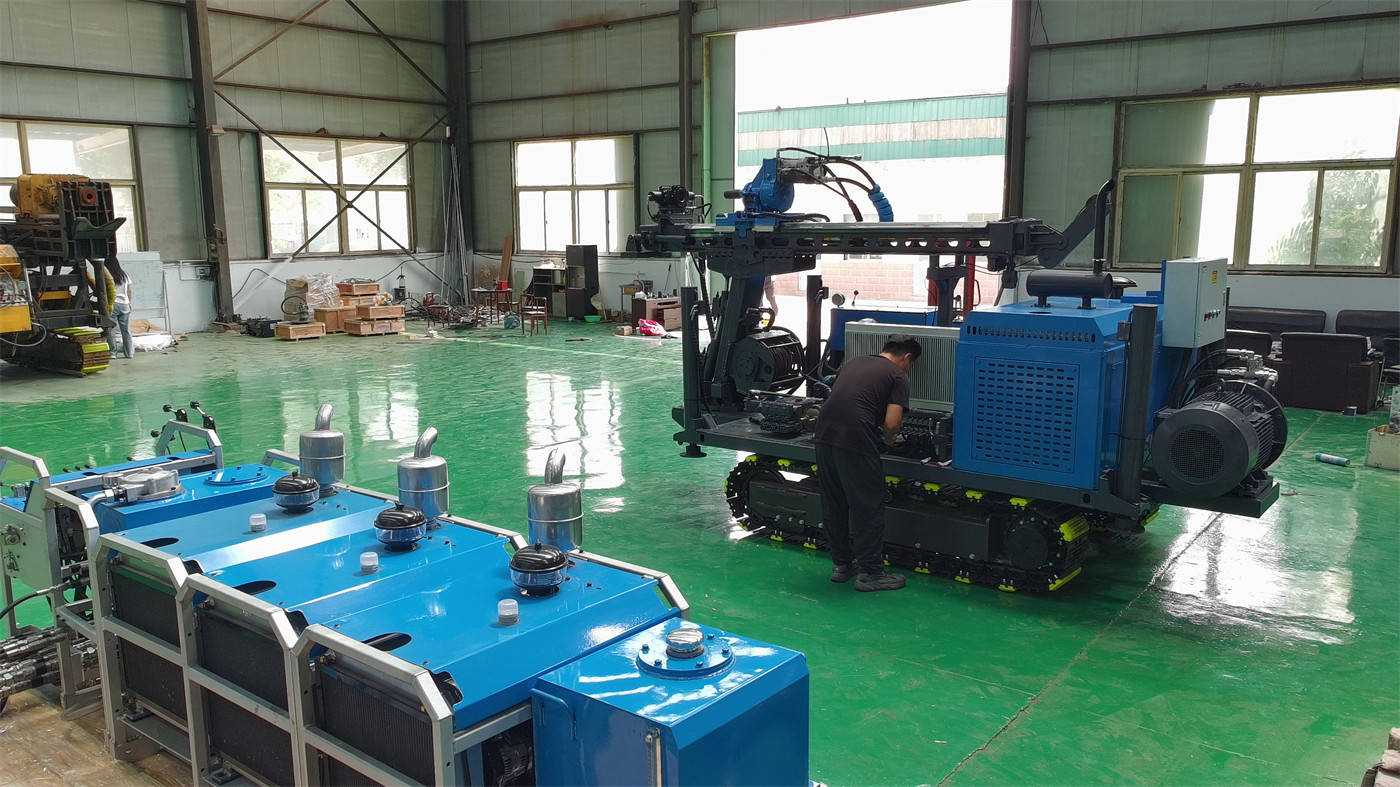
- With hole depth within 30 m, the drill pipe string length is limited, and rotation resistance mainly comes from the rock at the hole bottom and the hole wall, not from an extremely long drill string;
- With hole diameter varying between 76–280 mm, the larger the hole, the larger the contact area between the drill bit and the hole bottom, and the rotation resistance rises accordingly;
- With rock hardness in the f = 8–24 range, percussion and rotation need tighter coordination under hard-rock conditions; insufficient torque manifests as unstable rotation speed, drill bit jumping, or jamming.
From this, 3500 N·m is the rotation capability configured for this combination of hole depth and hole diameter. It serves continuous drilling of medium-shallow holes, not as margin reserved for deep holes or extremely large-diameter holes.
What supporting items torque depends on to be effective
Air supply and DTH hammer
Rock breakage in DTH drilling mainly relies on DTH hammer percussion. The reference air consumption in the data is approximately 8 m³/min; the original table marked it as 8 m²/min, which is interpreted as m³/min according to the common unit for compressed air flow, and the final value should be confirmed in formal technical documentation. When air volume is insufficient, percussion energy decreases, rotation resistance becomes relatively greater, and even sufficient torque cannot restore penetration. DTH hammer and drill bit specifications also need to be selected according to rock hardness, abrasiveness, and hole diameter; under hard-rock conditions, compressed air supply and DTH hammer lubrication must be ensured.
Feed mechanism and stroke
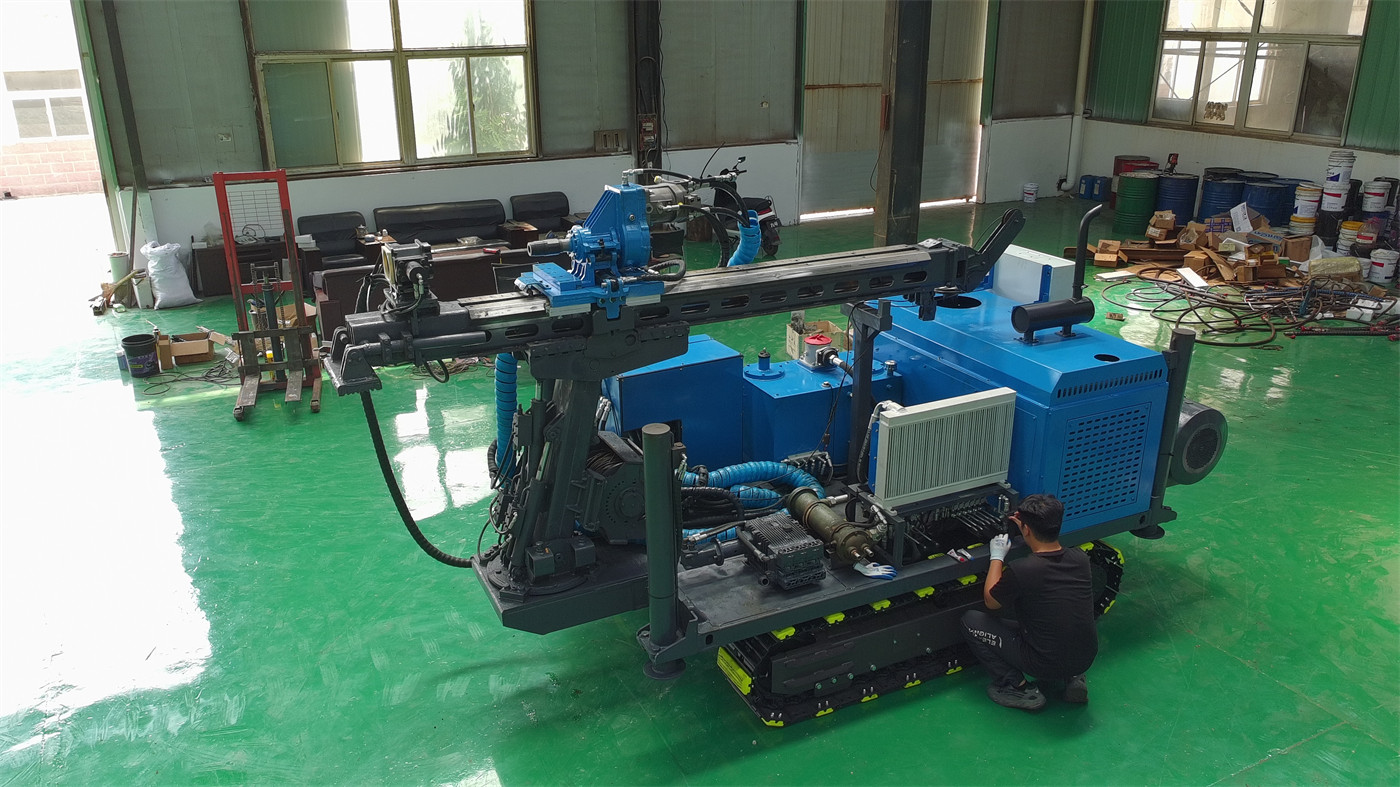
The rig has a slide frame stroke of 3.2 m, an effective stroke of 2.2 m, and a feed speed of 53 m/min. The data explicitly states that 53 m/min is the rapid movement speed of the feed mechanism, used for power head return, drill pipe handling, and non-drilling actions, and cannot be taken as the actual penetration rate in rock. Feed and rotation need to match: if feed is too fast and rotation cannot keep up, the drill bit is prone to stalling and jumping; if feed is insufficient, percussion energy cannot be effectively transmitted to the hole bottom.
Hole cleaning and cuttings removal
The data notes that if rotation resistance continues to increase, the amount of returned cuttings decreases, or the drill bit jumps noticeably, parameters should be adjusted and the hole cleaned in time. This indicates that the normal performance of the torque specification presupposes that rock cuttings in the hole can be continuously discharged; when cuttings removal is poor, rising torque reflects deteriorating working conditions, not the release of equipment capability.
Which hole orientations and site conditions affect actual torque performance
The rig has an 18–180° swing angle and can be used for vertical holes, inclined holes, and some lateral holes, and it has a tilt adjustment function. However, the original data does not give the specific numerical range of the tilt angle, and the final production configuration and technical confirmation documents should prevail. In inclined and lateral holes, the component of drill string self-weight acting on rotation and feed changes; the same torque encounters different actual resistance in inclined holes than in vertical holes, and judgments for vertical holes cannot be directly applied to inclined holes.
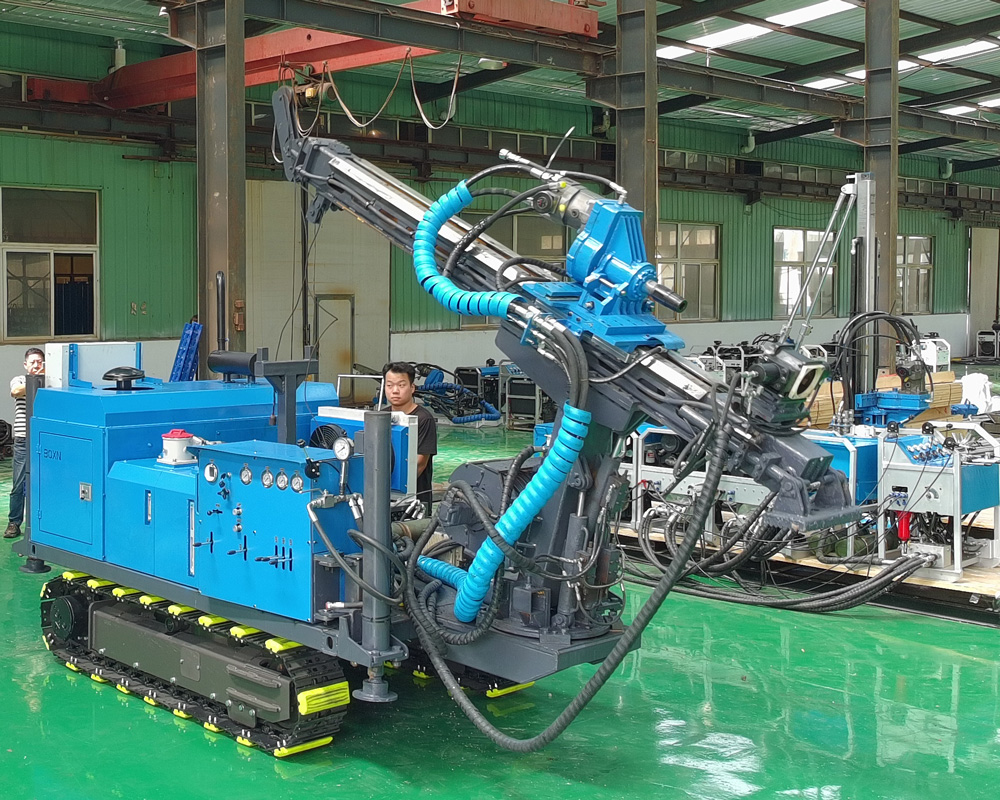
The overall dimensions are approximately 3200 × 1200 × 1850 mm, and the overall weight is approximately 2500 kg. It uses an engineering rubber track chassis with a travel speed of 5–10 km/h. The compact body and rubber tracks suit factory areas, sites within fencing, and generally uneven ground, but before entering the construction point, turning space, ground bearing capacity, underground pipelines, and surrounding structures must still be confirmed.
Several data statements that are easily misread
| Data item | Actual meaning | Cannot be inferred from it |
|---|---|---|
| 3500 N·m maximum rotary torque | Upper limit of the power head's ability to drive drill string rotation | Overall drilling efficiency, penetration rate at any hole diameter |
| Maximum drilling depth 30 m | Nominal depth upper limit for this class of engineering holes | Ability to drill 30 m in any formation |
| Feed speed 53 m/min | Rapid movement speed for non-drilling actions | Actual penetration rate in rock |
| Swing angle 18–180° | Attitude adjustment range | Complete tilt angle numerical range, direct operation on any slope surface |
These data come from product information and are used to explain the basis for selection; actual drilling efficiency is affected by rock hardness, hole diameter, DTH hammer specifications, air compressor capacity, and drill bit wear. The data does not provide efficiency conclusions, and this article does not make inferences either.
Several conditions to verify together before purchase
- Drilling purpose: slope anchor bolt holes, anchor cable holes, drainage holes, or equipment foundations, guardrail piles, and short pile pre-drilling; different purposes mean different combinations of hole depth and diameter;
- Formation data: rock type, hardness, integrity, and abrasiveness; weathered rock, soil-rock mixed layers, and fractured zones require separate consideration of hole stabilization and anti-jamming measures;
- Target hole depth and diameter: whether they fall within the 30 m and 76–280 mm ranges, and the effect of hole diameter changes on rotation resistance;
- Air supply conditions: whether air compressor capacity matches the DTH hammer; the unit issue of the reference air consumption of 8 m³/min needs to be confirmed in formal technical documentation;
- Site access and transport: whether site passages, ground bearing capacity, and loading/unloading conditions meet the overall dimensions and weight of the rig;
- Matching drilling tools: whether the interfaces and specifications of DTH hammers, drill bits, drill pipes, and casing tools correspond.
It should be noted that DTH drilling rigs for 30-meter-class engineering holes are different in purpose from deep water wells, core sampling, and reverse circulation sampling, and cannot be interchanged merely because the names are similar. If the project is a deep well of more than 200 m or requires continuous coring, it should be evaluated according to the corresponding equipment conditions instead of solving the problem by increasing torque on a DTH drilling rig.
Information to provide when requesting a quotation
Overall, rotary torque answers "whether the rotation stage can drive the drill string," and it must be judged together with hole depth, hole diameter, rock conditions, air supply, feed, and drilling tools. When requesting a quotation, the following can be provided: drilling purpose and designed hole depth and diameter, formation description and rock hardness, designed hole orientation (vertical or inclined), drilling method, on-site air supply and water/electricity conditions, access roads and site conditions, and planned DTH hammer and drill bit specifications. Items not given in the data, such as the precise tilt angle range and the final unit of air consumption, should be obtained from the supplier in formal technical confirmation documents before a decision is made.