

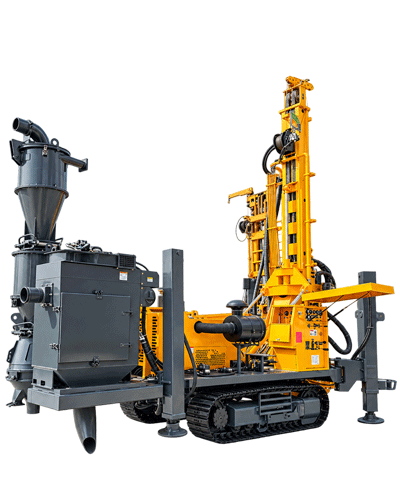
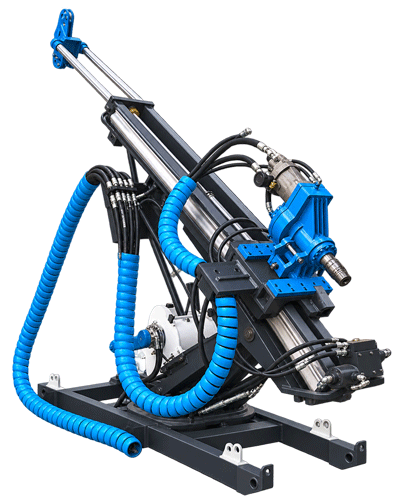
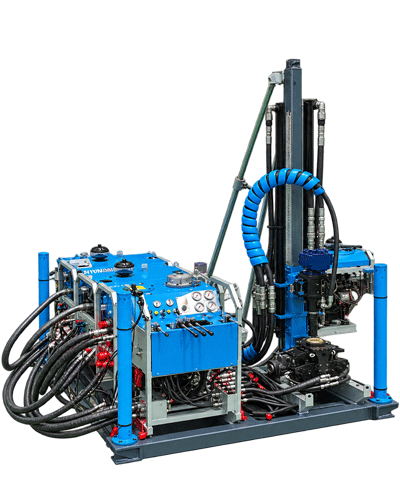
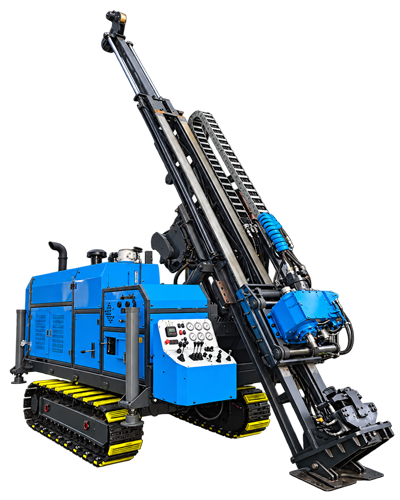
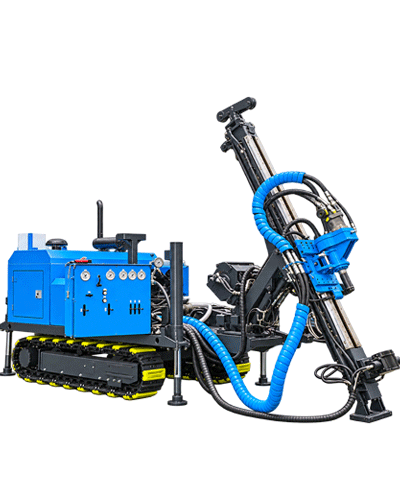
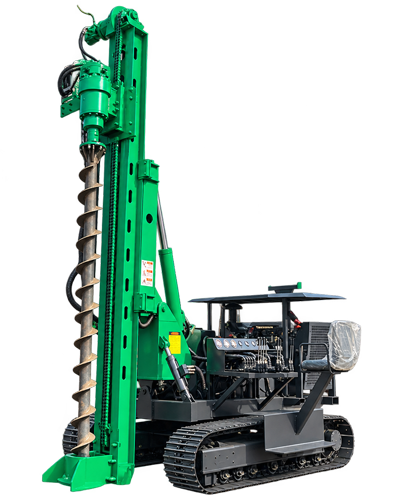
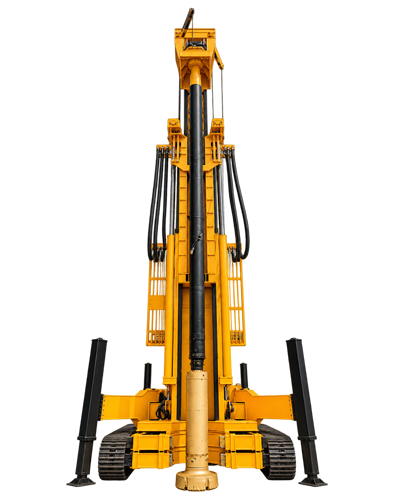
The term "1000 m core drill" is often treated as a figure that can be compared across machines. But the same equipment has a reference drilling depth of 1000 m under the NQ specification and 500 m under the HQ specification, and both figures appear in the publicly available materials for the CR1000I on this site. The difference lies not in the machine itself but in the coring specification—the larger the hole diameter, the heavier the drill string and the larger the annular clearance, so the depth that the same set of pull-up and rotation capabilities can support becomes shallower. Therefore, when asking "Where is the mid-deep hole capability boundary of a 1000 m core drill?" the first question is not how deep it can drill, but at what hole diameter it is drilling.
First, the core answer: 1000 m is the reference value under the N specification
The drilling capability given in the CR1000I materials has three tiers: reference drilling depth of 1200 m for the B specification, 1000 m for the N specification, and 500 m for the H specification. These three values are not three optional configurations, but rather the reference depths for the same machine equipped with different coring specifications.
Therefore, the designation "1000 m core drill" corresponds to the middle tier: the N specification. If the project uses the HQ coring specification, the reference depth of the same machine drops to 500 m; if BQ is used, the reference depth can be pushed toward 1200 m. Before procurement, first determine which specification the project will use for coring, and then discuss whether the depth matches. Reversing the order easily leads to incorrect conclusions.
Why pull-up force, torque, and winch appear here at the same time
Drilling depth is not determined by any single component alone. The three related values of the CR1000I are: maximum torque of the power head 1200 N·m, maximum rotation speed 1350 rpm; feed force 63 kN, pull-up force 185 kN; the winch uses 6 mm wire rope, rope capacity 1000 m, lifting speed 98 m/min.
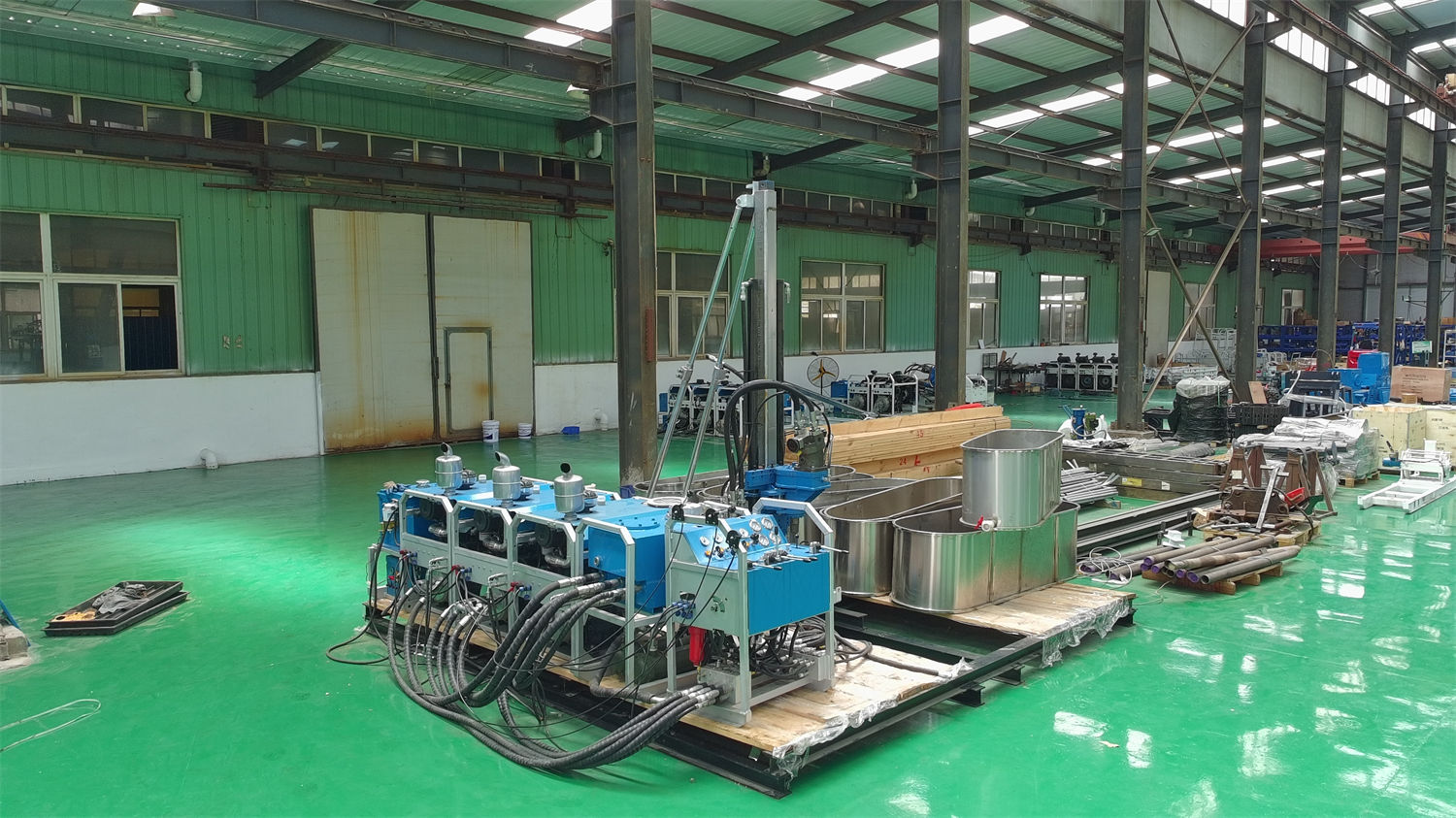
As hole depth increases, the self-weight of the drill string, borehole wall friction, and in-hole resistance all rise simultaneously. Pull-up force corresponds to the capability reserve for tripping in and out and handling in-hole resistance; torque corresponds to how much margin the power head still has to transmit torque when rotation resistance changes. Both items provide descriptions of margin. The materials do not give drilling efficiency or actual achievable depth under specific formations and specific drill string assemblies, so 185 kN cannot be directly converted into a certain depth.
The winch rope capacity of 1000 m is numerically consistent with the N specification reference drilling depth of 1000 m. This correspondence is a direct constraint of the wireline coring process: the wireline winch must be able to hold the wire rope for the corresponding hole depth in order to reduce the number of full-string trips during the mid-deep hole stage by using wireline coring.
What does a 45°–90° drilling angle change?
The CR1000I supports a drilling angle of 45°–90°. The value of inclined holes lies in intersecting inclined orebodies, fault zones, or vein bodies at a more reasonable angle, rather than simply increasing hole depth. It should be noted that the materials give the drilling angle range but do not give corresponding reference drilling depths, pull-up forces, or torque values separately by angle. When the hole direction clearly deviates from vertical, the stress conditions in the hole change. Whether the depth capability should still be understood according to the 1000 m tier is not explained in the materials, and this is a matter that should be confirmed with the manufacturer.
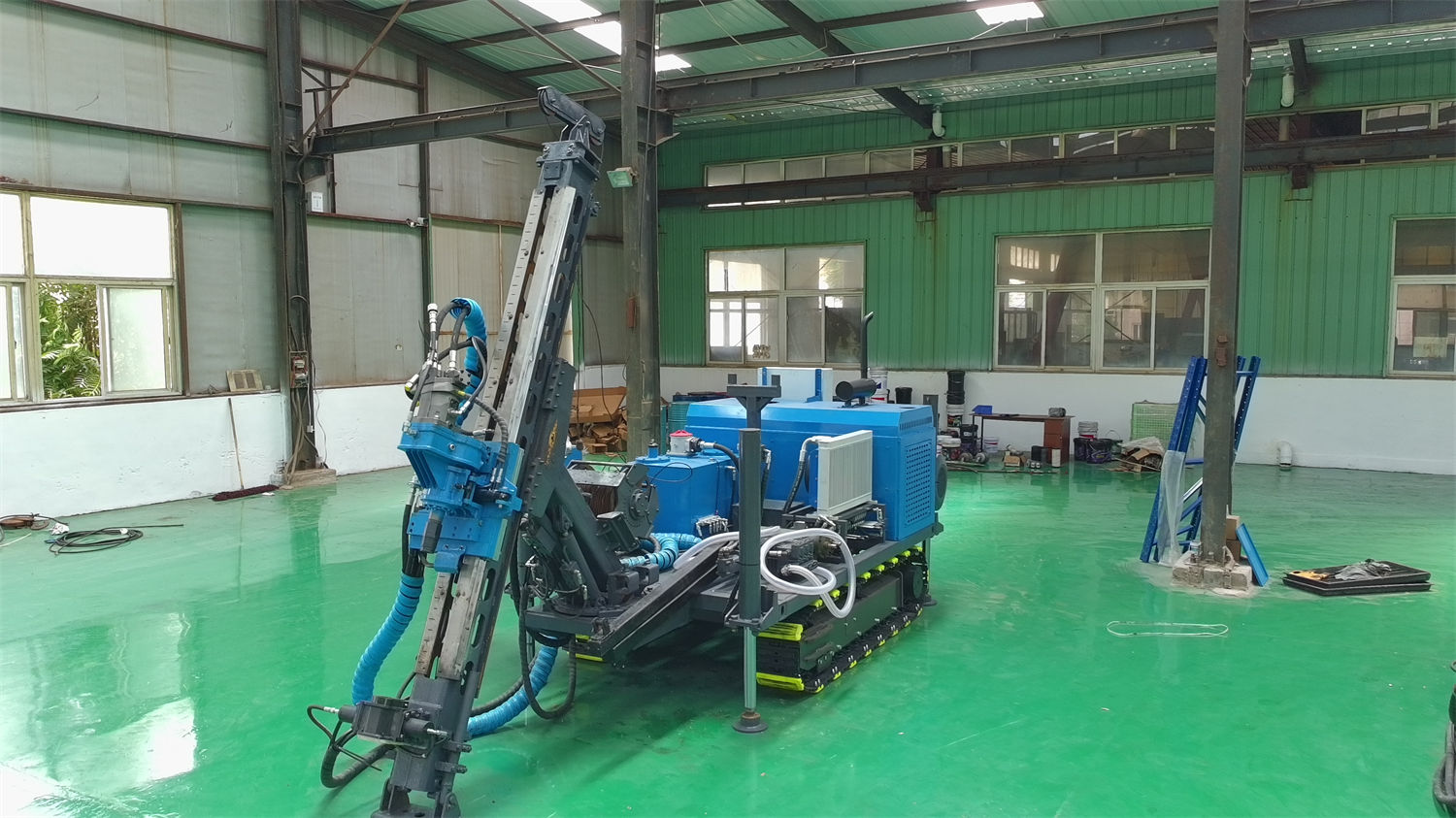
Conditions that must also hold simultaneously during the mid-deep hole stage
Treating 1000 m as a context-neutral figure easily overlooks several configurations that act simultaneously:
- The clamp has a through-hole diameter of 127 mm and is suitable for drill rods NQ, HQ, PQ, NTW, and HTW, using hydraulic clamping plus wooden-horse wedge self-weight anti-drop;
- The mast feed stroke is 3.3 m, handling drill rod lengths of 1.5 / 2 / 3 m, with hydraulic lateral displacement of the power head;
- The mud system has a flow rate of 150 L/min and pressure of 7 MPa, used for bit cooling, carrying rock cuttings, and stabilizing the borehole wall;
- The main pump has a flow rate of 250 L/min and pressure of 25 MPa, the auxiliary pump 80 L/min and pressure of 17 MPa, with air cooling plus water cooling;
- The engine is a Cummins QSB4.5, displacement 4.5 L, rated power 119 kW, rated speed 2200 rpm.
These parameters each constrain different links: the clamp through-hole and drill string system determine what specifications can be used, the mast stroke and drill rod length determine the rod-adding rhythm, and the mud system determines circulation conditions in complex formations. They are not the same question as "whether it can reach 1000 m," but in continuous mid-deep hole operations they will first become practical constraints.
Comparison of specifications and supporting conditions
| Item | Material value |
|---|---|
| B specification reference drilling depth | 1200 m |
| N specification reference drilling depth | 1000 m |
| H specification reference drilling depth | 500 m |
| Drilling angle | 45°–90° |
| Maximum torque / maximum rotation speed | 1200 N·m / 1350 rpm |
| Feed force / pull-up force | 63 kN / 185 kN |
| Winch rope capacity / wire rope diameter | 1000 m / 6 mm |
| Clamp through-hole diameter | 127 mm |
| Suitable drill rods | NQ, HQ, PQ, NTW, HTW |
What the materials do not provide
The following content does not appear in the publicly available materials for the CR1000I on this site, cannot be inferred from them, and falls within the scope that must be separately confirmed before project advancement:
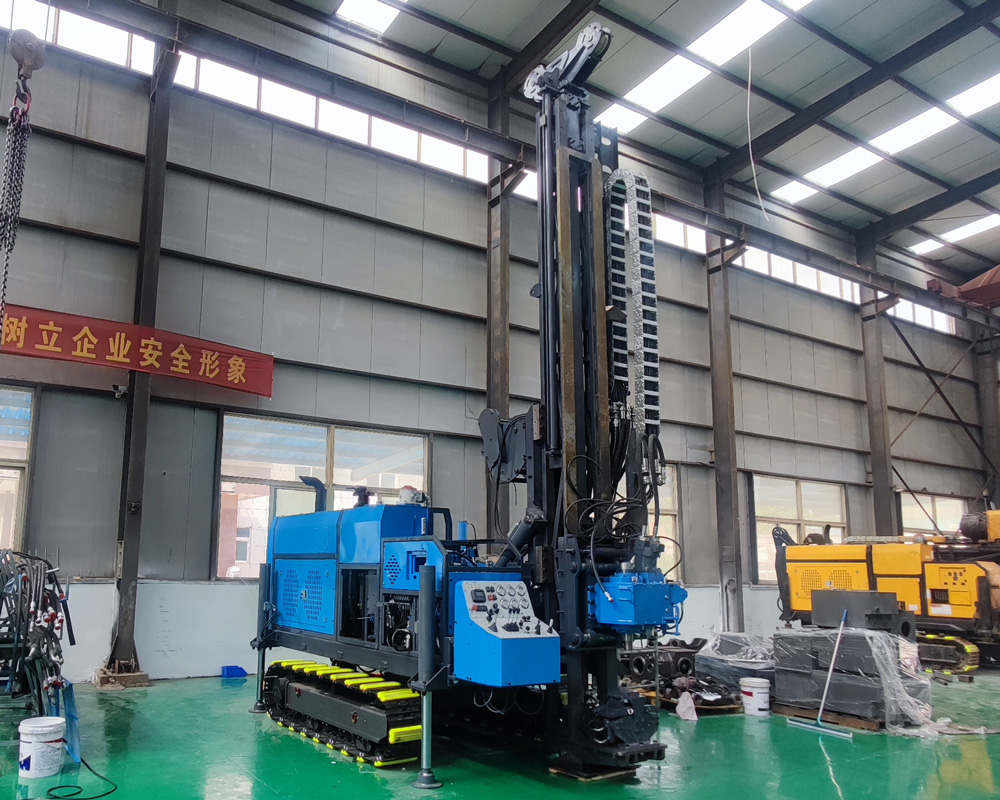
- Reference drilling depths corresponding to different hole directions (such as 45° and 90°);
- Actual achievable depth under different formation hardness, fragmentation degree, and integrity degree;
- Drilling efficiency and core recovery results under specific drill string assemblies (bit type, core barrel specification);
- Replacement cycles or life data for components such as wire rope, clamp, power head, and hydraulic filter.
The materials already indicate: before equipment enters the site, road width, slope, site bearing capacity, and drilling platform dimensions should be verified; before construction, drill rods, core barrels, bits, and mud system configuration should be confirmed in combination with target hole depth, hole diameter, drilling angle, and formation conditions; during deep hole operations, the condition of wire rope, clamp, power head, hydraulic filter, and high-pressure lines must be continuously checked. Due to differences in geological conditions, in-hole tools, drilling angle, and operating methods, actual drilling efficiency, drilling depth, and core recovery results should be based on on-site working conditions.
Reading 1000 m as a reference value with clear premises is closer to the materials themselves than reading it as the upper limit of equipment capability.