












Modular core drills are often treated as equipment that can go in even without a road. The site's description of the CR600P is that it targets mountainous areas, forest areas, and roadless mining zones by splitting the power, hydraulic, control, mud, and drilling mechanisms into multiple functional units that can be transported independently. This describes the transport method, not a site access checklist that can be compared item by item—the materials do not provide values such as ramp angle, access road width, or curve radius. So what a site looks like can only be broken down by verifiable conditions: whether things can be split into small pieces, how heavy each piece is, whether they can be carried to the hole collar, and whether there is space to assemble them once they arrive.
1. The first layer of site constraints is how divisible the transport route is
The site requirements of an integrated crawler drill center on whether the entire machine together with its undercarriage can be driven in: it needs continuous passage width, turning space, and load-bearing capacity. The modular approach changes this requirement into whether each piece can get through. The two are not the same type of constraint.
The CR600P's reference module weights are given as public parameters: power unit 180–260 kg, control unit 125 kg, hydraulic oil unit (including oil) 140 kg, mud unit 86 kg, and total weight 1200 kg. The materials do not distinguish the module weights of the drilling mechanism and the mast; this part is an item that needs to be verified separately on site.
These figures indicate the order of magnitude of the transport units: the largest item is the power unit. Matching this set of values against route conditions reveals a type of site that modular equipment handles more easily—the passage route can be divided into sections, and the width or turning conditions are insufficient for the complete machine, but the modules can be delivered to the vicinity of the hole collar in batches. Conversely, if the route itself allows large crawler equipment to pass smoothly, then the modular structure has no corresponding scenario for its transport advantage.
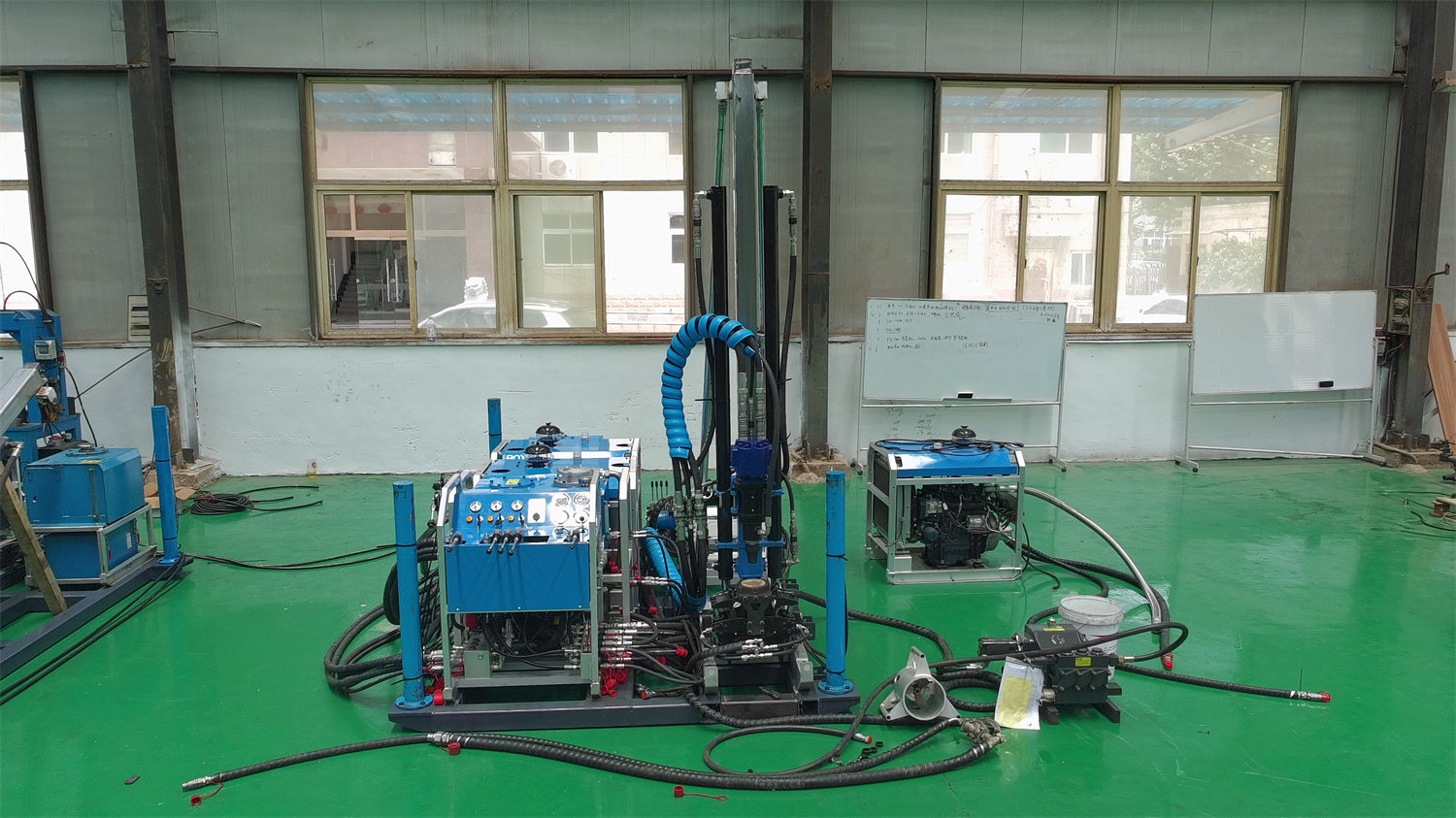
2. Module weight and handling method are the practical starting point for site assessment
Individual piece weight determines how handling is organized, and the handling method determines what conditions the site needs. A 180–260 kg power unit and an 86 kg mud unit present different levels of difficulty on site: the former usually requires auxiliary means for transfer, while the latter leaves more room for manual organization. The materials do not state the specific dimensions and handling interfaces of each module, so it is impossible to judge whether a specific route is feasible based on them.
Before purchase or entry, the items that need to be verified with the manufacturer include: whether the weight list for each module is complete, whether the modules have lifting points or carrying handles, whether disassembly and assembly require special tools, and the requirements that the assembly sequence places on site layout. This information is more useful for on-site decisions than a conclusion such as whether it can be used in mountainous areas.
3. After reaching the hole collar, a usable temporary platform is still required
What the modular structure lowers is the threshold for entry transport, not the elimination of setup requirements. The materials clearly state that before construction, an assessment should still be made of hillside stability, rockfall, rainy-season roads, manual carrying routes, and the load-bearing capacity of the temporary platform. This shows that equipment arriving does not mean drilling can begin.
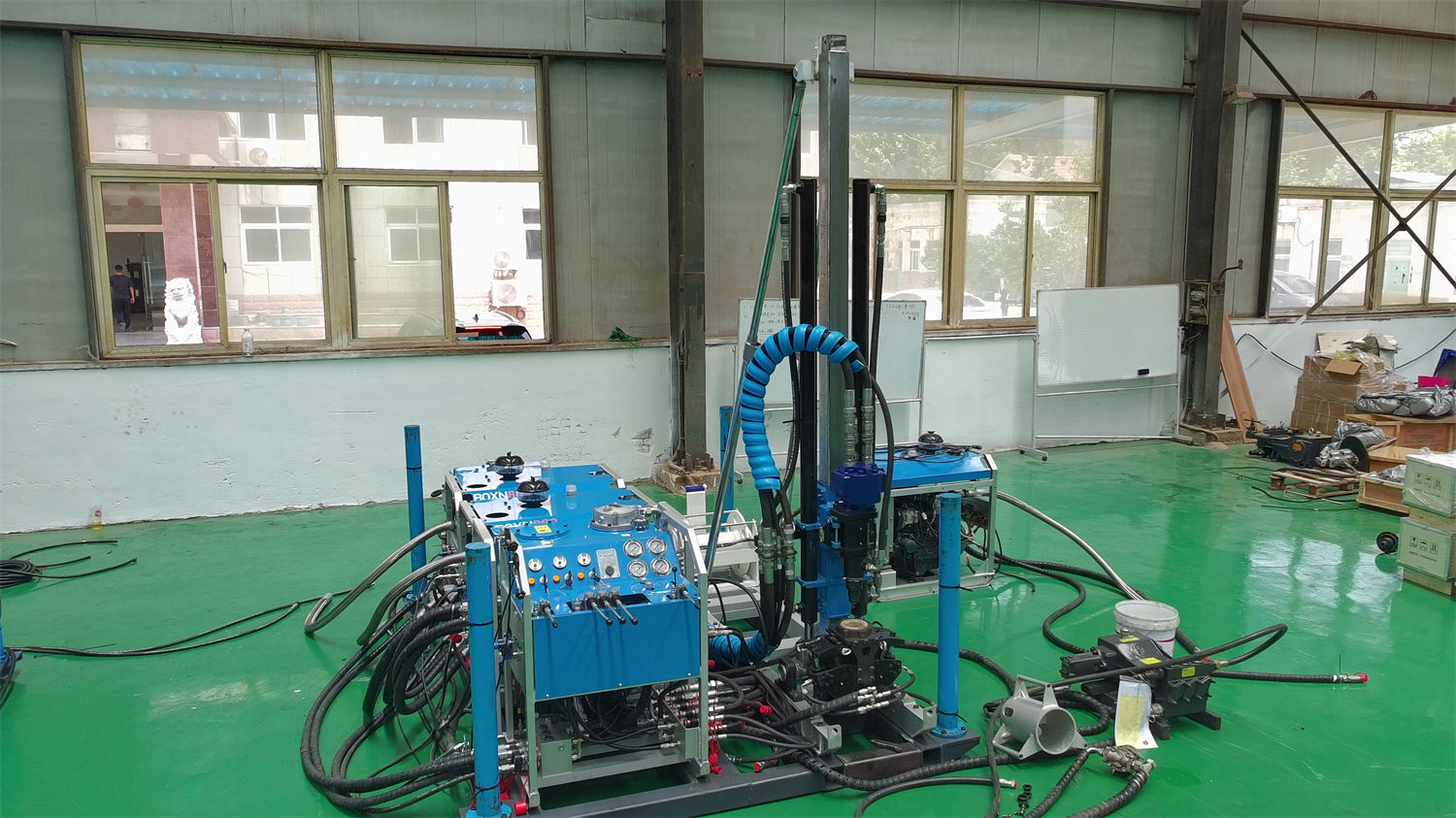
The conditions that generally need to be met near the hole collar include: working space for placing and connecting modules, the height required for raising and lowering the mast, the base load-bearing conditions for angled-hole construction, and the placement position of the mud unit. The CR600P supports drilling from 45° to 90°. In the angled-hole state, the force direction on the mast and base differs from that of a vertical hole. The materials require ensuring the stability of the mast and base before angled-hole construction, but do not give the allowable range of slope angle.
4. Factors affecting assembly time are related to the site
The materials mention that assembly can be completed in as little as about 30 minutes, while also stating that the actual time required will be affected by transport distance, site conditions, operator proficiency, and supporting equipment. Among these factors, site conditions and transport distance are directly related to the site forms discussed in this article: the final carrying distance of the modules to the hole collar, whether the placement position is convenient, and whether the connectors are easy to access will all change the actual disassembly and assembly time. Therefore, the figure of 30 minutes should be taken as a reference when the conditions are met, not as a promise for all sites.
5. Parameters that can be related to the site
| Item | Parameter value | Relation to site conditions |
|---|---|---|
| Power unit | 180–260 kg | The largest single piece in transport and transfer organization |
| Control unit | 125 kg | Requirements for carrying and connection space |
| Hydraulic oil unit (including oil) | 140 kg | Transported with oil; placement must consider leakage and oil contamination management |
| Mud unit | 86 kg | Related to mud circulation layout at the hole collar |
| Total weight | 1200 kg | Sum of modules; does not represent a single transport load |
| Drilling angle | 45°–90° | Angled-hole setup places different requirements on the base and platform |
The parameters in the table come from CR600P public materials. The materials do not provide the overall machine dimensions, mast height, or transport packaging dimensions, so they cannot be used to infer an access conclusion for a specific site.
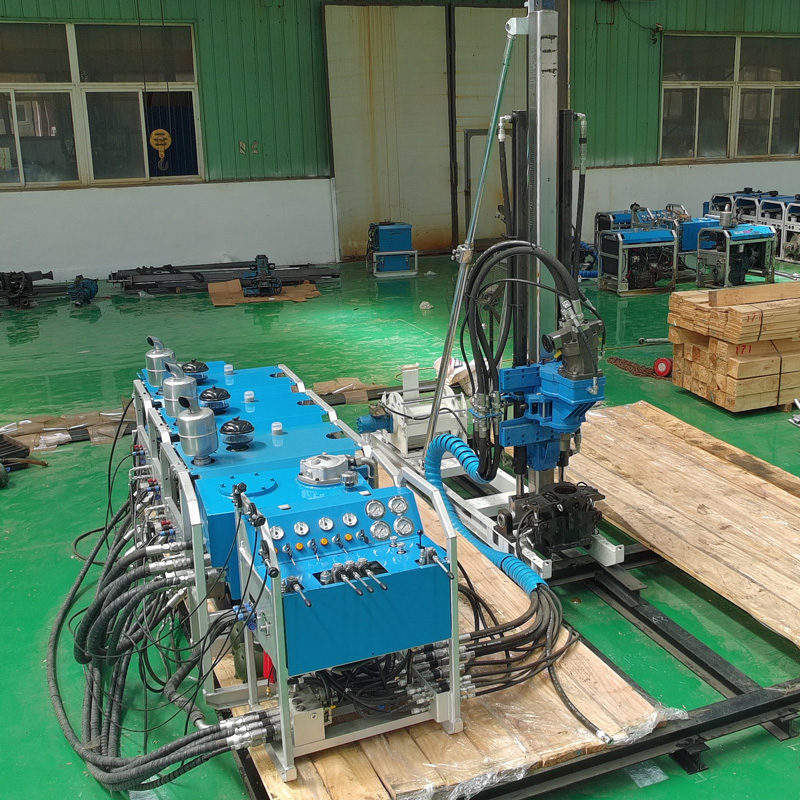
6. Sites that generally fall into the can-access category, and those that must be confirmed separately
Based on the available materials, the distinction can be made as follows:
- Mountainous or forest hole positions where the passage route can be divided into sections, the complete machine does not need to pass continuously, and modules can be delivered to the vicinity of the hole collar in batches fall within the scenarios considered in the design of the modular structure.
- Projects with scattered hole positions that require frequent hole changes and reduced road construction correspond to the modular disassembly, assembly, and transport method in terms of work organization.
- Sites that require passage on steeper slopes, crossing gullies, or relying on lifting equipment for transfer have no corresponding parameters in the materials and must be verified item by item.
- Sites where a usable temporary platform cannot be formed near the hole collar, or where hillside stability cannot be assessed, are outside the scope that equipment parameters can answer.
7. Items that need to be verified with the manufacturer and are not given in the materials
- The dimensions, packaging method, and recommended handling interfaces of each module;
- The requirements of disassembly and assembly operations for minimum site area and ground slope;
- The specific support or fixing requirements for the mast and base in the angled-hole state;
- The allowable layout distances between the mud unit, power unit, and hole collar;
- The actual range of assembly time under different handling organization methods.
These questions have no publicly available figures to check and are items that should be confirmed one by one before entry. Whether the equipment is suitable for a specific hole position should ultimately be based on the on-site geological conditions, the actual transport route, and the manufacturer's confirmation.