












“Modular and portable” is often treated as a pass into mountainous areas. In actual operations, it first solves the problem of oversized transport units: whether the equipment can be broken down into modules that can be carried by hand or with small tools, whether it can be reassembled at the hole, and whether it can start drilling stably after assembly. If any of these three links fails, portability remains only on the brochure.
The following sections follow the sequence of “access—assembly—drilling” to explain which site constraints the modular structure addresses and which conditions still need to be verified item by item.
When there is no road to the hole, the transport unit is the first bottleneck
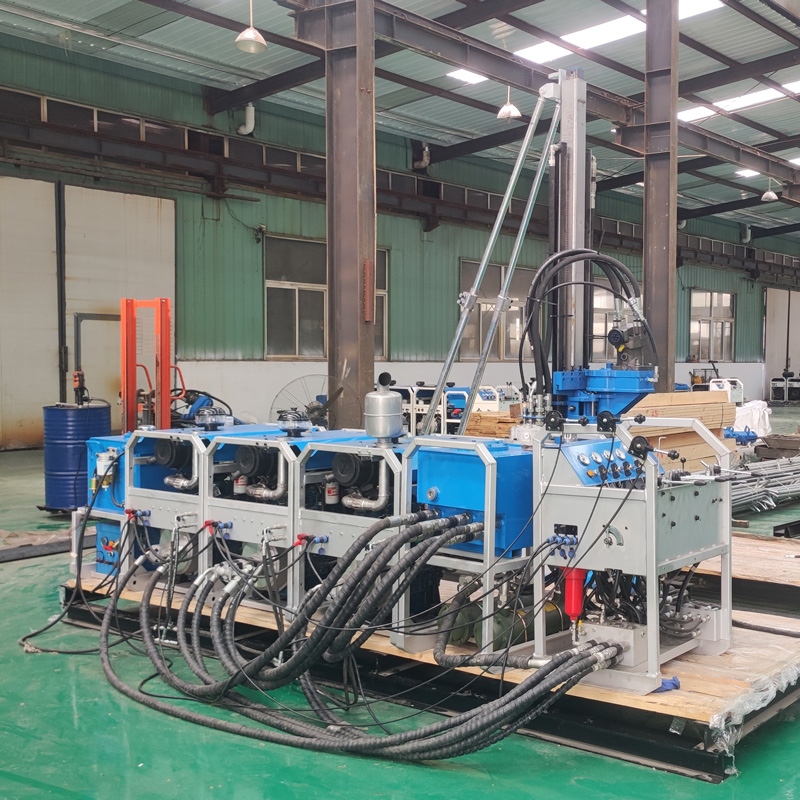
Exploration holes in mountainous, forested, and roadless mining areas are often located on slopes, in gullies, in woodlands, and on temporary platforms, with no complete construction roads. Integrated machines rely on vehicles to approach the collar directly, while modular structures split power, hydraulics, operation, mud, and drilling mechanisms into multiple functional units that can be transported independently, allowing them to be moved to the vicinity of the collar in batches. The value here lies in reducing road construction and dependence on large trucks, not in improving drilling capacity.
The reference module weights provided in the data can serve as a starting point for transport planning:
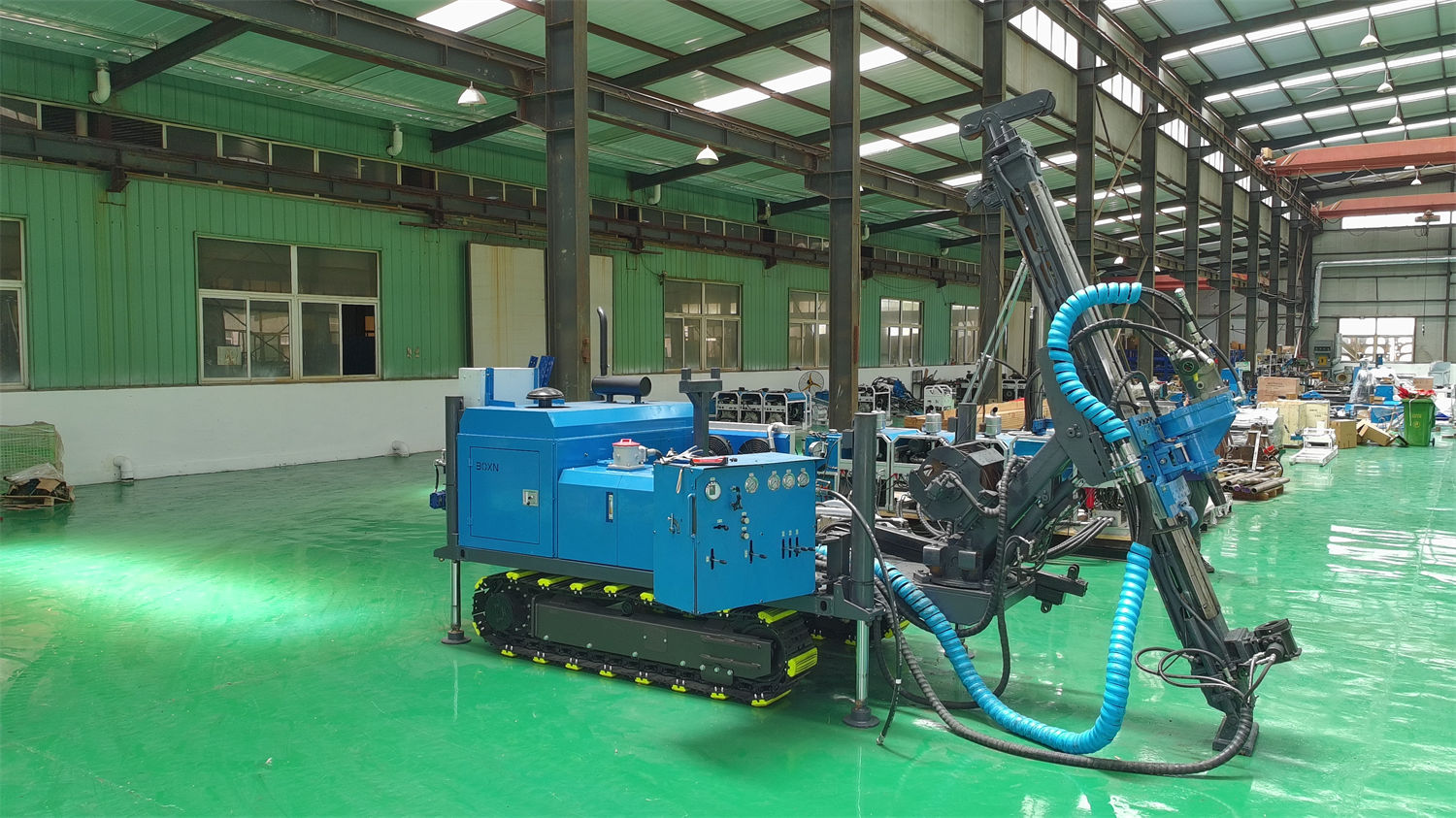
| Module | Reference Weight |
|---|---|
| Power unit | 180–260 kg |
| Control unit | 125 kg |
| Hydraulic oil unit (including oil) | 140 kg |
| Mud unit | 86 kg |
| Total machine weight | 1200 kg |
These figures indicate the order of magnitude for single-piece handling, not that handling is necessarily feasible. When slopes are too steep, roads are slippery after rain, forest passages are narrow, or temporary walkways need to be built, the configuration of manpower, cableways, or small transport tools must still be calculated based on the actual route.
Being able to disassemble is only the first step; being able to install is what counts as access
After modular equipment reaches the hole, it must be reassembled and installed. The data states that assembly can be completed in about 30 minutes at the fastest, but explicitly notes that actual time is affected by transport distance, site conditions, operator proficiency, and supporting equipment. If this auxiliary work can be shortened when moving between holes, exploration lines with scattered holes can be organized more comfortably.
Inspection items related to assembly include: whether quick-change connectors, hydraulic lines, and structural connections are properly in place; whether the mast and base are stable before inclined hole drilling. Short assembly time does not mean installation quality can skip verification.
The modules are lighter, but what supports drilling capacity?
The modular structure does not sacrifice coring capacity. The drilling capacity of the equipment is given as reference values according to wireline coring specifications: BQ reference depth 760 m, NQ reference depth 600 m, HQ reference depth 280 m. These are reference depths; the actual achievable hole depth is still affected by formation, drilling angle, downhole tools, and operating methods, and should not be understood as being able to drill to that depth in any formation.
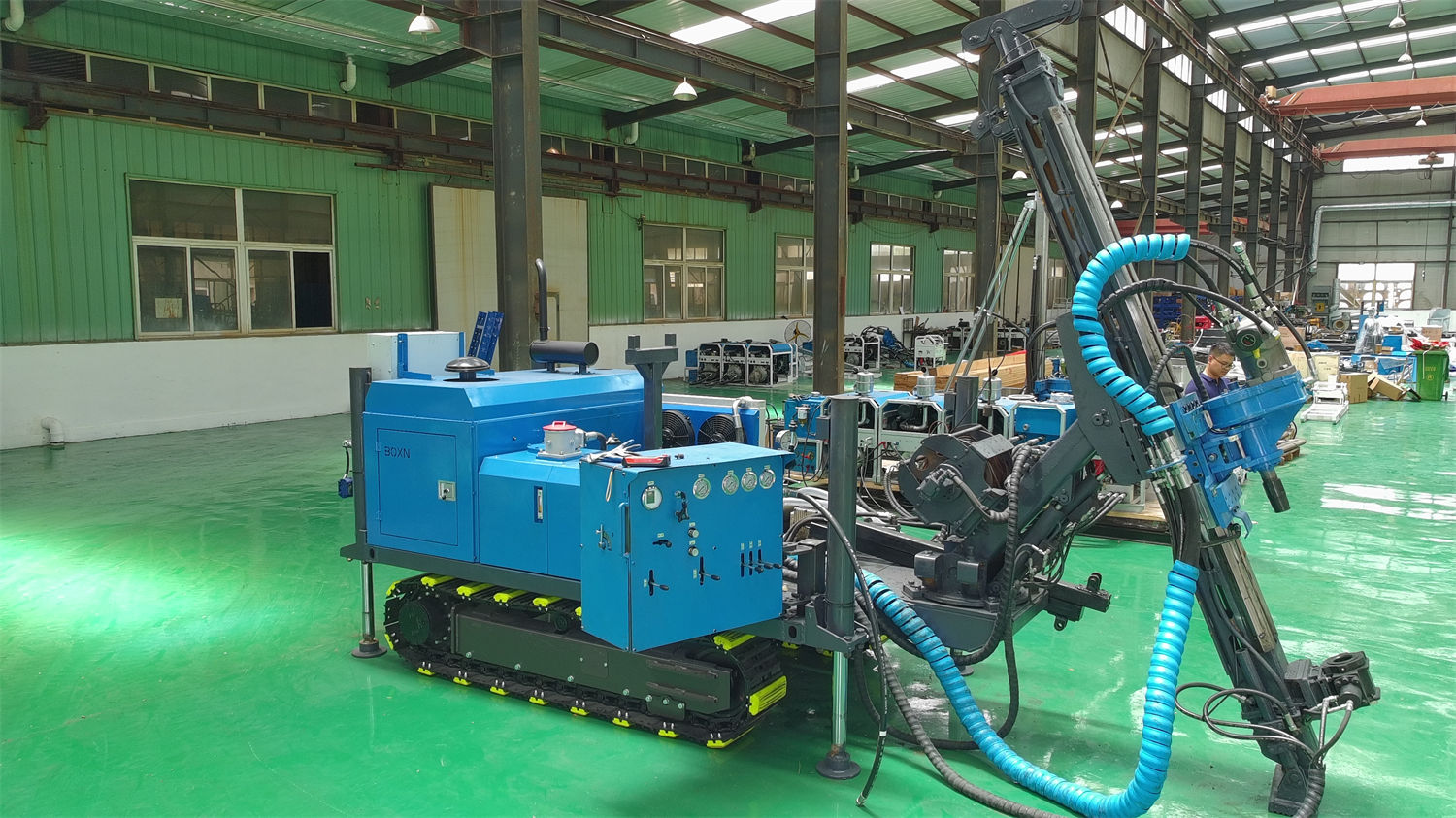
The main configurations supporting coring operations include: power head maximum speed 1200 rpm, maximum torque 780 N·m, feed force 55 kN, pull force 100 kN; winch with 6 mm wire rope, rope capacity 800 m, lifting speed 116 m/min, used for wireline coring; clamp maximum clamping force 120 kN, through-hole capacity 54–127 mm, hydraulic clamping with pressure-loss protection design. Drilling angle 45°–90°, allowing selection of inclined or near-vertical holes according to orebody attitude.
The mud unit is a plunger high-pressure pump with a flow rate of 90 L/min and pressure of 3 MPa, responsible for cooling, cuttings transport, and borehole wall protection. In strongly weathered, fractured, or loose hole sections, mud performance adjustment and casing measures are still needed to maintain borehole stability; this part cannot be replaced by the equipment itself.
Power form depends on on-site power supply conditions
The equipment can be powered by diesel or electric: diesel engine power requirement ≥66 kW; the electric option is a 22 kW×2 motor combination. Remote field projects rely more on independent power, while mining areas with stable power can weigh power supply conditions, maintenance methods, and energy costs. This only explains the existence of the two forms and does not constitute a preferential recommendation for any project.
Beyond “can enter any mountain,” these items also need verification
Modular portability addresses transport units and assembly organization, and does not automatically cover the following conditions:
- Slope stability, rockfall risk, and road conditions during the rainy season;
- Length and gradient of manual carrying routes and whether auxiliary means such as cableways are needed;
- Load-bearing capacity of temporary platforms and base stability during inclined hole drilling;
- Actual weight of each module and transport batch arrangements;
- Degree of hole dispersion and organization of transfer between holes.
When information on these matters is lacking, they can only be treated as conditions to be confirmed and cannot be inferred from the word “portable.”
Information to prepare before requesting a quote
Regarding hole conditions, it is recommended to prepare: drilling purpose and coring specification (BQ, NQ, HQ), target hole depth, drilling angle, expected formation and borehole stability, number and dispersion of holes, length and gradient of access routes, whether manual or cableway transport is needed, power source and power supply conditions, mud materials and casing plan. The more specific the information, the better it is to judge whether the modular structure truly reduces access difficulty on the project.
Understanding modular portability as “smaller transport units” is closer to reality than understanding it as “can go anywhere.” What it changes is the way equipment enters the hole; rock, borehole wall, platform, and transport routes still need to be addressed item by item on site.