












Continuous irrigation wells and single dispersed water wells have different construction rhythms. In the same area, multiple wells are often drilled consecutively in layout order, and auxiliary actions such as connecting and disconnecting drill rods, moving the rig and aligning the hole recur. Accumulated working hours directly affect how much can be completed in a day. The long-stroke water well drill is proposed for this kind of continuous operation: a longer single advance combined with longer drill rods reduces the number of rod connections. However, to implement this on site, several conditions must be confirmed before drilling starts; otherwise, the convenience of the long stroke will be offset by site or transport problems.
The following uses a 300 m-class long-stroke crawler water well drill as an example to explain the site conditions that need to be checked item by item before continuous irrigation well construction. The parameters in this article come from verified product information; whether a specific project applies still depends on local hydrogeological conditions and the actual configuration.
First confirm one thing: which part of the working time the long stroke addresses
The main value of the long stroke is not in drilling itself but in the auxiliary step of drill rod connection. This model uses a 6.6 m single advance length, can use drill rods up to 6 m long, offers drill rod diameters of 76, 89 and 102 mm, and is also compatible with 1.5 m, 2 m and 3 m drill rods. When using 6 m drill rods to complete a 300 m-class borehole, the number of rod connections is significantly lower than when connecting short rods one by one.
This means it is suitable for continuous irrigation well projects that require sustained drilling throughout the day and have tight hole-to-hole schedules. Conversely, if well depths are generally shallow, transfer distances between well positions are long, or the site simply cannot provide operating space for 6 m drill rods, the advantage of the long stroke cannot be realized, and the choice should be reconsidered before selection.
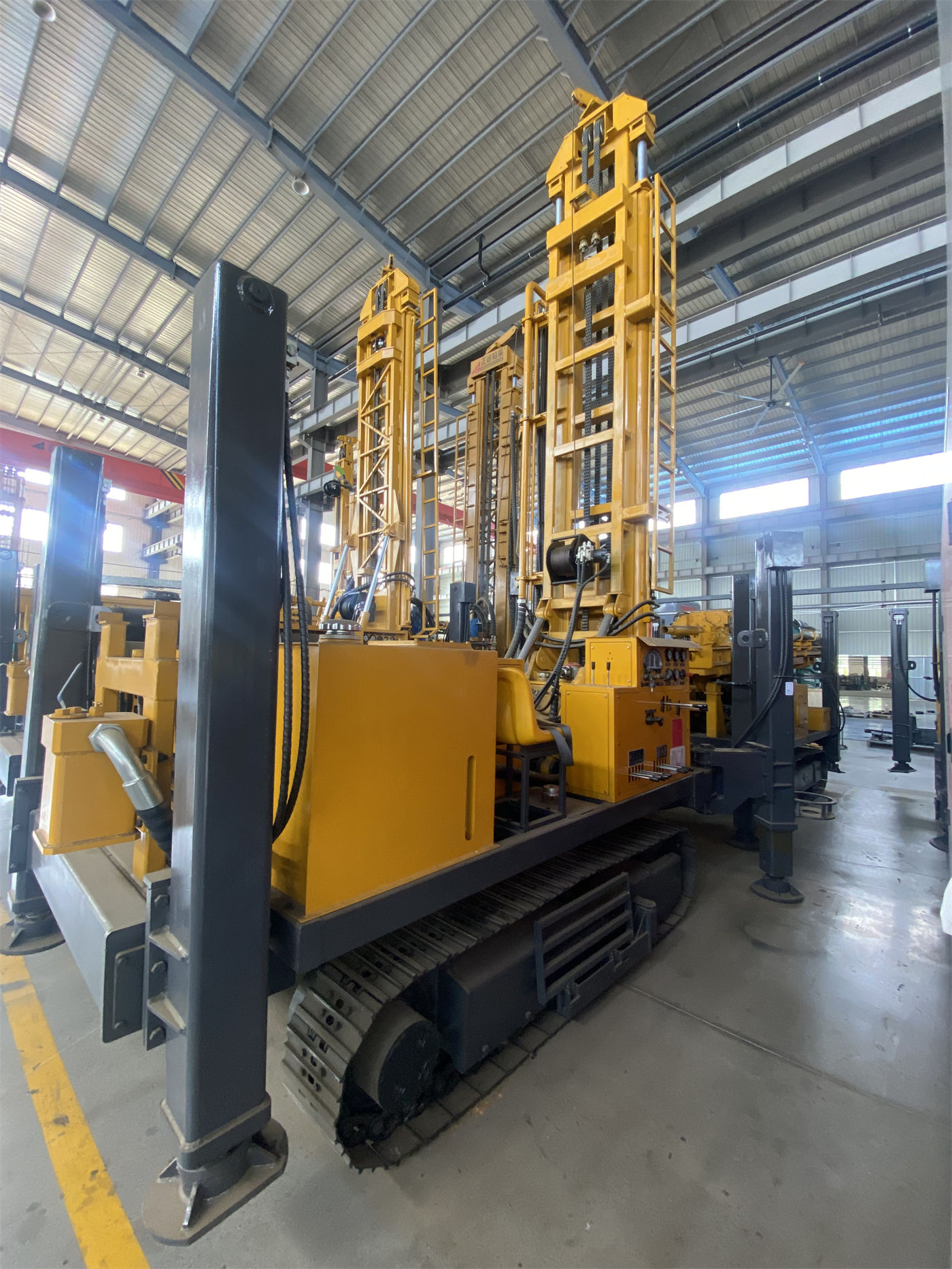
Site conditions to check in order before drilling
Site clearance and mast extension space
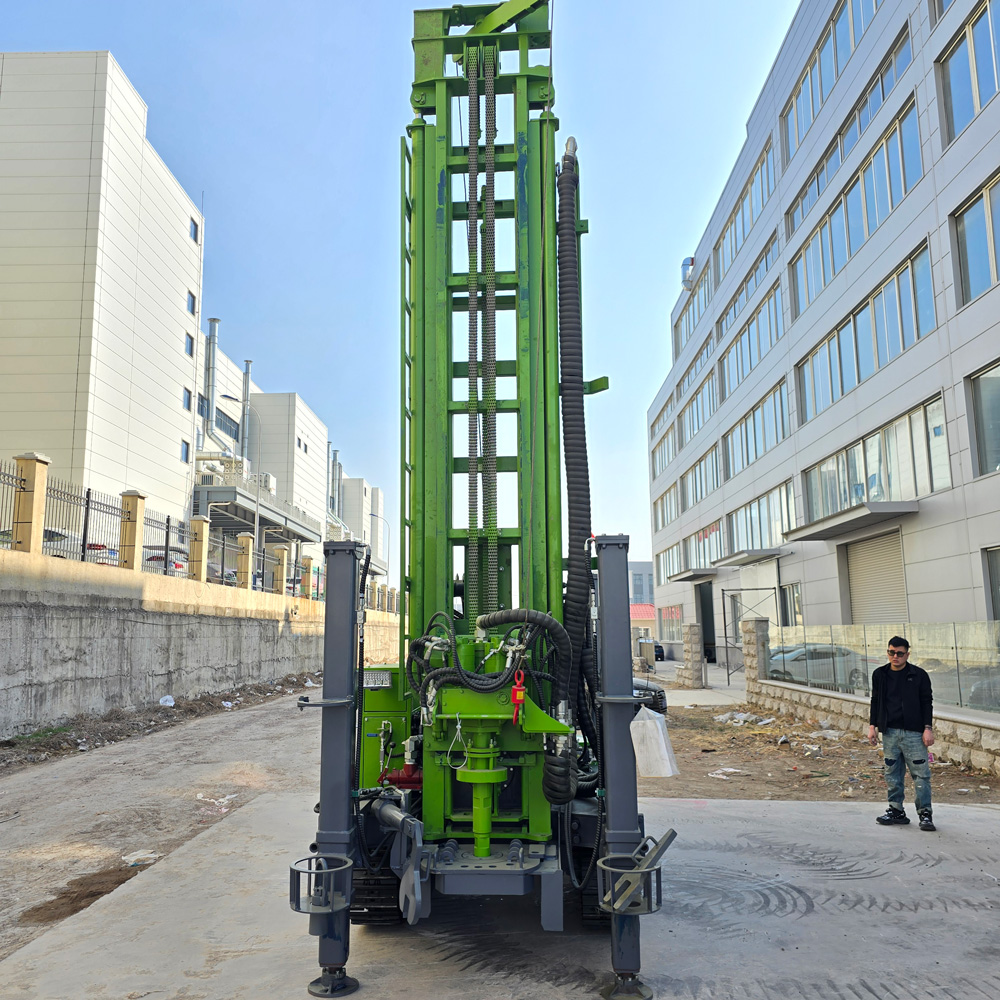
The 6.6 m long-stroke mast requires sufficient extension space before and after drilling starts. During site layout, the mast raising and lowering range, drill rod placement area and personnel passage area should all be considered together, and there must be no power lines, tree branches or other obstructions above. During continuous construction, this must be reconfirmed each time the rig moves to a new well position; experience from the previous well layout cannot simply be reused.
Ground bearing capacity and outrigger loading
This model has a reference overall weight of about 8 tons, uses a crawler chassis, has a travel speed of about 2.5 km/h and a reference maximum gradeability of 30 degrees. On soft ground such as farmland, orchards and nurseries, the crawler ground pressure and the foundation beneath the outriggers must be assessed in advance, with matting provided if necessary. After the long-stroke mast is extended, the center of gravity differs from that of a short mast, and outrigger loading should be evaluated according to on-site ground conditions.
Drill rod handling and lifting space
A single 6 m drill rod is relatively long, requiring passage and turning room during handling and connection. This model is equipped with an auxiliary winch with 2 tons of lifting capacity, which can be used to handle DTH hammers, drill rods and casing tools, but the load must be controlled during lifting and personnel must stay clear of suspended areas. If roads between continuous well positions are narrow, the drill rod transfer method must also be decided in advance.
Transport vehicles and transfer routes
This model has overall dimensions of about 5900×1850×2200 mm and an overall weight of about 8 tons. Before transport, confirm the vehicle length, securing points for loading, and the turning radius and road bearing capacity of the access road. The long-stroke configuration places higher demands on transport organization than standard-stroke models; when well positions are dispersed, transfer frequency and transport arrangements should be planned before work begins.
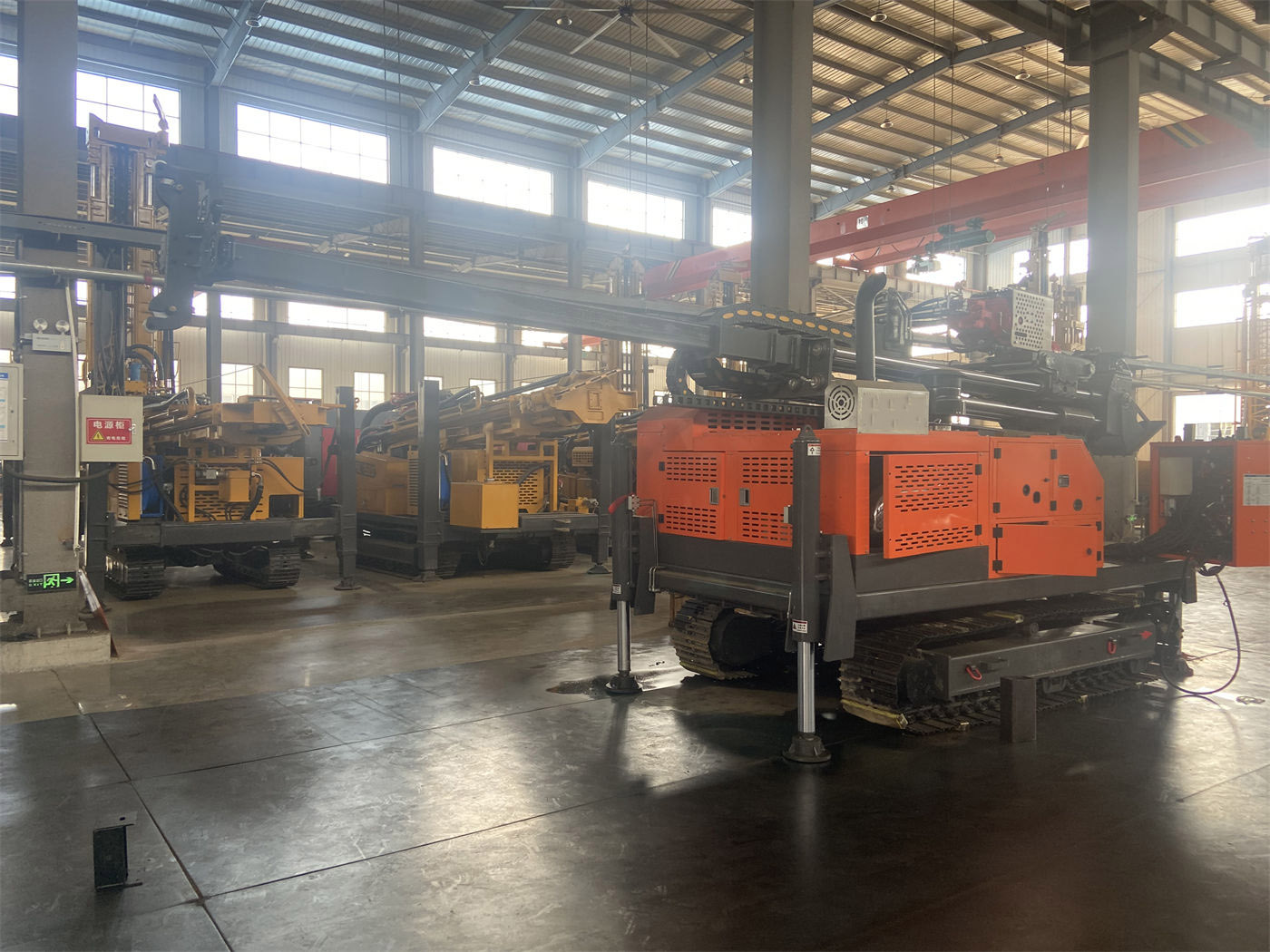
Water supply, mud and cuttings discharge conditions
Continuous irrigation well construction consumes a relatively large amount of water, so the water source location and supply method must be established in advance. Upper soil layers, sand layers and loose overburden may require mud or casing for hole stabilization, and the mud pump and casing plan should be considered together during the equipment matching stage. If DTH pneumatic drilling is used, the reference working pressure range of the air compressor is 1.7 to 3.0 MPa and the air consumption is 17 to 36 cubic meters per minute; pressure and displacement must both be satisfied, and looking at only one of them is not sufficient.
Power and energy conditions
This model uses an 85 kW diesel engine and does not rely on a fixed power supply, making it suitable for remote farmland and mining areas. The information also provides optional configurations such as generator and electric motor power; when the site is fixed and stable power supply is available, an electric option can be evaluated, and the final configuration should be determined based on on-site energy costs and maintenance conditions.
Correspondence between equipment capability and irrigation well requirements
This model has a maximum drilling depth of 300 m and a drilling diameter of 140 to 325 mm, covering common needs such as rural domestic water wells, agricultural irrigation wells, livestock water and general industrial water wells. The rotary torque is 5700 to 7500 N·m and the rotary speed is 40 to 70 rpm; it can be used with a DTH hammer to drill in weathered rock, limestone, sandstone and granite. The lifting force is 18 tons, which helps with normal tripping and some casing operations when drill rod weight and borehole wall friction increase with depth.
| Site condition | Items to confirm | Corresponding equipment information |
|---|---|---|
| Site clearance | Mast extension range, overhead obstructions, drill rod placement area | 6.6 m single advance length |
| Ground bearing | Matting on soft ground, foundation beneath outriggers | Reference overall weight about 8 tons |
| Transport organization | Vehicle length, securing points, road turning radius | Overall dimensions about 5900×1850×2200 mm |
| Air supply matching | Air compressor pressure and displacement both satisfied | 1.7 to 3.0 MPa, 17 to 36 cubic meters per minute |
Applicable boundaries and items still requiring verification
300 m is the nominal maximum drilling depth; the actual completed well depth depends on local hydrogeological conditions, formation structure and well completion technology, and the nominal value cannot be directly treated as the achievable depth under any formation. When fractures, broken zones or strong water inflow sections are encountered, the air supply and cuttings discharge methods need to be adjusted accordingly, and such situations should be predicted before drilling based on geological data.
The well depth, well diameter and well spacing of continuous irrigation wells directly affect whether the equipment matches. If project well depths are generally shallow and well spacing is large, the advantage of the long stroke is limited; if the formation is mainly thick loose overburden, the importance of hole stabilization and mud matching may be higher than rod connection efficiency. These all need to be judged based on specific project information, and this article does not constitute a commitment regarding the construction results of any project.
Information to prepare before requesting a quotation
Organizing site conditions and operating objectives clearly before communicating with the supplier about configuration and supporting equipment is more likely to yield a usable plan than simply asking for a price. It is recommended to prepare: drilling purpose and water supply target; local formation data and estimated well depth; target hole diameter and well completion structure; planned drilling method; number and distribution of well positions; access road and transport conditions; water source, power supply and air supply conditions; and whether supporting equipment such as mud pumps, casing or generators is needed. If information is incomplete, key items should be completed first before discussing the specific configuration.