












In the term "800-meter portable drill," the most common source of misconfiguration is treating 800 as a fixed specification. The same CR800P documentation lists a BQ reference drilling depth of 920 m, an NQ reference drilling depth of 800 m, and an HQ reference drilling depth of 380 m. These three figures refer to three different coring specifications, not alternative expressions of the same hole diameter. Therefore, when reverse-engineering the configuration, the first step is not to choose a model, but to confirm what specification of core the verification hole needs to recover.
1. The verification objective determines the specification, and the specification determines the usable depth
Deep verification holes typically serve three purposes: confirming the downdip direction of a mineralized zone, assessing variations in orebody thickness, and observing the continuity of deep-seated attitudes. These three objectives impose different requirements on core specification. BQ has a smaller hole diameter, so the drill string weight per unit advance and the annular clearance are relatively smaller, allowing the same hoisting and rotation system to support a greater reference depth; HQ has a larger hole diameter and produces more complete samples, but its reference drilling depth is only 380 m. This is not a fluctuation in equipment capability, but a correspondence between hole diameter and drill string load.
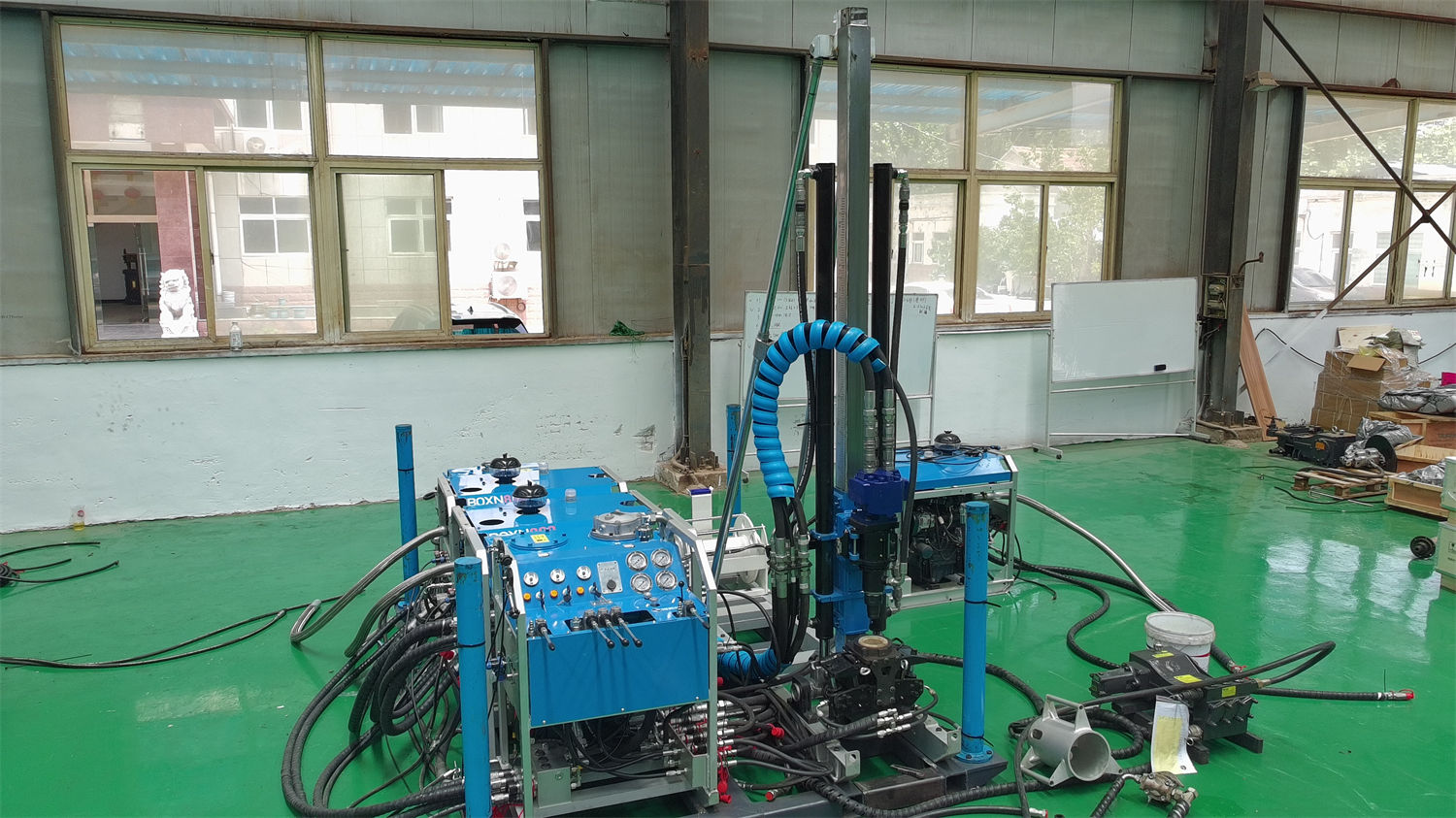
The CR800P is positioned for projects where shallow anomalies have already been verified and deep extension needs to be traced further. This description itself implies the configuration logic: first determine which specification the verification hole should fall into and where the target depth lies within that specification, then assess whether a more conservative specification should be used to leave margin.
2. Three associated conditions easily overlooked during the hole-depth verification stage
Once the specification is set, drilling depth is still only one condition. What truly determines whether continuous operation is possible at the intermediate-deep hole stage is often the simultaneous satisfaction of the following three items.
- Hoisting margin: The CR800P has a hoisting force of 130 kN and a thrust force of 67 kN. As hole depth increases, the drill rod's own weight and borehole wall friction rise simultaneously. Hoisting capacity is not only used for normal tripping out, but also affects the ability to handle drill string issues in deeper hole sections. The documentation specifically notes that if abnormal resistance occurs, the borehole wall and circulation status should be checked first, rather than continuing to pull forcefully.
- Wireline winch rope capacity: The wireline winch uses 6 mm steel wire rope, with a rope capacity of 1000 m and a hoisting speed of 116 m/min. For 800-meter-class wireline coring, the rope length provides a certain margin. The documentation requires checking the rope end connection and wire rope damage before construction each day.
- Circulation conditions: Mud flow rate is 100 L/min and pressure is 7 MPa. When fractures are developed or return water is unstable, this set of values provides conditions for maintaining circulation, but the documentation also states that in actual construction, adjustments should still be made according to hole diameter, rock properties, and loss conditions, rather than simply pursuing high pump pressure.
3. Portable split structure should be verified by transport unit, not by total machine weight
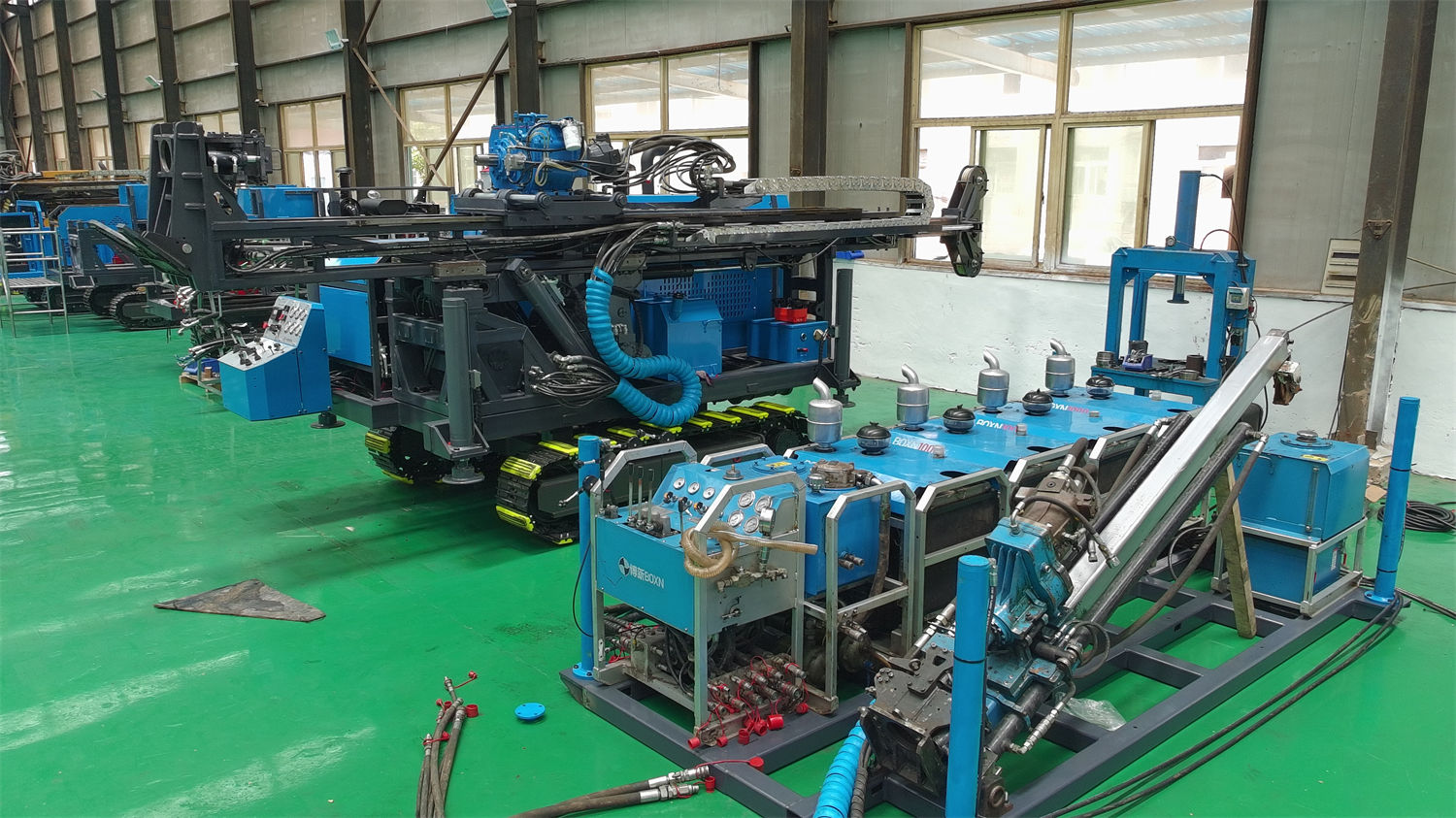
The total weight figure of 1380 kg cannot directly determine site accessibility, because split-type equipment is transported in disassembled modules. The module reference weights given for the CR800P are more practical: power unit 180–260 kg, control unit 140 kg, hydraulic oil unit (including oil) 160 kg, and mud unit 95 kg. These are the actual starting points for transport planning—route width, turning radius, uphill method, and temporary platform area must all be considered around the heaviest unit, not the total machine weight.
It should be noted that the documentation does not provide site access values such as slope angle, access road width, or curve radius. Therefore, whether "this road can be traveled" can only be verified section by section and cannot be directly inferred from the parameter table.
4. Relationship between drilling angle and hole layout
The CR800P supports drilling at 45°–90°, with a feed stroke of 1.8 m and applicable drill rod lengths of 1 m or 1.5 m. On limited platforms in mountainous areas, the significance of this angle range is not just "being able to drill inclined holes," but being able to adjust the hole angle without rebuilding the platform. When gold veins are controlled by faults and shear zones, inclined holes improve the effectiveness of intersecting the ore; when pegmatite veins have branches and pinch-outs, continuous coring with inclined holes makes it easier to determine width and deep-seated trend. The angle should be determined by the orebody attitude, not chosen first and justified afterward.
5. Power form reverse-engineering is about supply conditions, not power rating
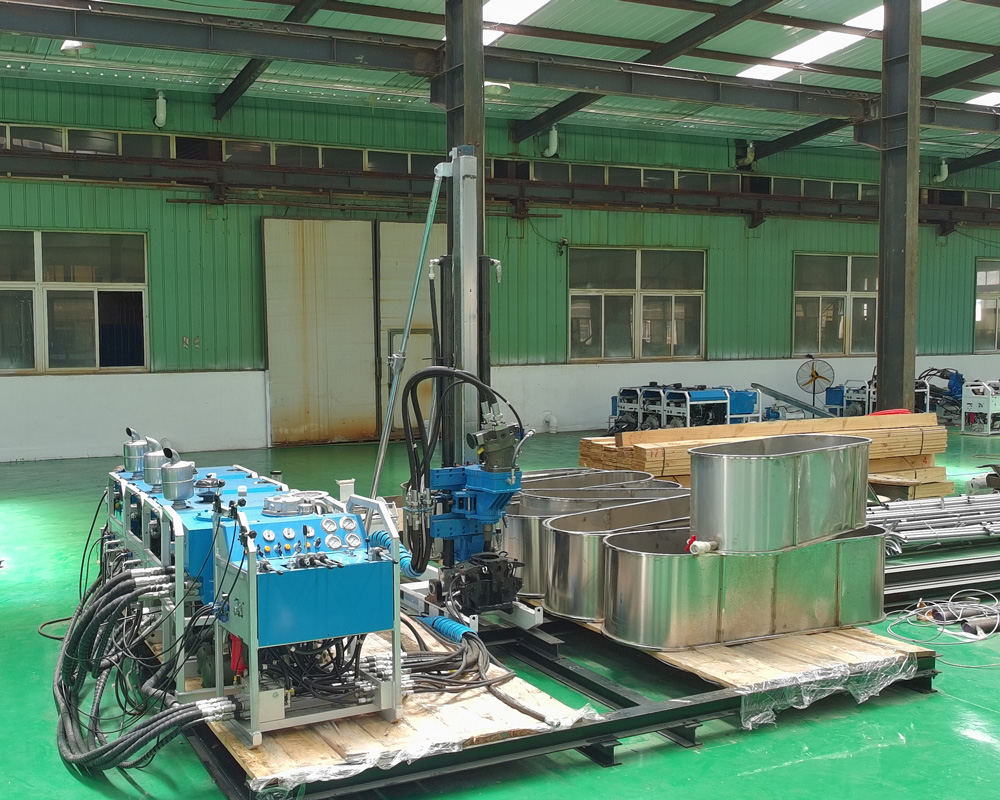
The CR800P requires a diesel engine power of ≥99 kW, with optional brands including Kubota, Cummins, Yunnei, and Yuchai; a 22 kW × 3 electric motor configuration is also available. This set of information actually corresponds to two construction organizations: remote mountainous areas must weigh fuel transport, power generation conditions, and maintenance resources; fixed mine platforms with stable power supply can evaluate electric solutions to reduce engine maintenance and fuel storage and transport. There is no universal answer as to "which is better"—only whether the supply conditions support it.
6. Main parameter comparison
| Item | Parameter Value |
|---|---|
| BQ reference drilling depth | 920 m |
| NQ reference drilling depth | 800 m |
| HQ reference drilling depth | 380 m |
| Drilling angle | 45°–90° |
| Thrust force / Hoisting force | 67 kN / 130 kN |
| Maximum torque / Maximum speed | 980 N·m / 1200 rpm |
| Wireline winch rope capacity | 1000 m (6 mm steel wire rope) |
| Mud flow rate / Pressure | 100 L/min / 7 MPa |
| Maximum clamping force of clamp / Through-hole | 130 kN / 54–127 mm |
| Power form | Diesel (≥99 kW) or 22 kW × 3 electric motor |
7. Items requiring confirmation from the manufacturer or project owner
The following content is outside the scope of the existing information on this site and should be listed separately when reverse-engineering the configuration: the specific lithological assemblage and fracture zone distribution of the target mining area, the final coring specification and hole deviation requirements of the verification hole, the actual traffic conditions for access roads and lifting, the supply distance for mud water sources, and the run length arrangement for different hole sections. Actual drilling efficiency, drilling depth, and core recovery are affected by geological conditions, downhole tools, drilling angle, and operating methods, and should be based on on-site conditions.