












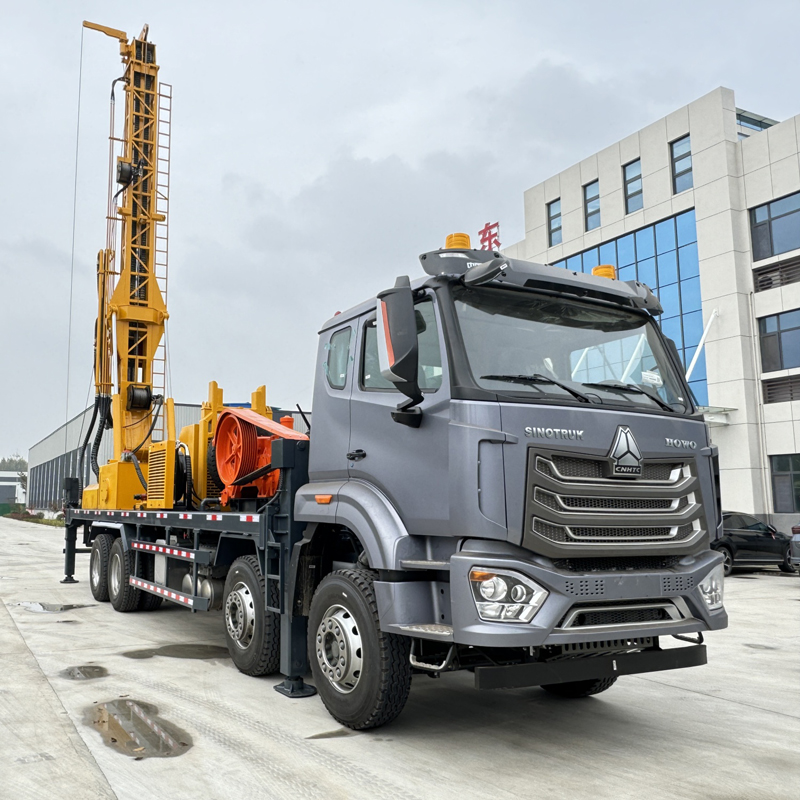
Truck-mounted water well drills are often understood as "arrive and drill." In the materials on this site for the WRT1000, the description corresponding to the truck-mounted structure is: after completing one hole position, the equipment can be transferred to the next construction point via road, without the need to repeatedly arrange flatbed loading and unloading like crawler drills. This sentence describes the transfer method, not the conditions for starting work. Being able to drive there and being able to drill on the same day after arrival are separated by several independent verification tasks.
Below, using the public specifications of the WRT1000 as a clue, we break "mobility" down into several layers. For any part where the materials do not give values, only items requiring confirmation are listed, without conclusions.
What the truck-mounted chassis eliminates is the loading and unloading step, not the entry step
Cross-regional transfer of crawler drills usually requires flatbed cooperation, and each loading and unloading counts as one operation. The value of the truck-mounted structure lies in eliminating this step, allowing the equipment to move along the road by itself. But what is eliminated is loading and unloading, not the requirements for the road: a route that a flatbed can detour around may not be suitable for the drill to drive through itself; conversely, a road the drill can drive on does not mean all bridges, culverts, curves, and gate openings along the way can be passed.
Therefore, the actual constraints on truck-mounted transfer fall on the overall transport dimensions and on-site parking conditions, not on the question of whether there is a tractor head.
The first hard constraint given by transport dimensions is 4.23 m
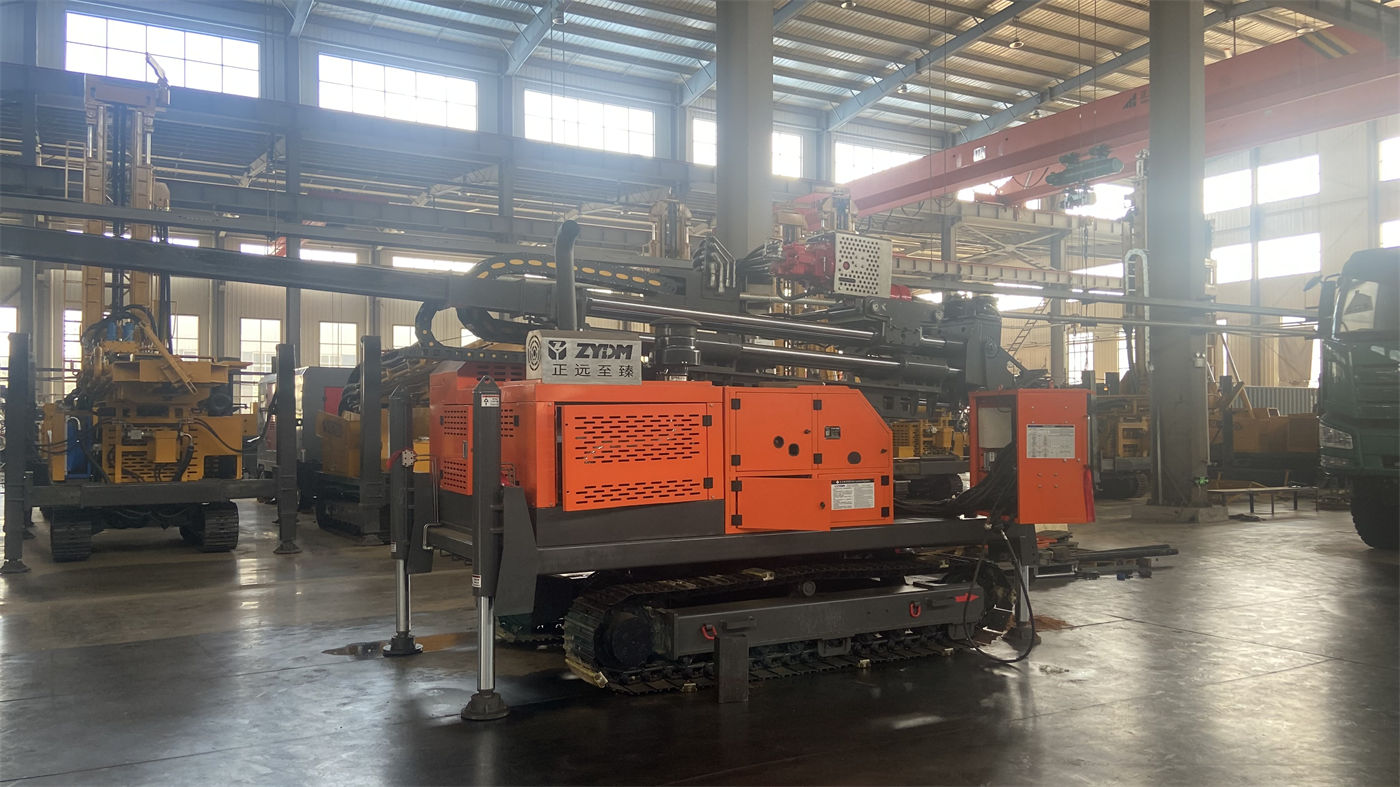
The WRT1000 has an overall weight of about 26 T and transport dimensions of about 10.8 × 2.5 × 4.23 m. Among these three numbers, height is the most easily underestimated. 4.23 m is of a magnitude that requires special verification, and before entry it should be checked item by item:
- Road height limit signs, clearance heights of tunnels and underpasses
- Lowest points of bridges, culverts, overhead lines, and communication lines
- Actual heights of factory gate openings, mining area access checkpoints, and yard entrances and exits
- Whether there are trees, pipe galleries, or temporary cables above temporary access roads inside the construction site
Length and width must likewise be checked against specific road sections, including curve radii, passing conditions, narrow village roads, and temporary road surface bearing capacity. The materials give the transport outline but do not give passage indicators such as climbing angle or minimum turning radius; these need to be confirmed with the manufacturer or carrier according to the actual route.
After arriving at the hole position, whether work can start is determined by several other things
Mast, outriggers, and platform bearing capacity
The WRT1000 uses a straight mast structure. The materials state that the straight mast has a more direct force path and is suitable for long-duration high-torque rotation, deep-hole drill pipe handling, and casing operations. Accordingly, before starting work, site preparation for raising the mast must be done in advance: whether the platform is level, whether bearing capacity is sufficient, and whether the area under the carrier and outriggers needs treatment are not reflected in the transport dimensions.
Construction water, mud, and cuttings discharge conditions
There is a noteworthy sentence in the materials: in suitable rock formations, pneumatic DTH drilling has low dependence on large amounts of mud water, so it is suitable for arid mining areas and water-scarce construction points. Read in reverse, this sentence means not all hole sections are water-free. The upper loose formations can use mud rotary, casing, or other hole stabilization methods, which means that as long as the upper part of the hole requires mud or casing for wall protection, construction water and cuttings discharge conditions still need to be arranged in advance.
Air pressure and air compressor matching
The recommended working air pressure for DTH down-the-hole drilling on the WRT1000 is 1.65–8 MPa, with air consumption of 16–96 m³/min. These are equipment-side values. The size of the air compressor to be provided on the project side depends on the DTH hammer specification, hole diameter, hole depth, altitude, and rock hardness. If the air compressor is not in place, the drill can arrive but still cannot advance.
Drill pipe specifications and operation organization
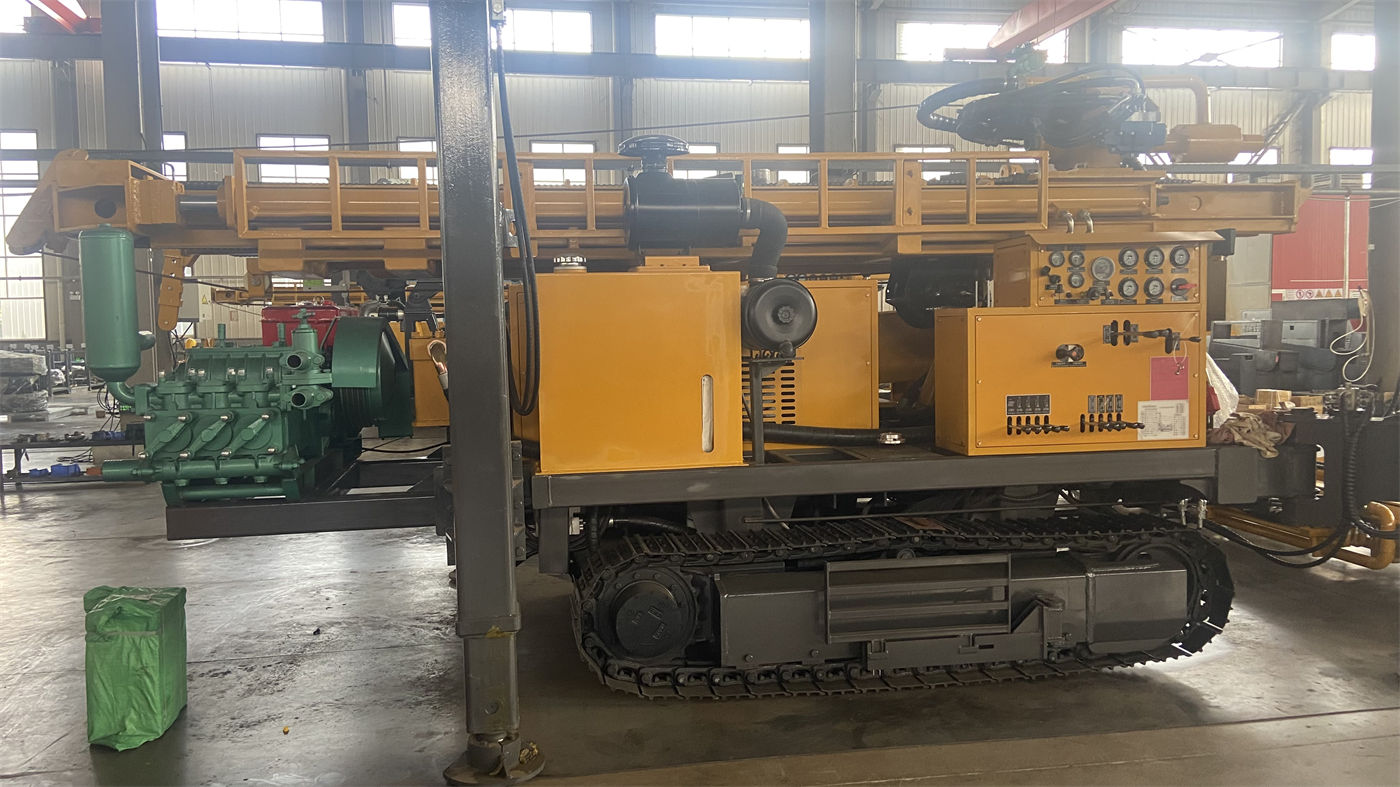
The feed stroke is 7 m, and 3 m or 6 m drill pipes can be used, with a recommended drill pipe diameter of 114 mm. The 6 m drill pipe is suitable for long-cycle deep-hole construction and can reduce the number of pipe connections; the 3 m drill pipe is more suitable for sites with limited space, transport, or manual operation conditions. Which one to choose depends on on-site space and matching lifting capacity, not simply that shorter is more flexible.
The equipment is also equipped with a 4 T large auxiliary winch and a 3 T small auxiliary winch, used for handling DTH hammers, drill pipes, casing, air hoses, and accessories. Projects at the 1000-meter level have more and heavier supporting tools, and whether there is enough on-site space for placement and transfer is also something to be arranged before starting work.
Looking at the WRT1000 values in two categories
The numbers in the same set of materials are not all of the same nature. One category describes the equipment's own capabilities, while the other describes the conditions imposed on the site. Looking at them together makes it easy to be misled by the phrase "mobility."
| Value or description | Nature | Corresponding items to verify |
|---|---|---|
| Transport dimensions about 10.8 × 2.5 × 4.23 m, overall about 26 T | Equipment outline and weight | Route height and width limits, curves, bridge and culvert and gate opening clearances |
| Maximum drilling depth 1000 m, hole diameter 105–800 mm | Equipment capability range | Target aquifer depth, well completion structure, well casing and pump type |
| DTH air pressure 1.65–8 MPa, air consumption 16–96 m³/min | Equipment working conditions | Air compressor specifications, altitude, rock hardness |
| 194 kW diesel power | Equipment power configuration | Fuel supply, filter and radiator maintenance arrangements in dusty environments |
| 51 / 52 T lifting force, 11 T axial pressure | Equipment capability range | Drill string assembly, casing weight, actual downhole friction conditions |
| 20000 / 10000 N·m two-speed rotary torque, 70 / 140 r/min | Equipment operating range | Select operating conditions according to hole diameter and rock formation, and adjust in combination with cuttings return and drilling tool wear |
The three periods of time not covered by "mobility"
The truck-mounted structure compresses the transfer time between holes, but it cannot manage the other three periods of time.
- Route survey and permit confirmation time before entry, which varies with route complexity
- Site preparation, platform treatment, and positioning of water, power, and supporting equipment after arrival
- Commissioning, parameter adjustment, and hole cleaning time between raising the mast and normal drilling
If this part of the time is judged as "truck-mounted equipment requires no preparation" when estimating the schedule, the risk of falling short lies in these periods.
Items not given in the materials and requiring confirmation with the manufacturer or project party
The public materials on this site regarding the WRT1000 do not give the following content, and no inference can be made from them: climbing capability for road transport, minimum turning radius, specific bearing requirements for the drilling site platform, the relationship between outriggers and ground bearing capacity, power correction of diesel power under different altitude conditions, and actual penetration rates in various formations. These all need to be confirmed in combination with the specific project and equipment manual.
A relatively reliable approach at the procurement stage is to treat "truck-mounted" as a description of the transfer method, and list route conditions, platform conditions, and water, power, and supporting equipment conditions as three separate checklists for item-by-item comparison. Only when all three checklists match does mobility translate into starting work.