












The most direct challenge in slope PV pile foundation construction is not whether the machine can drill, but whether the equipment can stand stably on uneven ground and align the drilling tool to the pile position. Mountainous and hilly sites commonly have left-right height differences, undulating slopes, and dense pile positions. If the ground must be leveled before drilling each pile, the process is broken up. The high-low leg hydraulic PV pile driver is designed around this need, but "adjustable height" does not mean "can construct on any slope." This article separately explains the conditions such equipment can cover and the conditions it cannot cover.
What type of site problem high-low leg adjustment targets
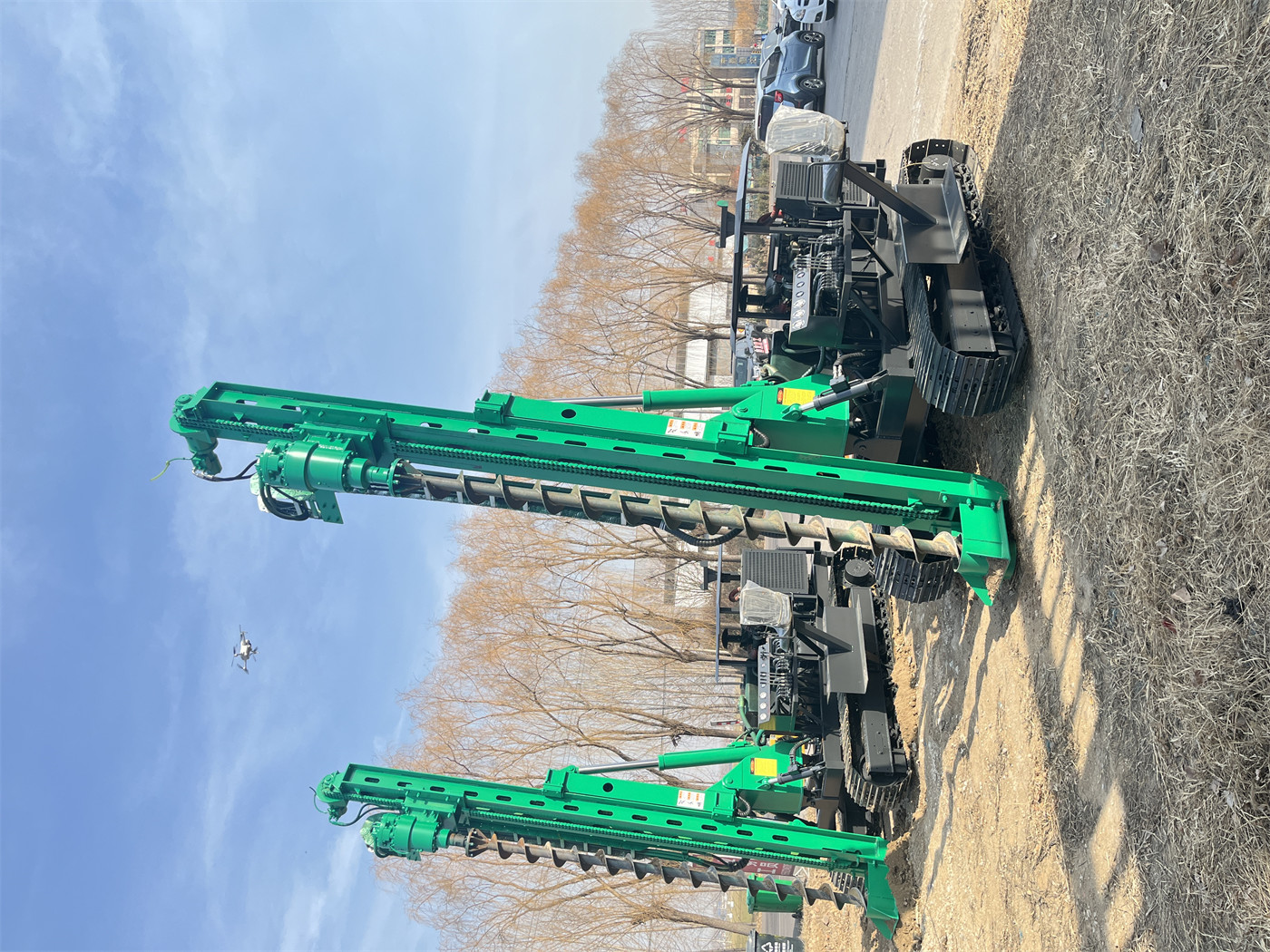
Ordinary fixed-height tracked equipment on cross slopes or sites with obvious left-right height differences often has one track suspended or unevenly loaded, requiring an excavator to level the platform, add soil, or repeatedly reposition. High-low leg models adjust track height so that the two tracks work at different ground contact heights, giving the whole machine a relatively stable posture on uneven ground. This function targets left-right height differences and lateral unevenness, not all terrain problems.
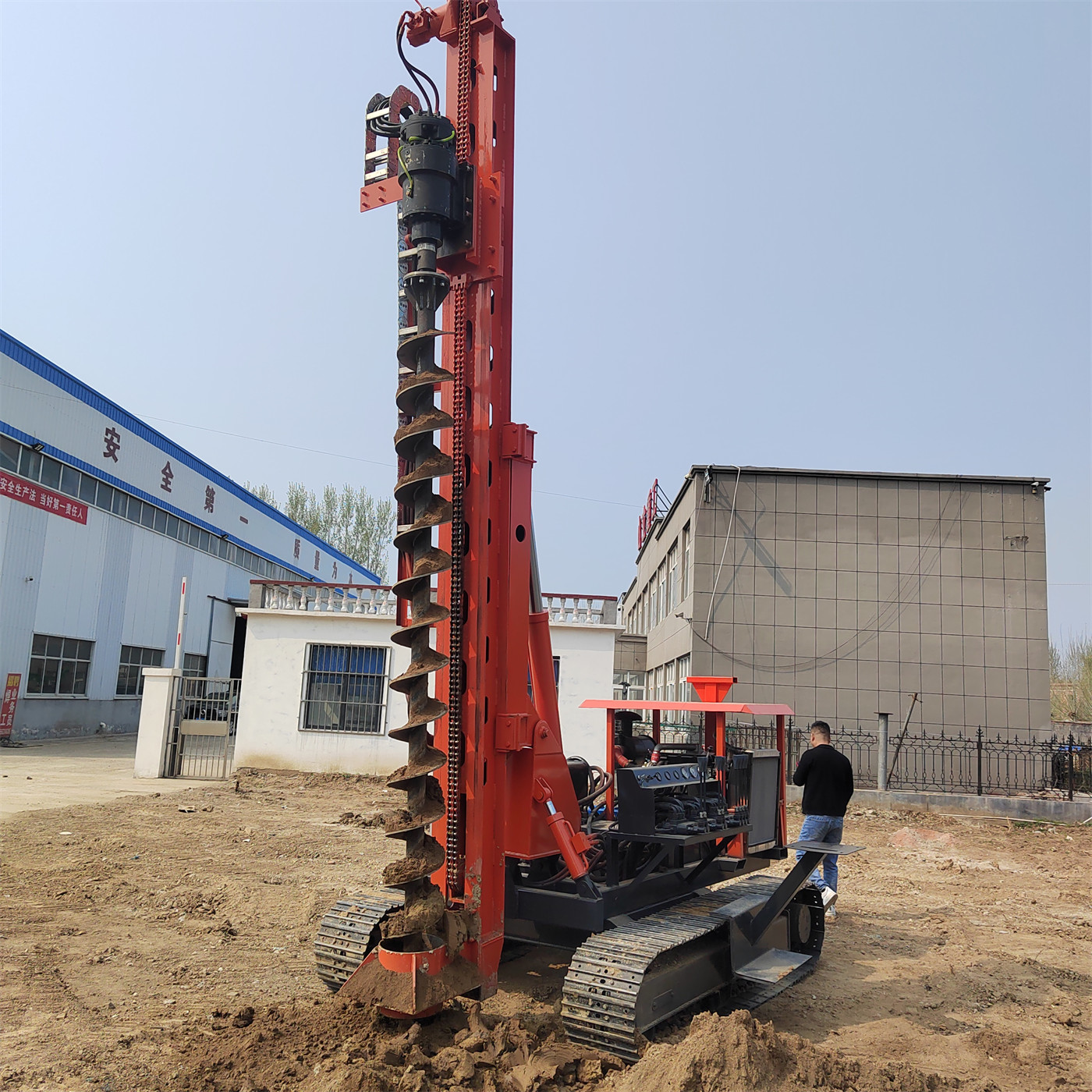
Taking the PV390H as an example, the documented track height telescopic dimension is 1200 mm, used to handle more obvious left-right height differences. During construction, the two tracks should be adjusted gradually according to slope conditions to avoid excessive single-side adjustment causing the machine's center of gravity to shift.
What each posture adjustment action handles
Hole alignment on slopes cannot be completed by a single action. The posture-related adjustments in the equipment documentation include 120° mast pitch, dual-cylinder left-right swing arms, and 450 mm telescopic compensation. The three must work together to complete one pile position alignment.
| Adjustment item | Documented value | Corresponding operational need |
|---|---|---|
| Track height telescoping | 1200 mm | Adapt to left-right height differences, improve ground contact posture on slopes |
| Mast pitch | 120° | Adjust drilling angle to suit slope surface and pile position requirements |
| Left-right swing arms | Dual cylinder | Lateral fine adjustment for hole alignment after the chassis is stabilized |
| Telescopic compensation | 450 mm | Fine positioning in the front-back direction |
These actions reduce repeated repositioning of the whole machine and repeated site leveling, suitable for PV sites with dense pile positions and frequently changing ground height differences. However, their sum is still a posture adjustment range, not unconditional adaptability to slope gradients.
Conditions that can be covered
- Sites with obvious left-right height differences but overall accessible slopes: adjustable track height allows a construction posture without separately leveling each pile position.
- Array-type stations with dense pile positions and frequent ground undulation between holes: swing arms and telescopic compensation are used for lateral and front-back fine adjustment, reducing the number of small-range chassis repositioning moves.
- Pile positions requiring drilling angle adjustment according to the slope: 120° mast pitch provides an angle adjustment range; the specific usable angle should be confirmed in combination with pile foundation design and site conditions.
- Shallow PV foundation pre-drilling: the documented drilling diameter is 80–600 mm and drilling depth is 0–6 m, corresponding to shallow-hole operations such as bracket foundation pre-drilling and pile position pilot holes, not deep holes or water well drilling.
- General unpaved sites such as dirt roads, grassland, and gravel ground: track shoe width is 300 mm, suitable for short-distance transfers within the site, but speed should still be reduced on wet slippery slopes and areas with large cross slopes.
Conditions that cannot be covered or replaced
The high-low leg function improves slope adaptability, but the documentation itself also makes clear: it cannot replace a safe construction platform and foundation bearing capacity assessment. The following types of conditions need to be addressed separately beyond the equipment.
Foundation bearing capacity and whole-machine stability
Adjustable track height solves ground contact posture, not soft foundations or insufficient slope adhesion. Loess slopes may experience reduced adhesion and equipment sliding risk after rain. Such situations must be addressed through construction roads, platform treatment, and on-site safety judgment, not eliminated by adjusting track height.
Slope direction and rollover risk
Cross-slope construction requires greater caution. When the equipment operates on lateral slopes, center-of-gravity shift and rollover risk are not determined by the adjustment range, but jointly by the actual slope, ground contact state, and operating method. No slope capability can replace on-site safety judgment.
Movement assistance for steeper slopes
The documentation states that adding a winch allows use in steeper slope conditions. The winch provides auxiliary traction for equipment movement, but before use, the anchor point, wire rope, and traction direction must be confirmed reliable, and it cannot replace necessary construction roads and safety platforms.
Stratum and drilling tool matching
Equipment posture solves "aligning to the hole," not "drilling through." The documentation notes that soil layers and loess are generally suitable for PV foundation drilling, but moisture content and density affect hole wall stability; high-plasticity clay easily clogs the drill; cobble sand, gravel, and mixed overburden easily cause drill bit bouncing, hole deviation, and local sticking; backfill waste layers may contain bricks, concrete blocks, rebar, and voids, and abnormal impact or rotary sticking should prompt a shutdown inspection. After changing to impact drilling tools, it can be used for strongly weathered rock and rock layers, but the documentation does not give impact hammer models and impact energy, so hard rock efficiency cannot be inferred from this.
Power and drilling parameters corresponding to the operation segment
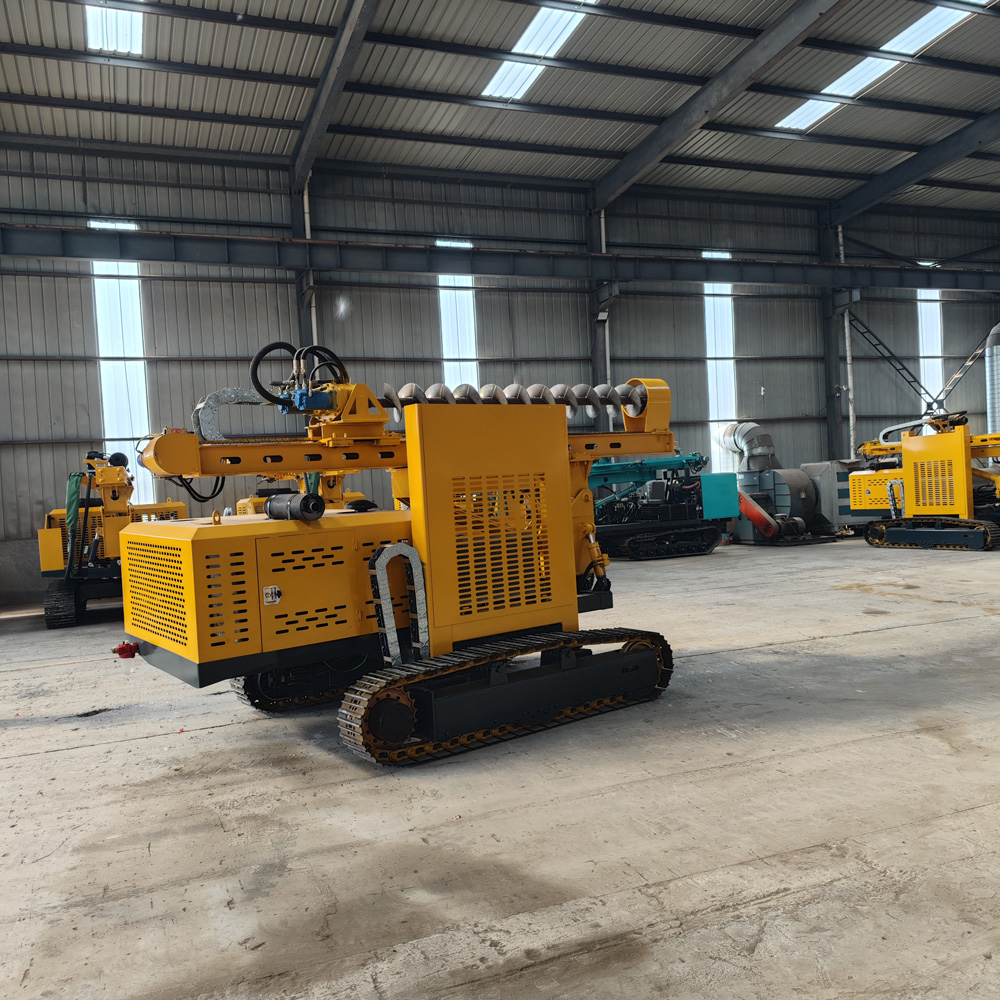
The PV390H is equipped with a 130 kW six-cylinder turbocharged engine, reducer torque of 13000 N·m, drill pipe speed of 100 r/min, and chain pressurization. These parameters indicate the equipment is aimed at shallow, relatively large-diameter foundation pre-drilling requiring higher rotary torque, not deep-hole drilling. Chain pressurization can continuously provide thrust, but when encountering cobbles, backfill layers, and strongly weathered rock, the feed speed should still be controlled according to rotary load to avoid excessive downward pressure causing hole deviation, stuck drilling, or drilling tool impact.
Documentation to be checked item by item against site conditions before procurement
- Slope distribution in the site, range of left-right height differences between pile positions, and whether cross-slope operation sections exist;
- Surface soil type, density, moisture conditions, whether mixed with gravel or backfill, or whether strongly weathered rock layers must be entered;
- Pile type, hole diameter, and hole depth requirements given in the PV bracket foundation design, confirming whether they fall within the equipment documentation range;
- Construction access road conditions, equipment entry transport dimensions (whole machine dimensions 5200 × 2300 × 2800 mm) and whether they match site roads;
- Whether winch assistance is needed, and whether reliable anchor points exist on site;
- Power form and on-site fuel supply conditions; the engine in the documentation is diesel-powered;
- Construction organization and safety measures when slope adhesion decreases after rain.
Among the above conditions, slope and height difference range, stratum data, and target hole diameter and depth are the main inputs for judging whether such equipment matches. The specific slope upper limit, single-side adjustment limit, and actual drilling efficiency under different strata not covered by the documentation need to be determined after combining project foundation design, on-site trial drilling, or further technical confirmation.
Information to specify when requesting a quote
When consulting the equipment supplier, it is recommended to provide: PV site terrain and slope overview, pile spacing and height difference distribution, target hole diameter and depth, stratum description, construction access roads and entry conditions, whether winch assistance is needed, and power and supply conditions. This information helps judge whether the posture adjustment range of the high-low leg model is sufficient, and whether drilling tools and impact configuration need separate confirmation, rather than deciding based only on a single conclusion of "suitable for slopes or not."