












Two sets of figures often appear together in WRT1200 materials: maximum drilling depth of 1200 m and maximum rotary system torque of 24000 / 12000 N·m. The latter corresponds to speeds of 75 / 150 r/min. These two torque values are not two performance descriptions of the same rig at the same moment, but the output limits of two rotary conditions. Understanding their difference is equivalent to understanding why a 1200-meter-class rig must have both a high-torque and a high-speed working path.
First, determine which component 24000 / 12000 N·m describes
These two values are listed under the rotary system of the WRT1200, referring to the maximum rotary torque the power head can output, not the pull-up force or the feed stroke. The paired speeds given in the materials are 75 / 150 r/min, meaning 24000 N·m corresponds to the low-speed range at about 75 r/min, and 12000 N·m corresponds to the high-speed range at about 150 r/min.
The low-speed range outputs greater torque at lower speed; the high-speed range is the opposite. This is a common configuration for rotary systems, dividing limited power into two output forms so that the same equipment can both drive large-diameter drilling tools and maintain a certain speed when resistance is relatively low. There is a trade-off between the two; maximum values cannot be achieved simultaneously.
Which hole section does the 24000 N·m range correspond to?
Based on the applicable descriptions in the materials, the low-speed high-torque range targets the hole sections bearing the greatest resistance: large-diameter completion sections, relatively intact hard rock sections, and sections where drill string friction increases significantly as hole depth increases. In 1200-meter deep holes, the drill pipe's own weight, borehole wall friction, and cuttings in the annular space continuously consume rotary margin. The torque limit determines how heavy a drilling assembly the power head can drive and how large a bit it can turn.
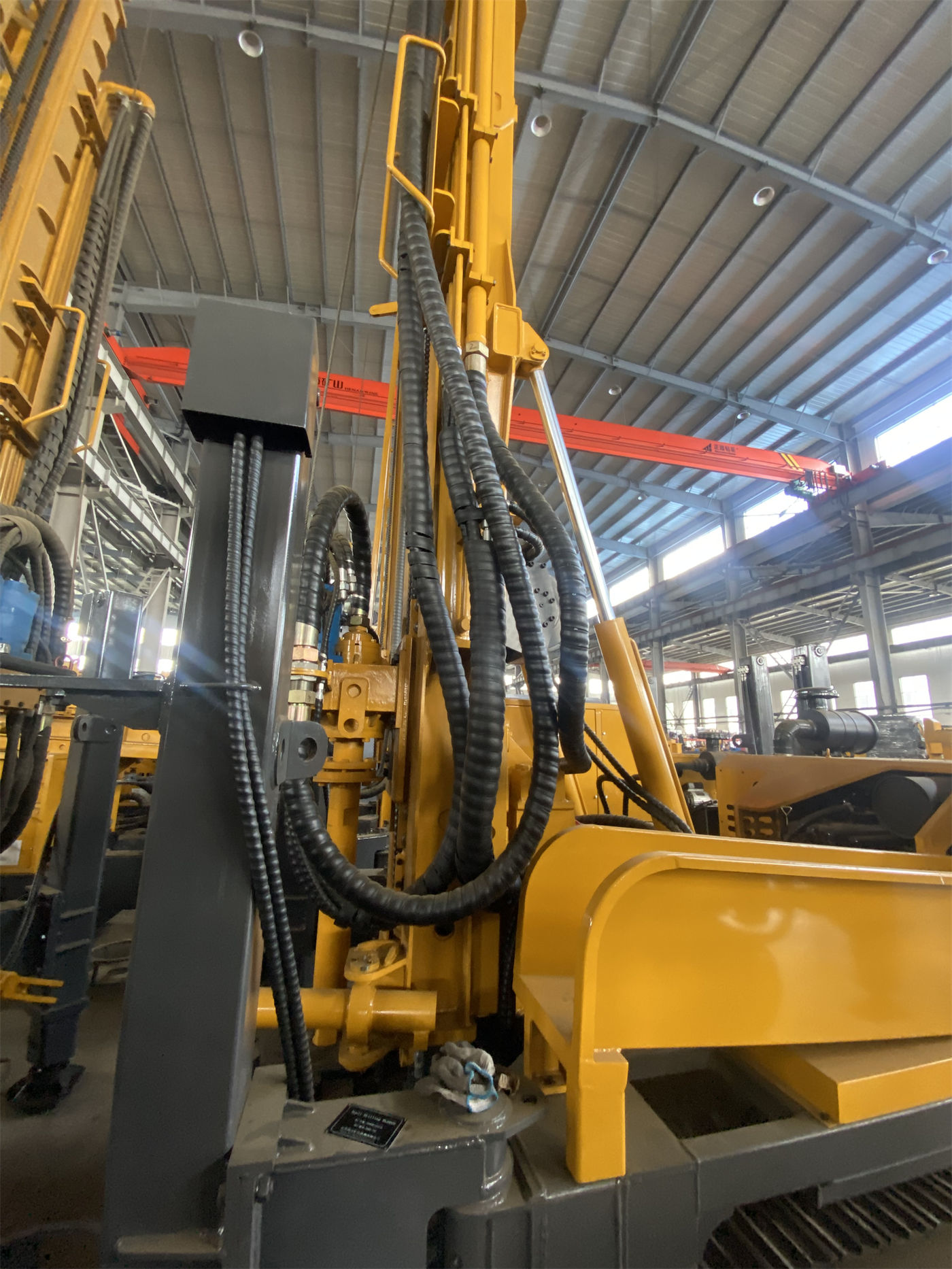
The WRT1200's drilling diameter range is 105–900 mm, a very wide span. At 900 mm diameter, rotation, cuttings removal, and drilling tool loads are significantly higher than at 105 mm, so large-diameter sections can basically only be considered within the high-torque range. The materials do not provide recommended speeds for each diameter, nor torque margin values by diameter; these are items that need confirmation from the manufacturer.
The 12000 N·m range is not a "lower configuration" but another working state
The high-speed range reduces torque to about half while raising speed to about 150 r/min. It corresponds to hole sections with relatively low resistance: upper loose overburden, stable soft to medium-hard formations, and shallow sections where drilling tool loads have not yet accumulated. Continuing to use the low-speed high-torque range in these sections brings no additional benefit and may even affect penetration rate due to lower speed.
To be clear: the materials provide two maximum output values, not the actual torque ranges used during construction, nor the criteria for switching. Treating this as a "two-speed selection" misses the real constraint—the torque limit corresponds to how large a drilling tool can be driven and how much rotary resistance can be withstood, not just a matter of speed.
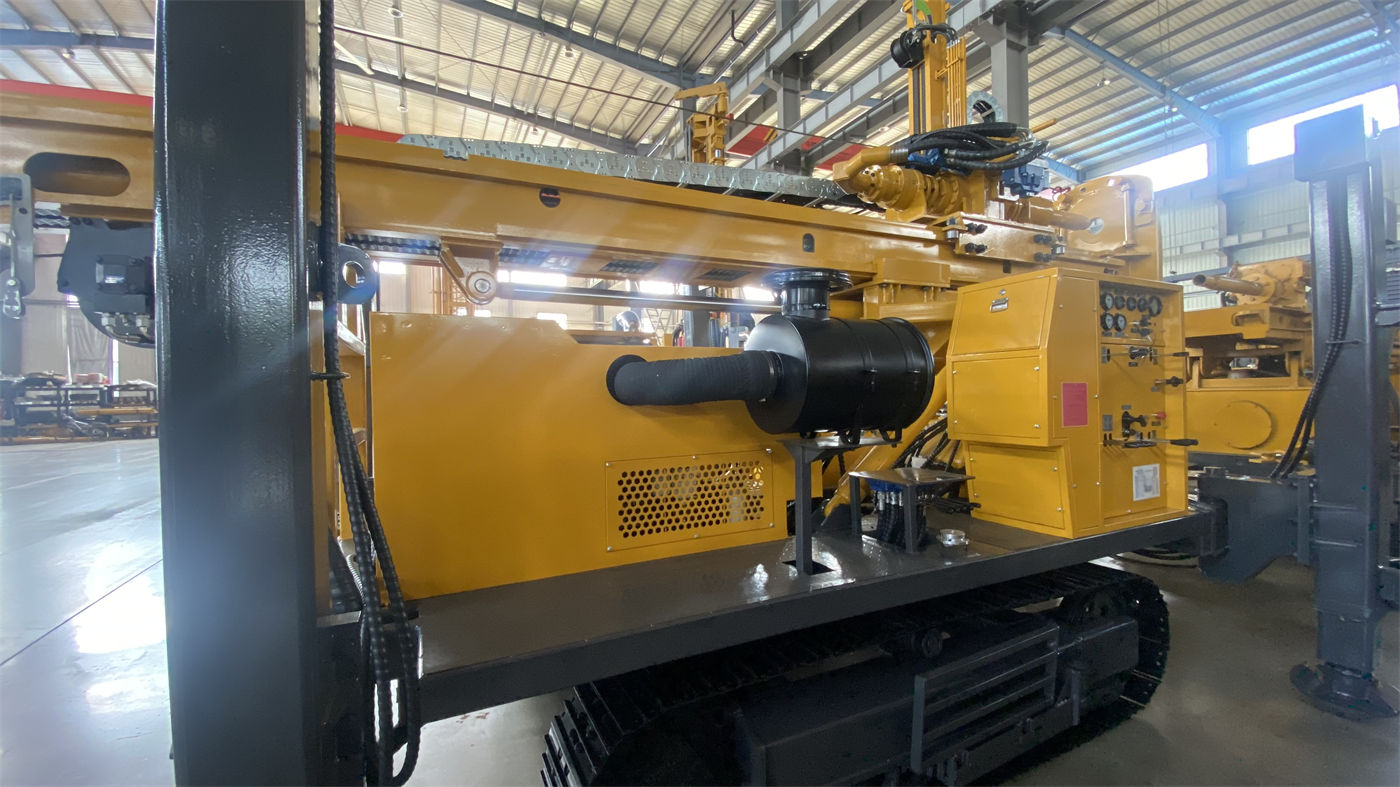
Why the same 1200-meter well requires changing conditions from top to bottom
The premise for a single rig to list two torques is that different sections of the same deep well inherently have different rotary requirements.
- Upper section: loose formation, good drillability, low drill string weight; rotary resistance mainly comes from borehole wall friction and cuttings removal, so speed is more valuable than torque.
- Middle section: as depth increases, the number of drill pipes and their weight rise, friction accumulates, and torque margin becomes important.
- Large-diameter or hard rock section: larger diameter and higher rock strength simultaneously increase rotary resistance; the low-speed high-torque range is most directly useful here.
- Deep fractured or blocky zone: torque may fluctuate; the materials only state that torque changes should be monitored and conditions adjusted promptly, without giving specific handling parameters.
The division of these four stages is based on the descriptions of the rotary system and construction in the materials, not on measured data. How actual hole sections are divided depends on the specific project's hydrogeological design.
Dual-condition torque cannot be used alone as a basis for drilling depth
24000 N·m is an attention-grabbing number, but it does not answer "can it drill to 1200 meters." The same materials also list 61 T pull-up force, 13 T feed force, 7 / 13 m feed stroke, recommended drill pipe diameter of 127 mm, and DTH working air pressure of 1.65–8 MPa with air consumption of 16–120 m³/min. In deep hole construction, the first bottlenecks are often cuttings removal and air supply conditions, and drill string tripping capacity—supporting items—rather than a single rotary torque figure.
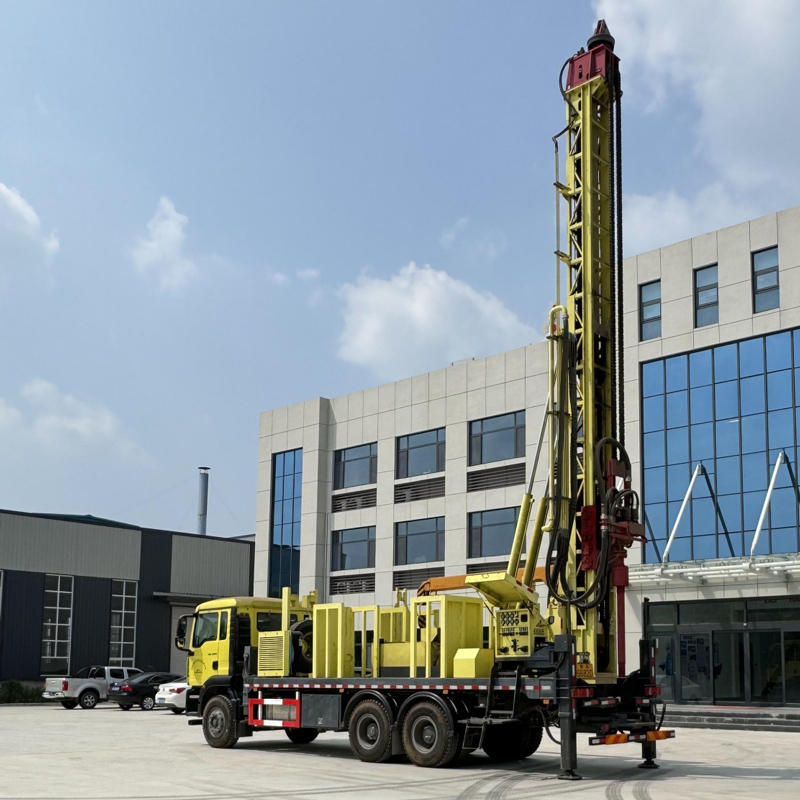
The WRT1200 is equipped with 220 / 264 kW diesel power; the power configuration itself affects how well the above systems can perform simultaneously. The materials do not provide the actual output differences of the rotary system under different power options. During procurement, confirm with the manufacturer based on the project's main hole diameter, rock hardness, and supporting system loads.
What can be confirmed from the materials and what needs separate confirmation
| Item | Value given in materials | What cannot be inferred |
|---|---|---|
| Rotary torque | 24000 / 12000 N·m | Torque margin at each diameter, actual operating range |
| Corresponding speed | 75 / 150 r/min | Switching point and criteria |
| Drilling diameter | 105–900 mm | Recommended condition range for each diameter |
| Pull-up force / feed force | 61 T / 13 T | Matching calculation method with torque |
| Recommended drill pipe | 127 mm, 3 m or 6 m | Drilling assembly recommendations for different hole sections |
| DTH working air pressure | 1.65–8 MPa | Air volume and pressure ratio for specific hole sections |
Overall, the two values 24000 N·m and 12000 N·m each govern hole sections of different natures: one is responsible for withstanding resistance, the other for increasing pace when resistance is controllable. Treating them as two interchangeable ranges can easily lead to missing the parameters that truly constrain equipment selection and drilling tool calculations.