












Deep coring in high-mountain or forest-covered mining areas often runs into a difficulty that comes before the hole itself: a large crawler-mounted whole rig cannot reach the collar. Road width, gradient, bridge load capacity and lifting points do not support moving the whole machine up the mountain. The split structure is designed for exactly these conditions—breaking the equipment into several modules for staged delivery. But "saving on transport" is only half the story. Once split, the modules must be reassembled on site, hydraulic and mud lines reconnected, and power and water supply arranged. These steps do not disappear; they simply shift in timing. Using a 1200 m-class split fully hydraulic core drilling rig as an example, this article lays out the selection basis and the conditions to verify before purchase from this premise.
First confirm which type of coring task the project is
Deep coring is not a single working condition. The same rig may face different drilling objectives: verifying deep down-dip extension of an orebody, tracing peripheral anomalies, controlling deep structures, or completing resource upgrade holes for a mining area. Different tasks impose different requirements on hole angle, hole diameter series and run organization.
- Drilling objective: whether it is tracing the extension of a known mineralized body or verifying a new anomalous body beneath overburden. The former emphasizes continuous coring and hole deviation control; the latter emphasizes penetrating a larger vertical range within a limited number of holes.
- Planned hole depth and diameter series: deep holes usually start with a larger diameter and then step down to smaller drill rods. The final hole diameter determines rod inventory, wireline winch configuration and coring tool specifications.
- Hole angle: the equipment data specifies a hole angle range of 45°–90°. Inclined and vertical holes differ markedly in drill string loading, downhole friction and pull-out resistance, and site organization must be arranged accordingly.
- Formation conditions: deep faults, fractured zones and lost-circulation zones are common risks in deep holes. The data notes that after entering such intervals, core breakage, abnormal pump pressure, reduced returns or wall sloughing may occur, requiring reduced mechanical impact, shorter runs and timely handling of circulation anomalies.
These conditions determine which capabilities the rig must deliver, rather than looking first at the depth figure.
What modular delivery saves and what it leaves behind
This model divides the equipment into power unit, control unit, hydraulic oil unit and mud unit modules. The reference weights given in the data are: power unit 180–260 kg, control unit 160 kg, hydraulic oil unit (including oil) 160 kg, mud unit 210 kg, overall weight 1880 kg. This weight distribution means delivery can be staged according to on-site transport capacity, rather than waiting for a whole rig to pass in one go.
What needs to be seen clearly is how the cost is transferred:
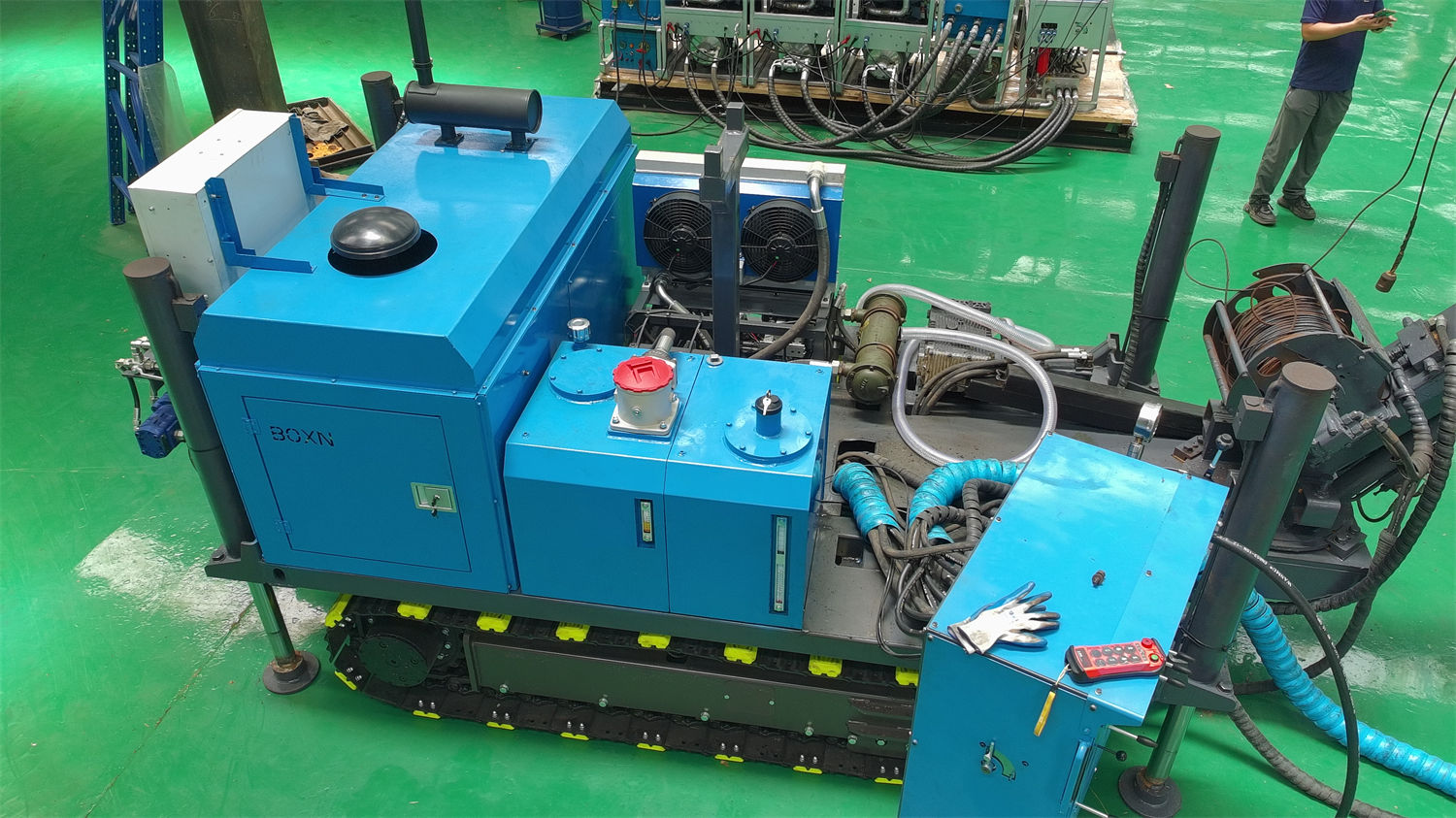
- What is saved is the road threshold for one-time passage of the whole rig, but that does not mean the collar is reachable. Construction organization must still plan in advance for gradients, lifting points, water supply, power and spare parts replenishment; the data explicitly notes this.
- What remains is the assembly work. After modules arrive, hydraulic interfaces and mechanical connections must be checked item by item, and before formal drilling begins, platform stability, hole orientation, rod inventory, water source and power supply must be confirmed.
- What remains is the relationship between disassembly frequency and the number of collars. When collars are scattered and individual holes are deep, disassembly occurs relatively less often; when there are many shallow collars, the burden of repeated disassembly rises noticeably, and the advantage of the split solution then shows more in site access than in hole-to-hole pace.
So "split and portable" is a relative concept: it lowers the threshold for transport units but does not change the requirements of deep-hole work for site, support and downhole management.
What really constrains drilling in the deep-hole stage
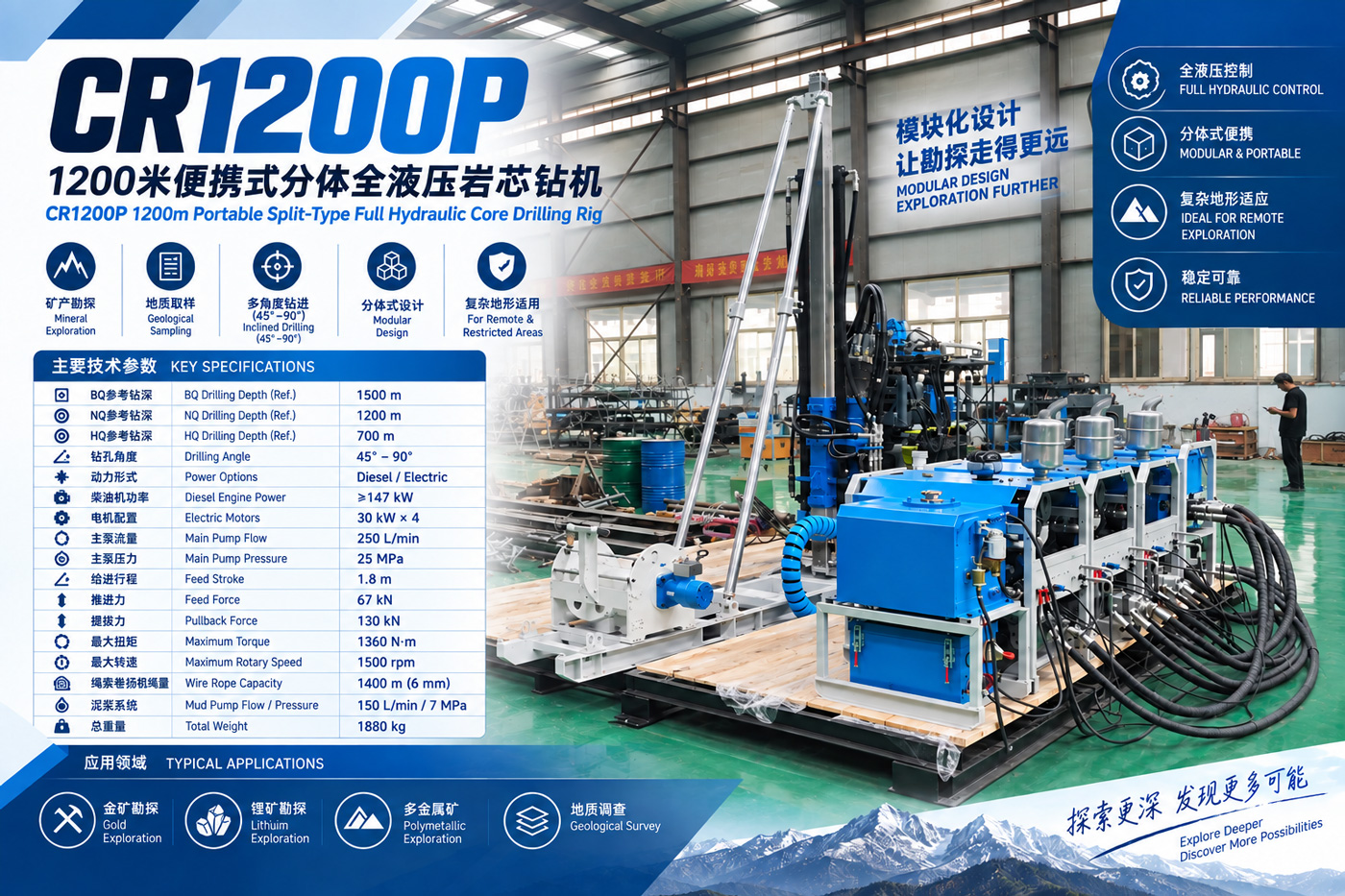
The rig's nominal drilling capacity is given as different reference values by rod specification: BQ reference depth 1500 m, NQ reference depth 1200 m, HQ reference depth 700 m. These figures are a starting point for selection, not the actual achievable depth in any formation. The main constraints in the deep-hole stage usually fall in the following areas:
Downhole management and pull-out resistance
Thrust force 67 kN, pull force 130 kN. The data explicitly notes that for 1200 m-class holes, controlling hole deviation, maintaining wall stability and reducing rod friction are more important than simply increasing pull force. If pull-out resistance keeps rising, circulation, pull-out inspection or wall treatment should be carried out promptly rather than relying on equipment margin to force the pull.
Stage differences in rotation speed and torque
The power head uses a variable displacement piston motor and gear transmission, with maximum torque 1360 N·m and maximum speed 1500 rpm, and supports swing or side shift. Different deep-hole stages have quite different speed and torque requirements, and operation should be adjusted dynamically according to lithology, hole diameter and drill string load. Swing or side shift is practically helpful for rod changes and collar operations, but does not replace judgment of downhole conditions.
Long-distance use of the wireline system
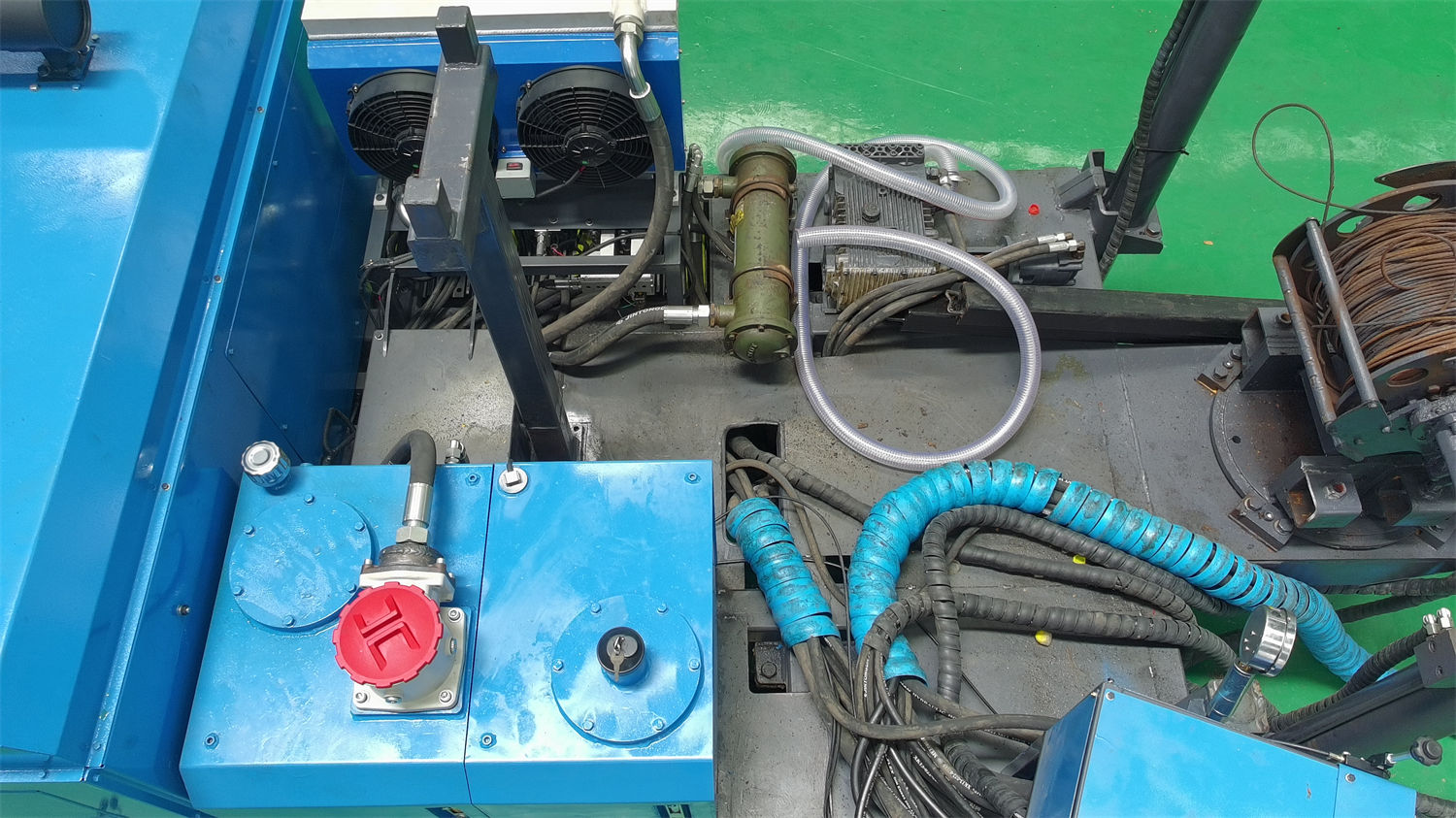
Winch rope capacity 1400 m, using 6 mm steel wire rope, lifting speed 116 m/min. In deep holes the inner tube is lifted over long distances and the wire rope is used frequently, so inspection and replacement records should be established, with periodic checks for broken wires, wear, indentation and rope-end connections. The condition of the wireline system directly affects whether the coring process can continue.
Cooling, lubrication and wall protection by mud
Mud pump flow 150 L/min, pressure 7 MPa, mixer mixing capacity 1.2 m³/min. In deep holes rock cuttings are carried over long distances, and mud simultaneously provides cooling, lubrication and wall protection. When deep lost circulation, water-bearing fractures or fractured zones are encountered, mud properties should be adjusted promptly according to changes in returns and pump pressure; severe lost circulation requires casing, plugging or staged wall protection rather than continued pursuit of footage.
Power form must match on-site energy conditions
This model can use diesel or electric power. The diesel engine power requirement is ≥147 kW; the electric configuration is a combination of 30 kW × 4 motors. The judgment logic given in the data is: remote field projects place more emphasis on independent power and fuel security; fixed mine platforms with a stable power supply can choose the electric configuration according to energy cost and maintenance conditions. This is not a question of which is more advanced, but a choice jointly determined by on-site power supply conditions, fuel replenishment distance and maintenance capability.
For the hydraulic system, main pump flow 250 L/min, pressure 25 MPa; auxiliary pump flow 10 L/min, pressure 17 MPa; main tank 250 L; control mode manual plus pilot. Larger hydraulic flow supports continuous deep-hole operation, but also requires greater attention on site to hydraulic oil filtration, temperature control and high-pressure line maintenance. These tasks also belong to the part that "remains on site".
Applicable boundaries and items to confirm
Based on the data, this split model is more suitable for projects where the following conditions hold at the same time: collars are located in high-mountain, forest or remote mining areas, and existing roads cannot support whole-rig transport; the orebody has been preliminarily controlled but deep resources still need further verification; the site can arrange module assembly, power supply and mud support; and the drilling crew has experience in deep-hole downhole management and wireline system maintenance.
Before purchase, it is recommended to verify item by item:
- The actual gradient, curves and load capacity of the road to the collar section, and the lifting positions for staged module transport;
- The drill rod specification series corresponding to the planned hole depth, and the requirements of the final hole diameter on drilling tool inventory;
- Hole angle and collar layout, and on-site experience with drill string loading and pull-out resistance under inclined-hole conditions;
- Power form: whether there is a stable power supply on site, and what the fuel replenishment distance and maintenance conditions are;
- Water supply conditions and mud material inventory, especially contingency plans for deep lost circulation and fractured zones;
- Common spare parts list: seals, filters, quick-change couplings, wire rope wear parts, drilling tools and mud materials.
It should be noted that the data does not provide actual drilling efficiency, core recovery or guaranteed hole depth under different formation conditions; these should be based on on-site working conditions. The conditions described in this article are a solution analysis based on product data and do not constitute facts that a specific project has adopted or achieved the stated results.
When requesting a quotation, it is recommended to provide: drilling purpose and mineral type, planned hole depth and final hole diameter, hole angle, expected formation conditions (overburden, bedrock, fractured zones and lost-circulation zones), access road and transport unit restrictions, on-site water, power and air supply conditions, and the supporting drilling tool and mud plan. The more specific this information is, the more targeted the equipment configuration and site organization plan will be.