












In the published information for the WRTR600, the short mast and long mast are listed side by side in the same parameter table. Both versions have a maximum drilling depth of 600 m, a maximum hole diameter of 500 mm, rotary table speeds of 38 / 57 / 85 r/min, the same 3NB-130 mud pump, and the same SCGC-200kW generator. In other words, the mast height option does not change the rig's drilling capability.
What it changes is something else: after each drill pipe is completed, how many times the operation must stop to connect a rod. The short mast is equipped with a 7.5 m kelly and 5.5 m drill pipe, while the long mast is equipped with a 10.5 m kelly and 9 m drill pipe. This difference in the operation is the most direct distinction between the short mast and long mast, and most other differences derive from it.
The data differences between the short mast and long mast are only a few lines
| Item | Short mast | Long mast |
|---|---|---|
| Effective height | 12 m | 15 m |
| Kelly | 108 × 108 × 7500 mm | 108 × 108 × 10500 mm |
| Drill pipe | Ø89 × 10 × 5500 mm | Ø89 × 10 × 9000 mm |
| Working dimensions | 15100 × 2480 × 14170 mm | 15100 × 2480 × 17170 mm |
| Transport dimensions | 15100 × 2480 × 4100 mm | 16630 × 2480 × 4100 mm |
Two things can be read from the table. First, the mast-up height of the long mast is 3000 mm higher than that of the short mast, and this figure comes from the difference between the effective heights of 12 m and 15 m. Second, the transport height of both the short mast and long mast is listed as 4100 mm, and the difference falls on length: the short mast is 15100 mm and the long mast is 16630 mm, a difference of 1530 mm.
The number of rod connections is the core of this operation
Rotary drilling relies on the kelly to drive the drill string downward. When the effective stroke of the kelly is completed, drilling must stop, the connection must be broken out, a drill pipe must be added, and feeding then continues. The short mast has a 7.5 m kelly and the long mast has a 10.5 m kelly, so the length that can be fed continuously in a single pass differs by about 3 m. The single-pipe length of the drill pipe is also different: the short mast uses 5.5 m drill pipe, while the long mast uses 9 m drill pipe.
This brings two levels of difference:
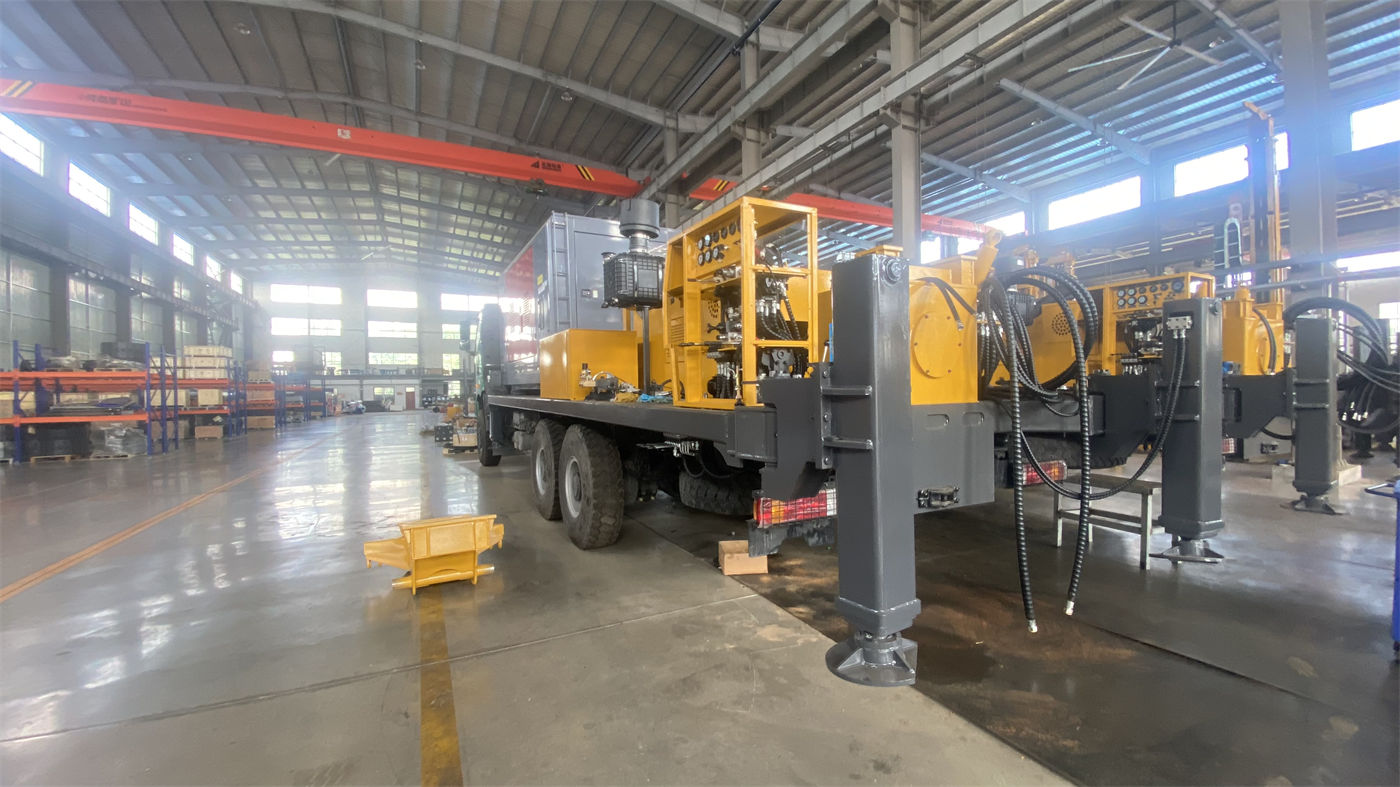
- The hole section that can be drilled between each rod connection is longer, so the long mast has a relatively lower frequency of auxiliary operations.
- The drill pipe connected in a single operation is longer, so each rod connection on the long mast handles a heavier object, and the requirements for coordination among the winch, swivel and wellhead operations also change accordingly.
This is why the information describes the long mast as “able to reduce the number of rod connections and improve the efficiency of continuous drilling in deep holes,” and the short mast as “more conducive to transport and site adaptability.” The two are not a matter of higher or lower capability, but of placing auxiliary downtime and transport conditions at opposite ends of the scale.
At a hole depth of 600 m, this operation does not disappear just because the mast is changed
Whether it is the short mast or the long mast, 600 m still has to be drilled one pipe at a time. The mast height only determines the interval between rod connections, not whether they exist. It should be noted that the number of rod connections discussed here comes from the kelly stroke and drill pipe length, which is a difference in equipment structure. In actual construction, the number of stoppages is also affected by formation, bit condition, mud returns, sampling or casing installation arrangements, and the information does not give specific values under these conditions.
Likewise, the information does not provide shift comparison data for the short mast and long mast under the same formation and the same hole depth. Therefore, “lower rod-connection frequency” can be understood as a definite structural difference, but a specific time saving in a given section cannot be converted into fixed working hours.
The difference in transport dimensions must be viewed in the context of relocation
The WRTR600 is a trailer-mounted chassis, and the entire rig is moved between projects by towing vehicles. The transport dimensions of the short mast are 15100 × 2480 × 4100 mm, and those of the long mast are 16630 × 2480 × 4100 mm. The width is the same, the height is the same, and the length is about 1.53 m greater.
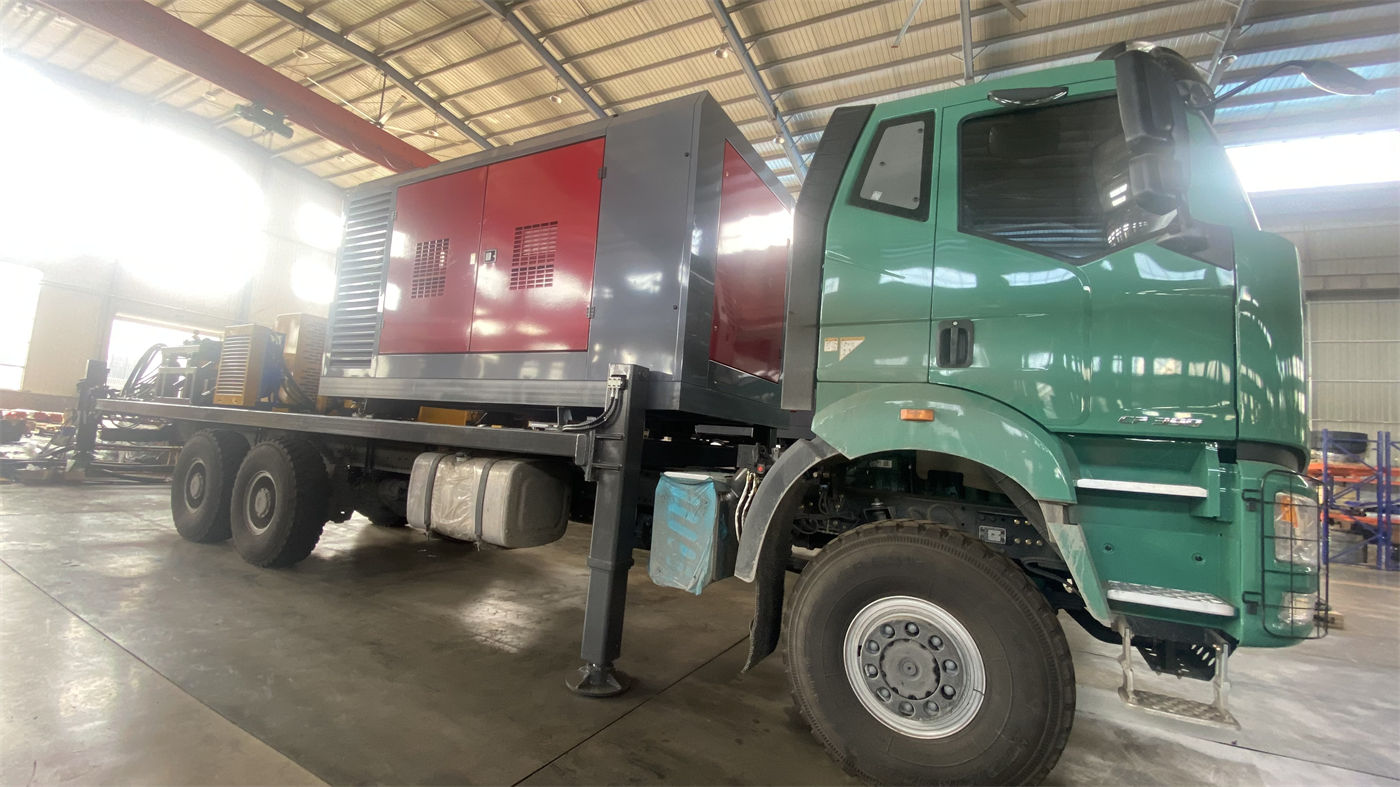
This extra length means that the long-mast version requires more items to be rechecked before cross-regional construction, at least in the following aspects:
- Road width and turning radius, especially the final leg when entering villages and towns, agricultural plots and mountainous sites.
- Bridge load-bearing capacity and height limits. The transport height of both is 4100 mm, so the verification result for height-limit conditions is the same, but the long mast occupies more longitudinal slope and turning space.
- Local requirements for trailer transport, including tractor matching and transport permits.
The information also notes that before starting work, road width, turning radius, bridge load-bearing capacity and height limits, as well as local trailer transport requirements, should be confirmed. These should be verified item by item, and “the short mast is more compact” cannot directly replace judgment about a specific route.
Mast height is also linked to mast raising and wellhead operations
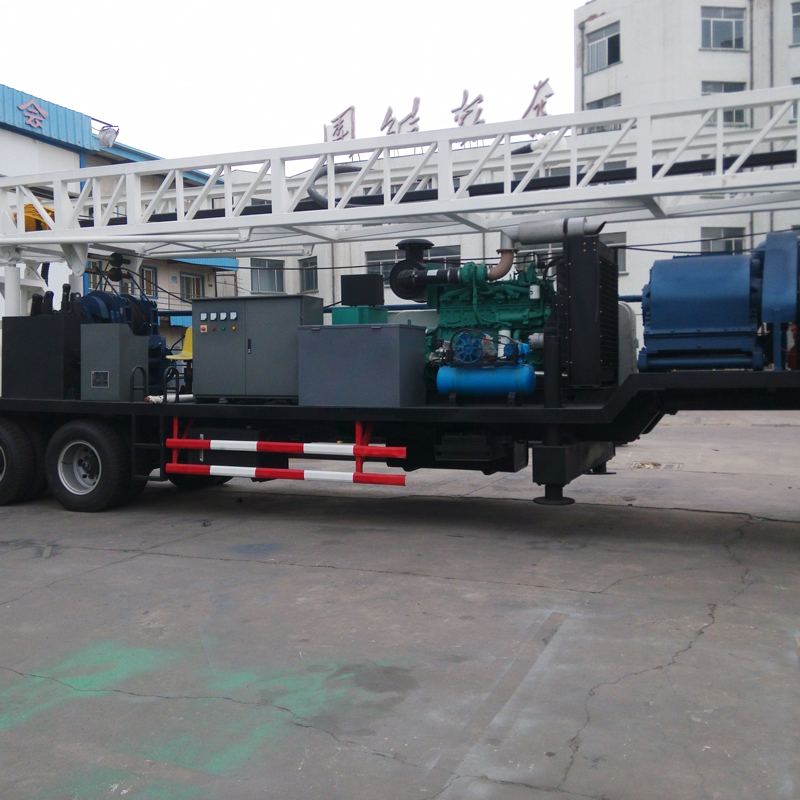
In the mast-raised state, the overall height of the short mast is 14170 mm and that of the long mast is 17170 mm, a difference of 3000 mm, consistent with the difference in effective height. The safety notice given in the information covers only one corresponding item: when raising the mast, confirm that there are no overhead lines or obstacles above.
From this it can be determined that the long mast has higher requirements for overhead clearance than the short mast, and this item should be listed separately during site survey. The information does not give wind resistance grades, mast load-bearing capacity classifications, or other structural parameters at different heights; these are matters that need to be confirmed with the manufacturer.
Which type of work organization each of the short mast and long mast fits better
Taking the above items together, the trade-off direction of the two versions is clear:
- For projects with scattered hole locations, narrow sites and frequent relocations, the short mast occupies less transport length and mast-raised height, and entry and site adaptability are the priorities.
- For projects with greater hole depth, long continuous drilling time for a single hole, and site conditions that allow transport and raising of the long mast, the value of reducing rod-connection frequency with the long mast is more obvious.
The basis for this judgment is only differences at the equipment structure level, and does not include geological adaptability or well completion effects. The information clearly states that actual drilling depth and hole diameter will be affected by formation, drilling tools, mud circulation, casing design and downhole resistance; the final drilling efficiency, drilling depth and well completion effect are subject to on-site working conditions.
Issues that need separate confirmation
Content not given in the information should not be inferred on one's own. Before purchase, at least the following points should be listed as matters to confirm with the manufacturer:
- Under the same hole depth and same formation conditions, whether there is a reference calculation method for comparing the number of rod connections between the two versions.
- The axle load distribution of the long mast in transport state, and whether the tractor configuration needs to be adjusted.
- Site levelness or foundation treatment requirements corresponding to different mast heights.
- For a single 9 m drill pipe during wellhead operations, whether there are corresponding operating instructions for personnel coordination and lifting/lowering methods.
The answers to these questions determine whether the long mast's reduction in rod-connection frequency can truly be realized in a specific project, rather than being just a line of difference in a parameter table.