












Several values in the WRTR1000 specification table are often viewed separately: maximum drilling depth 1000 m, maximum rotary table torque 25 kN·m, maximum rotary table through-hole diameter 660 mm, maximum mast load 60 T, and mud pump displacement 1200 L/min. Only by putting them together can one see where the borehole type boundaries lie for this trailer-mounted rotary table drilling rig—which holes it is designed to handle, and which holes require additional confirmation.
The following breaks it down along four lines: hole diameter, depth, hole deviation, and well completion structure, using only the values appearing in the publicly available specifications on this site.
The 660 mm through-hole governs the drilling tool passage, not the completed well diameter
The specification describes the 660 mm value as the maximum rotary table through-hole diameter, which provides space for large-size kelly, drilling tools, and casing operations. This is a passage size: the kelly, drill pipe joints, and casing string must pass through here.
The specification also clearly states: the final completed well diameter should be designed according to the aquifer, well casing, pump type, and formation stability, and cannot be directly understood as a fixed borehole diameter based on the through-hole size. Therefore, "being able to run 660 mm casing" and "this hole being completed at 660 mm" are two different things. The former belongs to the operational space provided by the rotary table structure, while the latter is a well completion design issue, which also depends on whether the bit specifications, reaming process, formation stability, and well casing structure can be matched.
When taking on a borehole type, a more reliable sequence is: first determine the well casing and screen based on the aquifer and target water yield, then determine the borehole diameter and reaming stages, and finally check back whether this structure can complete the casing running operation through the 660 mm through-hole. Conversely, using 660 mm to infer the hole diameter first can easily yield a number that makes sense for the rotary table structure but does not hold up in well completion design.
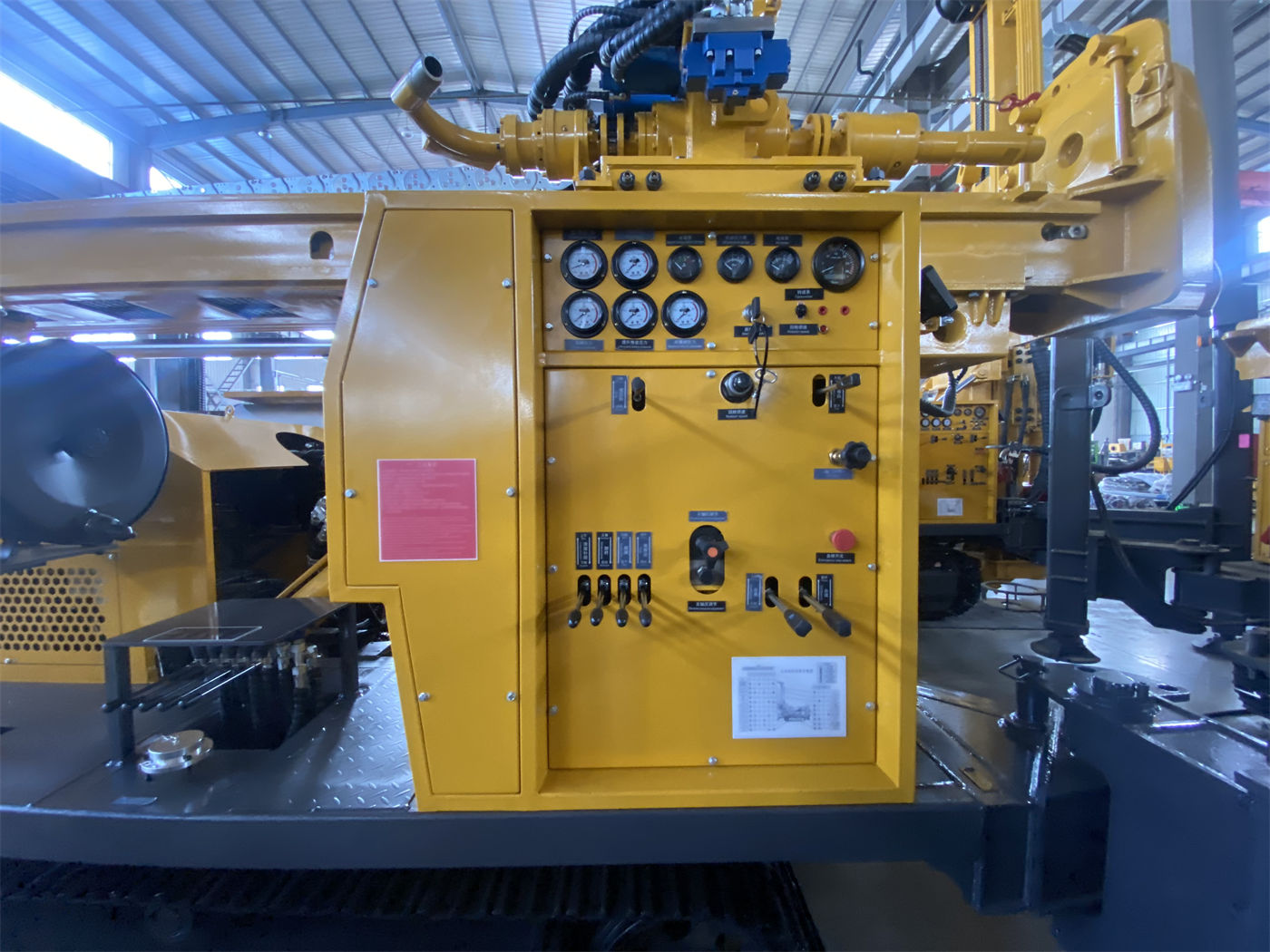
1000 m corresponds to a whole set of conditions, not a single hole diameter
The statement "maximum drilling depth 1000 m" in the specification carries several associated conditions: hole diameter, drilling tool assembly, formation, circulation method, and well completion design. That is, 1000 m is the depth level this equipment can cover under design conditions; when applied to a specific hole, it also depends on how large the hole is drilled, what formation is penetrated, and which circulation method is used.
This associated relationship can be sensed from three directions. The larger the hole diameter, the greater the annular clearance and drilling tool rotation resistance, and the shallower the hole section that the same torque can support. The harder the formation, the higher the requirements of DTH or roller cone drilling on the air compressor, down-the-hole hammer, and cuttings removal capacity; poor discharge of rock powder at the hole bottom will directly suppress penetration rate. The deeper the hole, the greater the circulation resistance and the longer the cuttings transport distance; the 1200 L/min displacement of the BW1200/7 is precisely the margin reserved for deep-hole cuttings carrying, wall protection, and downhole pressure control.
| Parameter given in the specification | Value | What it constrains in borehole type judgment |
|---|---|---|
| Maximum drilling depth | 1000 m | Depth level, to be combined with hole diameter, drilling tools, and circulation method |
| Maximum rotary table torque | 25 kN·m | Large drilling tools, casing, and high-resistance hole sections |
| Rotary table speed | 37 / 52 / 84 / 145 r/min | Trade-off between speed and torque in soft and hard formations |
| Rotary table through-hole | 660 mm | Passage capacity for kelly, drilling tools, and casing |
| Maximum mast load | 60 T | Long drill string and casing operation loads |
| Mud pump displacement / pressure | 1200 L/min / 7 MPa | Deep-hole mud return and cuttings carrying |
| Kelly / standard drill pipe | 108×108×12192 mm / 89×9400 mm | Rod connection frequency and mast space |
The four speed ranges determine segmented operation, not a single state for the whole hole
The four speed ranges of 37 / 52 / 84 / 145 r/min and the maximum torque of 25 kN·m involve a trade-off: the low-speed range delivers high torque, suitable for large drilling tools, casing operations, and high-resistance formations; the high-speed range is suitable for relatively stable soft rock, weathered layers, and some sedimentary formations.
A deep water well is usually not the same formation from top to bottom. Clay, silt, and soft formations are suitable for direct mud circulation, where attention must be paid to bit balling and poor mud return; loose sand and gravel layers are prone to hole collapse, mud loss, and reaming, and may require temporary casing or staged casing; after entering strongly weathered or decomposed rock, rotary drilling can continue based on bottom resistance and mud return, or air foam can be used; relatively intact hard rock can be equipped with an air compressor, down-the-hole hammer, and bit for DTH drilling.
In other words, the borehole type boundary faced by this equipment is not "one hole using the same set of parameters from 0 to 1000 m," but rather the same hole entering different borehole type intervals in the upper loose layer, middle sand-gravel layer, and lower bedrock section. The four speed ranges are precisely prepared for this segmented operation.
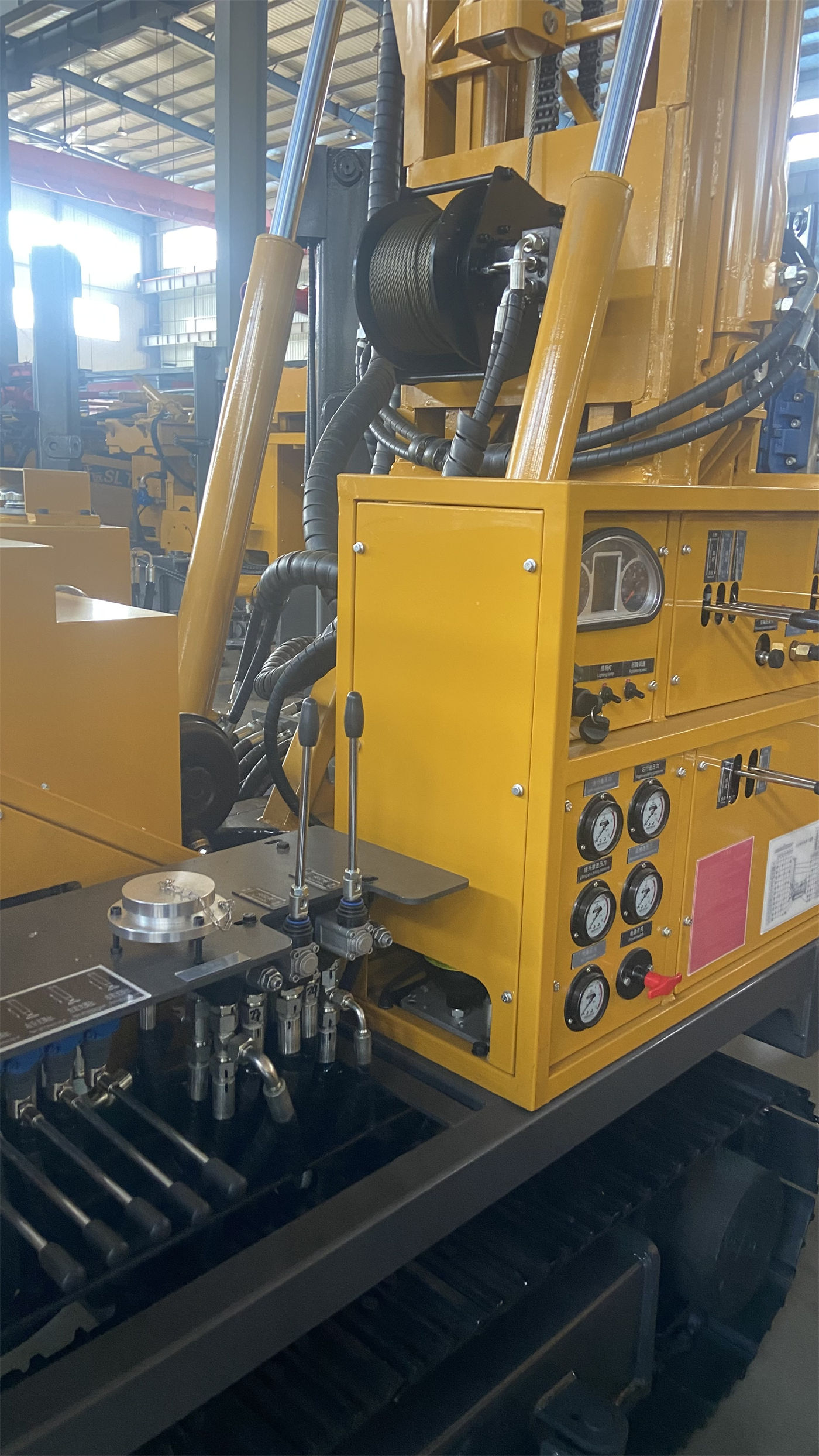
Hole deviation and angle: parts not given in the specification must be confirmed separately
Regarding the working angle of the rotary table drilling rig, the WRTR1000 specification on this site does not provide the inclined drilling angle range, inclined hole operation method, or matching inclined hole drilling tool description. Unlike some models that also specify 45°/90° working angles, the WRTR1000 specification does not contain such angle values.
Therefore, if a project requires inclined holes or directional holes, one cannot infer its angle capability based on the structural type "rotary table" alone, but should separately confirm with the manufacturer: whether inclined drilling is supported, the implementation principle of the kick-off method, the mast load and rotary table forces at the corresponding angle, and the circulation and cuttings return organization in the inclined hole section.
Similarly, the operating efficiency for small-diameter shallow holes is not given in the specification. It is a 1000 m-class heavy-duty machine, with a main winch single-line pull of 90 kN, an auxiliary winch of 50 kN, a drum rope capacity of 160 m for both, and a rated load of 60 T for both the traveling block and swivel. These values indicate that its positioning is in deep holes and heavy drill string handling, rather than high-frequency shallow hole turnover.
Optional air-lift reverse circulation changes the cuttings return method but not the borehole type positioning
The WRTR1000 supports direct mud circulation, air foam, DTH down-the-hole hammer, and optional air-lift reverse circulation. The specification is clear on this point: it is an optional drilling method, not a dedicated RC exploration rig; if the project has clear requirements for sample representativeness and splitting quality, matching dual-wall drill pipes, an air compression system, and sampling equipment should also be configured.
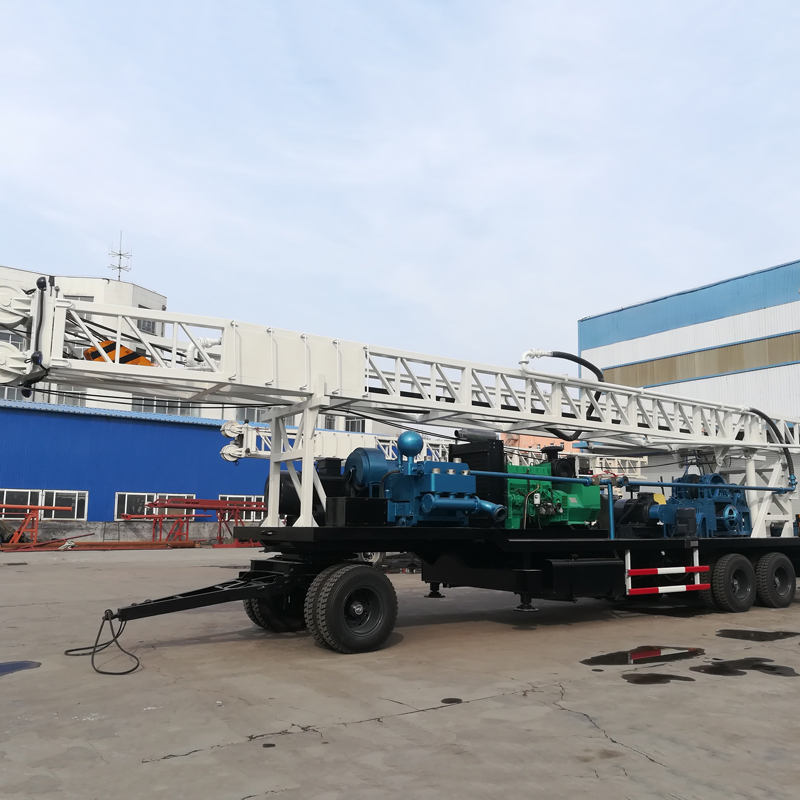
The significance of this section for borehole type boundaries is: the process can be switched on the same machine, but "being able to switch processes" does not equal "being able to replace dedicated sampling equipment." If the borehole type goal is continuous high-quality core, a dedicated core drilling rig should be selected; if the goal is cuttings sampling and splitting quality, it needs to be checked separately according to the matching conditions of the reverse circulation sampling system.
Borehole type range that can be confirmed from the specification and boundaries that need confirmation
Based on the existing parameters, the borehole type positioning of the WRTR1000 can be written as follows: aimed at 1000 m-class deep water wells, geothermal, mining area water supply, hydrogeology, and large engineering boreholes; the 660 mm rotary table through-hole provides passage for large-size drilling tools and casing operations; the 60 T mast load and 90 kN main winch are aimed at deep-hole long drill strings and casing loads; the BW1200/7 mud pump is aimed at deep-hole mud return; and the four speed ranges cover segmented operation from loose layers to bedrock.
At the same time, the following contents are not given in the specification on this site and need to be separately confirmed with the manufacturer or project designer:
- The corresponding drillable depth for different hole diameters under different formation conditions; the specification only gives the overall level of 1000 m.
- The angle range for inclined holes and the operating conditions for inclined holes.
- The specific matching relationship among completed well diameter, well casing structure, and reaming stages.
- The specific specifications of dual-wall drill pipes, air compression system, and sampling equipment when optional air-lift reverse circulation is selected.
- The specific combination of circulation method, casing program, and hole cleaning process under strong aquifer and high water inflow conditions.
When these items have no corresponding parameters, the borehole type boundary only extends to the level of "depth level, through-hole size, load level, and circulation method"; further down, it needs to be verified item by item according to the specific borehole type.