












When budgeting equipment for deep water supply projects, one phrase comes up often: "This rig can drill 1,500 m, so well depth shouldn't be a problem." That is exactly where the problem lies: the maximum drilling depth in the equipment data is the rig's capability limit under specific supporting conditions; how deep a well can ultimately be completed also depends on hole diameter, drill string, air supply and completion design. Treating rated drilling depth as completed well depth makes it easy to discover only after spudding that some link in the chain cannot keep up.
Below, using public data for a 1,500 m class crawler water well rig with a telescopic mast, we explain which processes lie between rated drilling depth and actual completed well depth, and what to verify during selection and quotation.
Rated drilling depth means "how deep it can go"; completed well depth means "what kind of well can be delivered"
The maximum drilling depth in an equipment specification table usually refers to the rig's drilling depth capability within a given drill pipe, drilling method and hole diameter range. Completed well depth, by contrast, requires continuing on that borehole to finish casing running, sealing, screen installation, gravel packing and well development, ultimately forming a water-producing wellbore. The two are not the same number.
For this model, for example, the data gives a maximum drilling depth of 1,500 m and a drilling diameter of 105–1,000 mm. These two figures must be read together to be complete: as hole diameter increases, drill string load, cuttings discharge volume and casing size all change, and the depth actually achievable is closely related to hole diameter, formation and drill string assembly. The 1,500 m figure cannot be understood as meaning the rig can drill to bottom at any hole diameter.
As hole depth increases, the drill string and lifting capacity are tested first
The deeper the hole, the greater the weight of the drill pipe, wall friction and casing weight. The data for this model gives a lifting force of 80 T, a feed force of 16 T, recommended drill pipe diameters of 114 / 127 mm, and support for 9.6 m drill pipe. These values correspond to margin for tripping and drill string control in ultra-deep holes, but they are equipment capabilities, not a guarantee that conditions in the hole will be smooth.
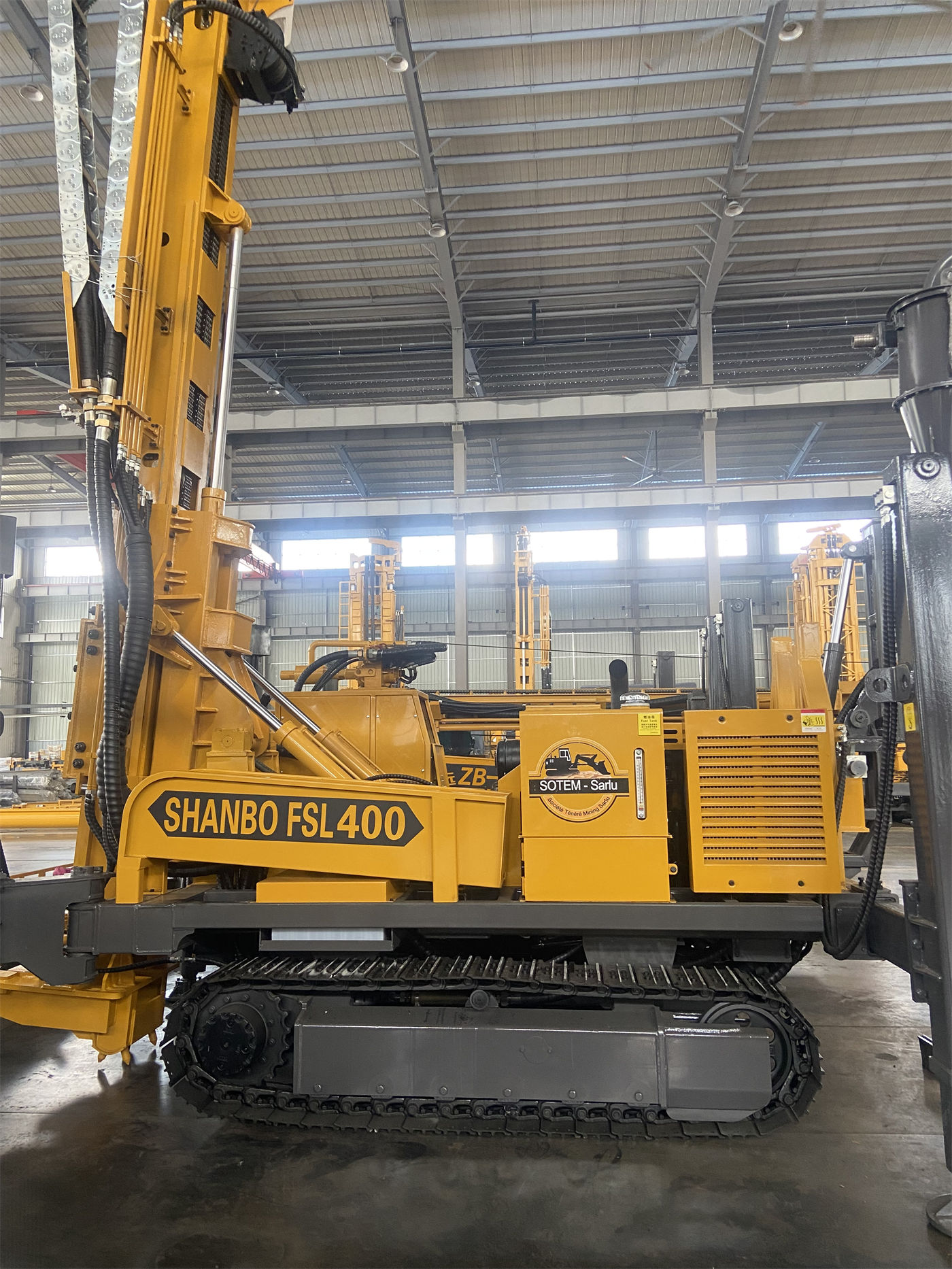
- The longer the drill string, the more connections are made and broken, and the more obvious the effect of tripping organization on process time;
- 9.6 m drill pipe can reduce connection frequency, but space for pipe handling and storage must be reserved on site;
- Having lifting force margin does not mean a stuck string can be pulled hard; the downhole condition should still be assessed first.
If the project plans to use large-size casing, casing weight and casing running procedures should also be included in advance in the check of drill string and lifting capacity.
Air supply conditions determine whether the DTH hammer section can proceed as planned
For DTH hammer drilling, the data for this model recommends a working air pressure of 1.65–8 MPa and an air consumption of 16–120 m³/min. Whether the deep hard-rock section can be drilled continuously depends on whether the air compressor pressure and displacement simultaneously meet the requirements of the DTH hammer and downhole cuttings discharge. If pressure is sufficient but displacement is not, cuttings discharge cannot keep up; if displacement is sufficient but pressure is not, impact performance is affected.
Therefore, when treating rated drilling depth as completed well depth, the most easily overlooked item is air supply support: air compressor specifications, pipeline length and pressure loss, and on-site air source organization all need to be confirmed before spudding. The data does not provide actual drilling speed or completed well depth conclusions for specific formations; these should be based on site conditions.
If the upper hole section is unstable, greater deep capacity cannot connect
The upper part of a deep water well often passes through soil, sand or gravel layers. The data notes that such loose overburden can be handled by mud rotary drilling, casing or other wall-protection methods. If the upper hole section shrinks or collapses, subsequent deep construction will be directly blocked.
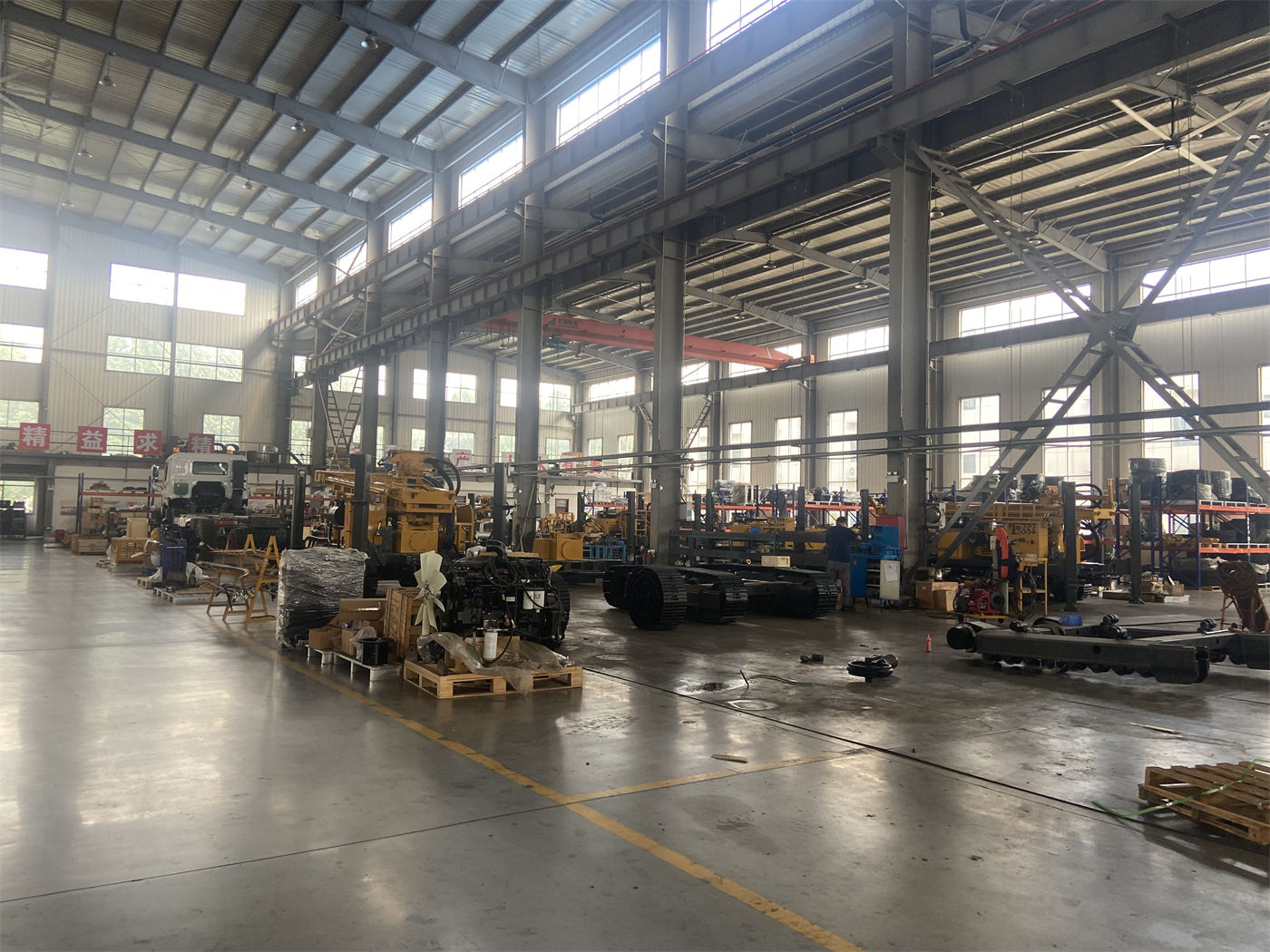
This is a different matter from "how deep it can drill": no matter how strong the equipment capability, the borehole wall in the opening section must first be stabilized before entering rock and switching drilling methods. When weathered rock, fissures or broken zones are encountered, the data recommends reducing penetration speed, strengthening hole cleaning, and using casing, foam or other hole-stabilizing measures as appropriate. These processes all affect how deep a well can actually be completed and at what diameter.
Completion design: another constraint beyond drilling depth
After entering the aquifer, water inflow will change downhole cuttings discharge and DTH hammer working conditions. The data advises recording the depth of main water-producing layers and adjusting air supply, hole cleaning and casing methods according to water volume; at the completion stage, the screen, sealing section and final pump type must also be designed according to aquifer distribution.
In other words, the "depth" of a deep well is not just the borehole depth; it also includes whether the screen position, sealing section and pump type match the aquifer. No matter how deep the borehole is drilled, if the completion structure does not match the aquifer, water yield may still be unsatisfactory. The data does not provide water yield data for specific projects; such conclusions can only be determined by hydrogeological data and completion design.
Site conditions can also in turn limit completed well depth
This model has an overall weight of about 28 T and dimensions of about 11.5 × 2.6 × 3.5 m. It uses a telescopic mast structure, and the data states that this can improve the overall outline in transport condition. However, 28 T class equipment still requires advance planning for flatbed truck load capacity, road height limits, bridge load capacity and turning space, and 9.6 m drill pipe usually needs separate transport.
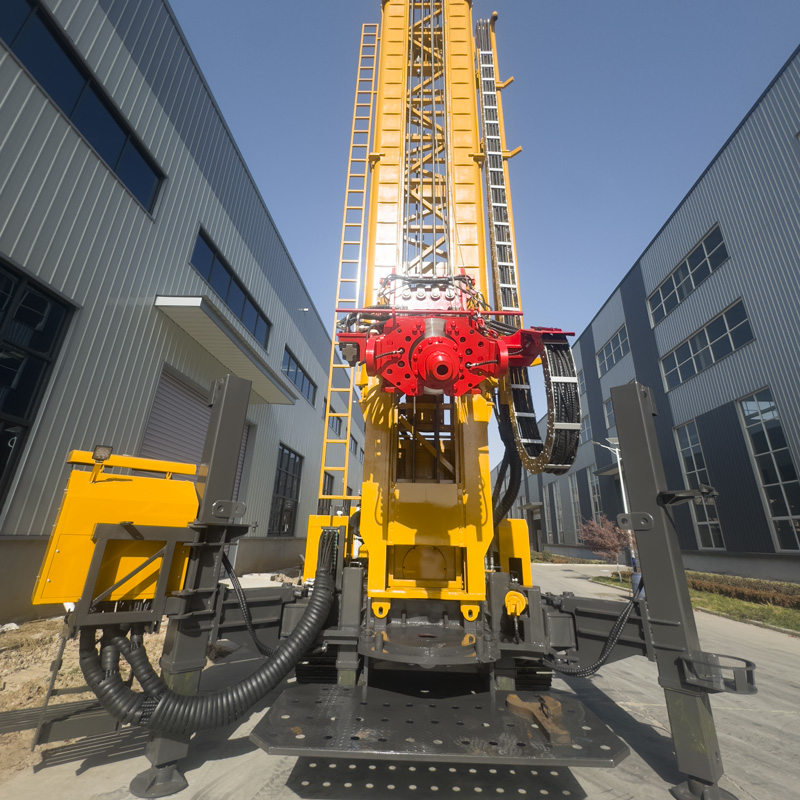
After arriving on site, space must also be reserved for the air compressor, mud system, drilling tools and materials area. These conditions do not directly determine drilling depth, but they determine whether the equipment can enter the site smoothly and organize processes as planned. If site or road conditions are not met, no matter how large the rated drilling depth is, it cannot be converted into actual completed well depth.
What to verify with the supplier during selection
If the project's target well depth is close to the equipment's rated capability, do not ask only "can it drill to this depth" during quotation; provide the conditions together:
- Borehole purpose and target well depth and target hole diameter;
- Formation data, including overburden thickness, lithology, broken zones and estimated depth of main aquifers;
- Planned drilling method (mud rotary, DTH hammer or a combination);
- Air compressor pressure and displacement, and on-site power or fuel supply conditions;
- Preliminary requirements for casing, screen and completion design;
- Site access roads, site dimensions and relocation arrangements.
Equipment data can explain the rig's capability range and supporting interfaces, but it cannot replace hydrogeological judgment and completion design for a specific project. Rated drilling depth can serve as a starting point for screening equipment class, but to determine completed well depth, hole diameter, drill string, air supply, wall protection and completion processes still need to be checked together.