












When selecting a core drill, portable split and integrated types are often compared side by side. Both can recover cores, and the real difference is usually not a single parameter but whether the hole location can be reached, how much must be disassembled once there, and whether the drilling objective requires continuous deep-hole sampling. This article addresses one specific question: with the sampling objective already clear, at what step do portable split core drills and integrated types diverge, and under what conditions a split machine like the CR1000P deserves consideration.
First establish the divergence point: transport to the hole or drilling itself
An integrated core drill mounts its main systems on a single chassis or structure, so once on site it only needs leveling and connection before drilling, with minimal site assembly. The cost is higher demands on road width, load capacity and turning conditions; in mountainous or forested areas, roads often must be built or widened first. This investment may not appear in the equipment quote but directly affects whether the project can start.
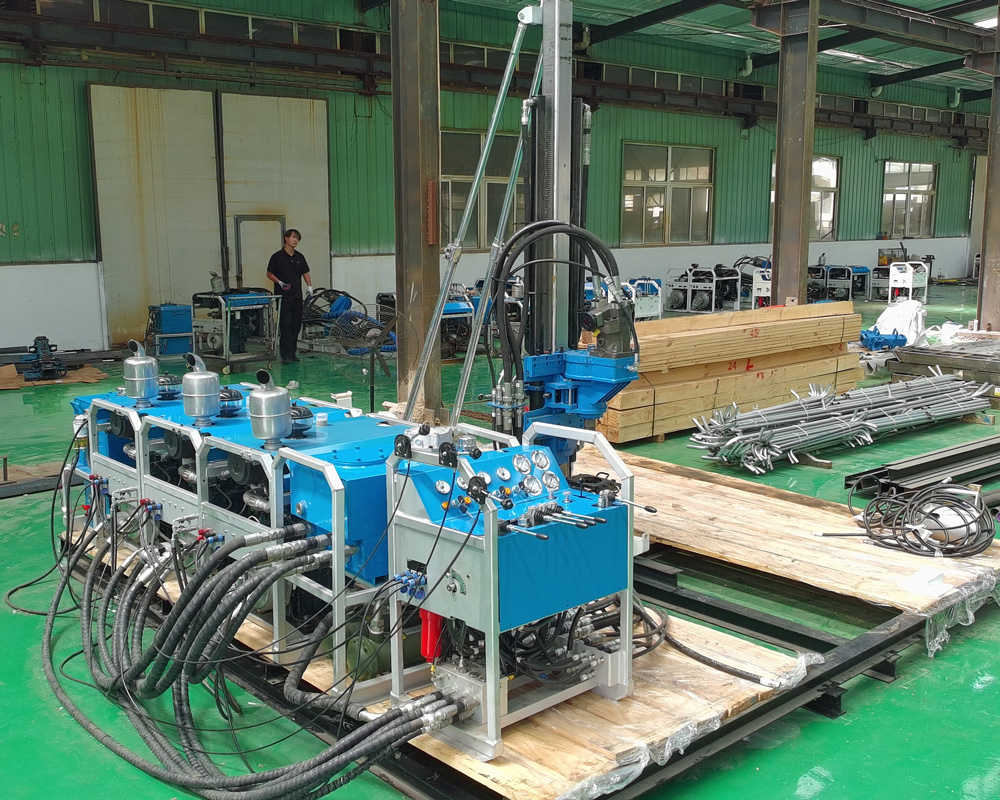
The portable split solution divides power, operation, hydraulic oil, mud and other systems into several transport units. With individual module weights reduced, it can reach hole locations via narrower routes, cableways or manual carrying. Here is the divergence point: if hole accessibility is the main constraint, the comparison should not be total machine weight but maximum single-module weight and the carrying method.
What coring needs the CR1000P's split structure serves
The CR1000P is a 1000-meter-class portable split fully hydraulic core drill, aimed not at ordinary shallow-hole projects but at deep exploration scenarios requiring kilometer-level coring capability where large integrated rigs struggle to reach the hole. Its reference depths are 1150 m for BQ, 1000 m for NQ and 550 m for HQ, with drilling angles of 45°–90°. These specifications show it covers continuous coring over relatively deep hole sections rather than primarily fast shallow-hole completion.
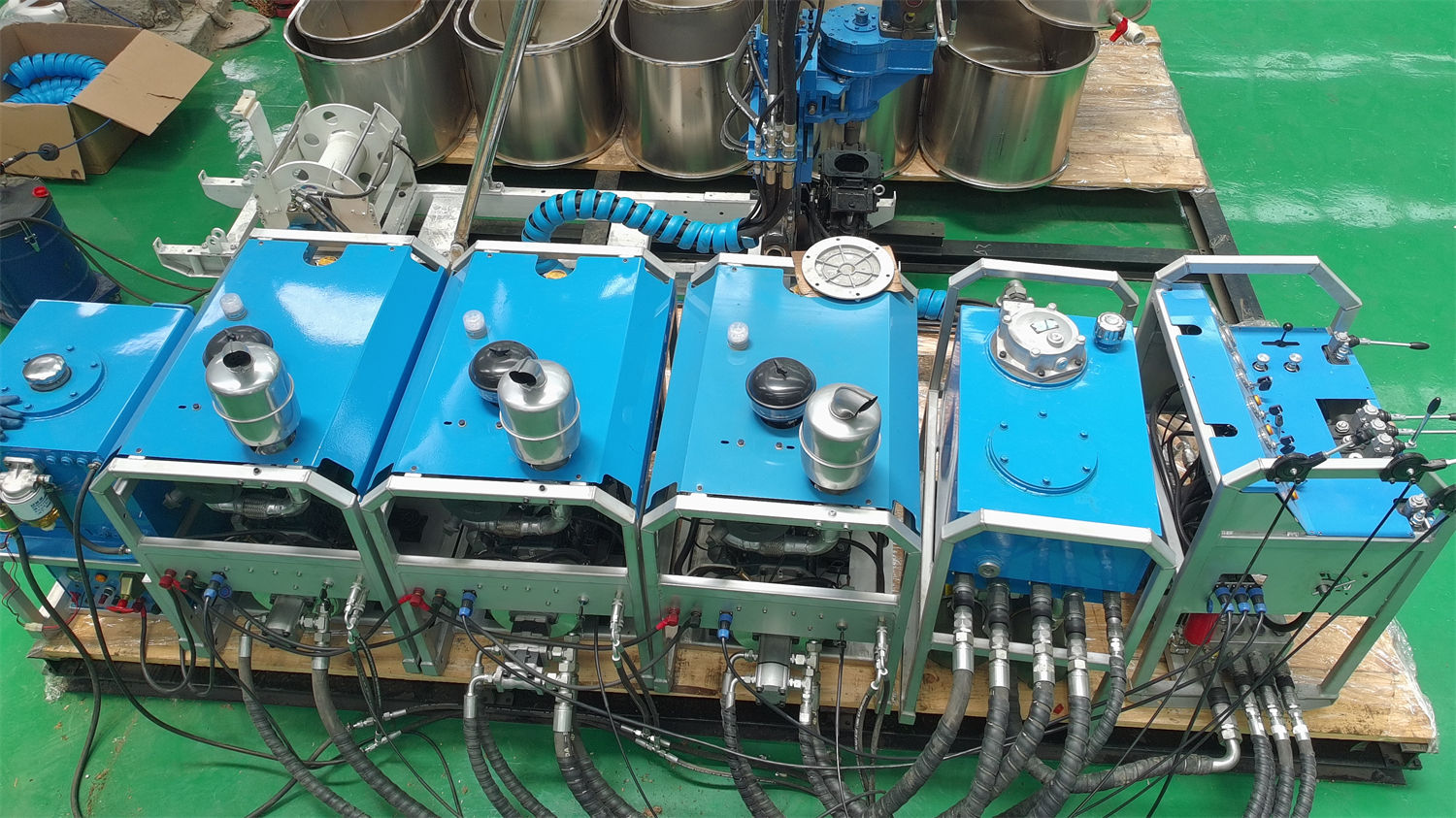
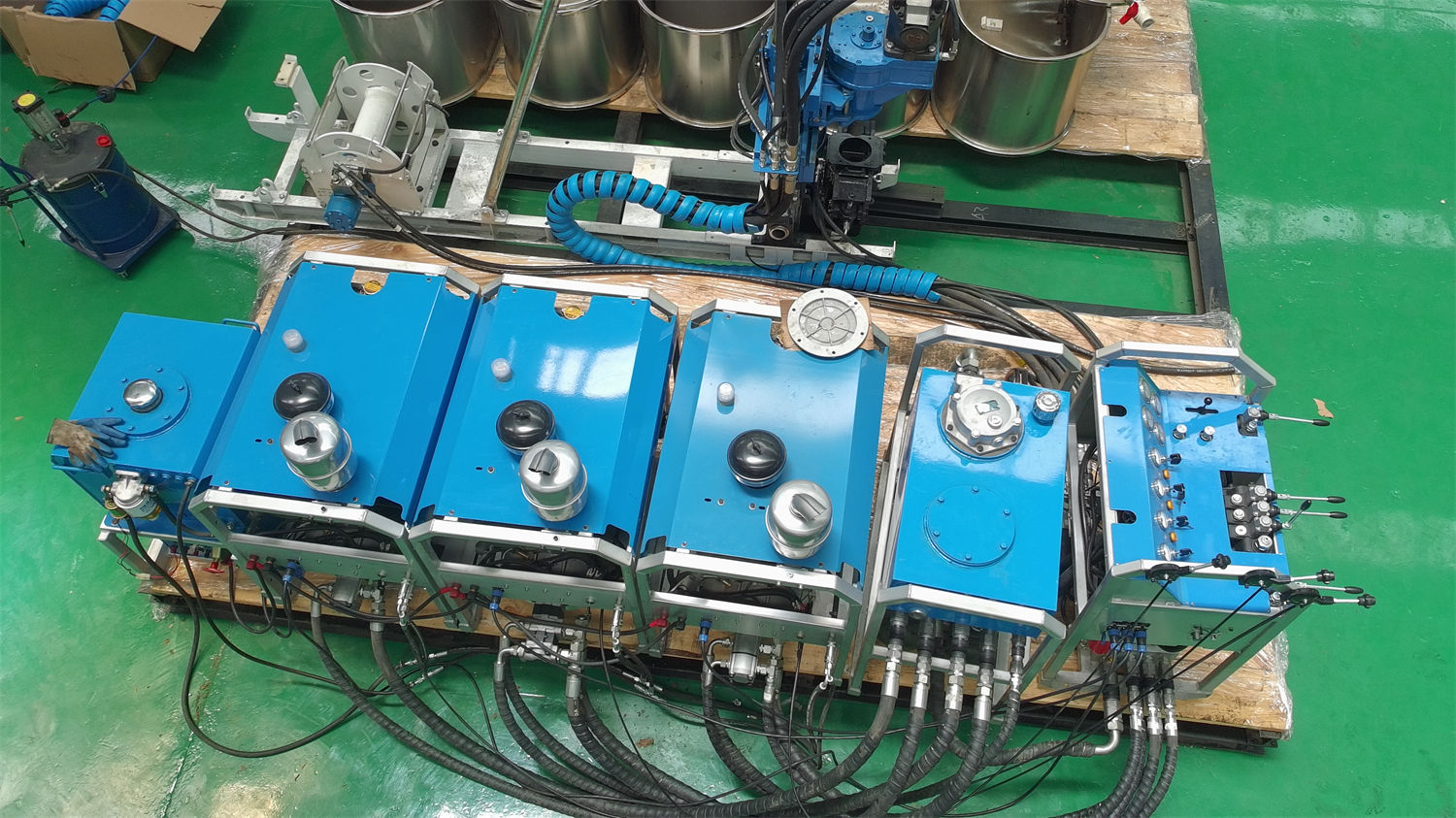
Among reference module weights, the power unit is 180–260 kg, the operation unit 145 kg, the hydraulic oil unit (including oil) 160 kg and the mud unit 95 kg, with a total weight of 1640 kg. To judge whether a split solution works, check whether the heaviest single module can pass existing roads, cableways or lifting conditions, not just total weight. A total of 1640 kg is not light; what splitting lowers is the single-piece transport threshold, not the ability to move the whole rig at will.
Where the process difference falls in deep-hole coring
The integrated type leaves assembly work at the factory, keeping site procedures short; it suits mining areas with relatively concentrated holes and good access roads. The split type moves part of the installation to the site, so after arrival each hydraulic interface, chuck and power head must be checked item by item. This work does not disappear; it shifts from factory to hole collar.
For deep-hole projects, whether this shift is worthwhile depends on three conditions: whether holes are scattered in road-restricted areas, whether the single-hole construction cycle is long enough to amortize assembly time, and whether the site has basic lifting or manual-carrying organization. If holes are dense and roads clear, the integrated type's site advantages are more obvious; if holes are scattered in high mountains or forests, only then may the split solution's savings in road building and transport hold.
Power and circulation support must be checked against project conditions
The CR1000P requires diesel engine power of ≥132 kW, or alternatively a 30 kW×3 electric motor configuration. Field projects far from the grid usually consider diesel power; mine platforms with stable power supply can evaluate the electric option. The two power forms correspond to site energy conditions, not a difference in efficiency.
The mud unit has a flow of 100 L/min and pressure of 7 MPa. As hole depth increases, cuttings transport distance grows and circulation resistance rises; in lost-circulation zones and water-bearing fractures, the mud system must be adjusted based on return water, pump pressure and core condition, not solved merely by raising pump pressure. The hydraulic system main pump has a flow of 200 L/min and pressure of 25 MPa, with a 200 L main tank; long-cycle deep-hole construction requires establishing hydraulic oil contamination control and radiator cleaning procedures.
Hoisting and rotation capacity must be viewed together with downhole process
The power head has maximum torque of 1100 N·m and maximum speed of 1250 rpm; feed force is 67 kN and pull force 130 kN. As hole depth increases, drill rod weight, wall friction and hole deviation become more pronounced; operations should adjust bit pressure, rotation speed and flushing fluid according to changes in torque and pull-out resistance, avoiding continued forced drilling under abnormal conditions.
The winch system uses 6 mm wire rope with a capacity of 1200 m, bare-drum lifting force of 14.5 kN, full-drum lifting force of 6.9 kN and lifting speed of 116 m/min. For deep-hole wireline coring, focus on wire rope fatigue, rope-end fixing and spooling. These capacities correspond to deep-hole inner-tube lifting and drill-string handling needs and should not be simply understood as achieving nominal depth in any formation.
Conditions to confirm item by item before purchase
- Hole transport conditions: whether the carrying method, route width and lifting capacity for the heaviest single module are secured.
- Drilling objective: whether the reference depth for the main hole diameter covers the project's deepest hole section, and whether depth is equipment capability or project demand.
- Formation data: distribution of intact hard rock, strongly weathered sections, fault fracture zones and lost-circulation water-bearing zones, affecting run length and mud management.
- Power and water/electricity conditions: fuel supply, power capacity and site maintenance resources for diesel or electric options.
- Supporting materials: reserves and replenishment cycles for drill rods, core barrels, bits, wire rope and mud materials.
- Site assembly and personnel conditions: basic lifting or manual-carrying organization for the split solution, and item-by-item inspection arrangements after assembly.
After checking these conditions item by item, judge which solution—portable split or integrated—better fits the project constraints. The CR1000P's specifications support kilometer-level coring and modular transport, but suitability for a specific project still depends on hole accessibility, target depth and diameter, formation conditions and site support. When requesting a quote, provide the drilling purpose, formation overview, target depth and diameter, drilling method, access transport conditions, and water, power and air supply conditions to facilitate configuration review.