












Ultra-deep water supply projects often set the water supply target and approximate well depth first, while grid conditions can only be clarified after mobilization or coordination with the mine owner or industrial park. Selecting equipment at this stage easily leads to two passive situations: first specifying a diesel engine, then discovering that a fixed drilling site has a stable power source, making fuel costs and emissions a long-term burden; or first considering an electric solution, then finding that the grid is not in place after mobilization and having to find another power solution. When power supply conditions are uncertain, a more practical approach is to treat power form as a condition that must be judged together with drilling depth, hole diameter, and schedule, rather than fixing it first and making adjustments later.
The following sections outline how the oil-electric dual-power configuration applies to ultra-deep water supply projects in the order of operational objectives, site constraints, equipment features, and items to be confirmed. The models and parameters in this article come from verified product information and are used only to explain the basis for selection; they do not constitute a commitment to well completion results for any specific project.
Break Down Requirements First: What Else to Confirm Beyond Power Supply for Ultra-Deep Water Supply Projects
Power supply is only one of the site conditions. Whether an ultra-deep water supply well can be successfully drilled and completed involves at least the following categories of requirements, whose priorities differ during equipment selection:
- Target well depth and water-bearing horizon: determines how much depth capability the equipment needs to reserve, but the maximum nominal drilling depth is not equal to the actual completed well depth under any formation.
- Well diameter and well structure: affects drill bits, casing, torque, and lifting loads, and also affects the subsequent pump scheme.
- Formation combination: upper loose layers, deep hard rock, fractured zones, and aquifers have different requirements for drilling methods and wall protection methods.
- Construction period and site nature: power supply conditions differ significantly among fixed mine drilling sites, remote field locations, and industrial parks.
- Air supply and circulation support: pneumatic DTH hammer drilling has clear requirements for air compressor pressure and flow, while mud rotary drilling requires another set of circulation conditions.
Only after laying out these requirements can one evaluate the power form and judge whether oil-electric dual power truly reduces uncertainty or merely adds a set of configurations that are temporarily unusable.
Selection Thinking for Power Form When Power Supply Is Unclear
Projects with temporarily unclear power supply conditions usually have three paths: pure diesel power, pure electric solutions, and dual-power solutions that can be configured with diesel and electric power.
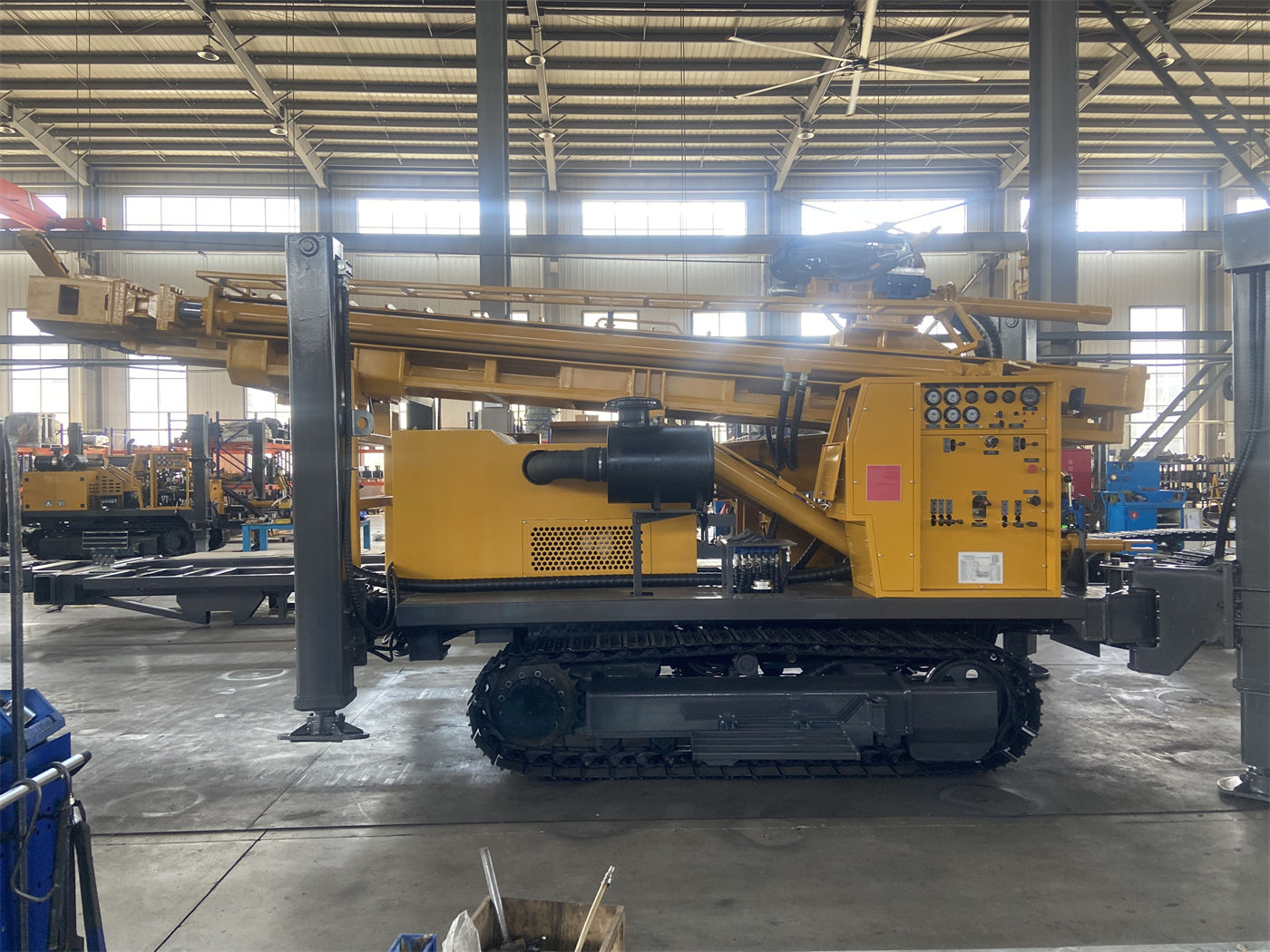
Pure diesel power is more straightforward for independent field construction, but long-term operation at fixed drilling sites places greater pressure on fuel and emissions management. Pure electric solutions depend on a stable grid; if any of voltage, frequency, transformer capacity, cable distance, and starting current is not secured, the equipment will be difficult to operate as expected. The value of oil-electric dual power lies in leaving the power form to be determined after site conditions are clear, rather than being forced to choose one at the procurement stage.
It should be noted that oil-electric dual power does not automatically mean fuel savings at any site. The final power, voltage, frequency, and starting scheme of the electric part should be determined according to the project's power supply system and cannot be simply converted from diesel power. If the project never has a reliable power source, the value of the electric part in the dual-power configuration is limited, and this should be honestly weighed during selection.
What Requirements Does a 1200-Meter-Class Oil-Electric Dual-Power Crawler Water Well Drilling Rig Correspond To
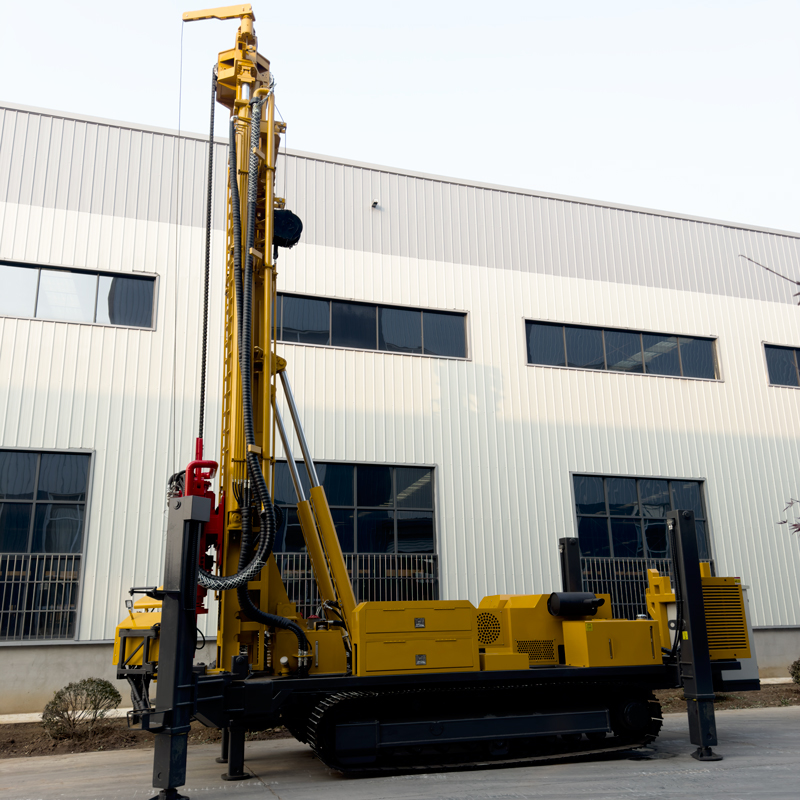
The WR1200SL associated with this article is a 1200-meter-class oil-electric dual-power telescopic mast crawler water well drilling rig, with a maximum drilling depth of 1200 m, a drilling diameter of 105–900 mm, 60 T lifting force, 30000 / 15000 N·m rotary torque, and 264 kW diesel power, supporting 9.6 m drill pipes. The following maps its verified features item by item to the aforementioned requirements.
Power Form and Power Supply Uncertainty
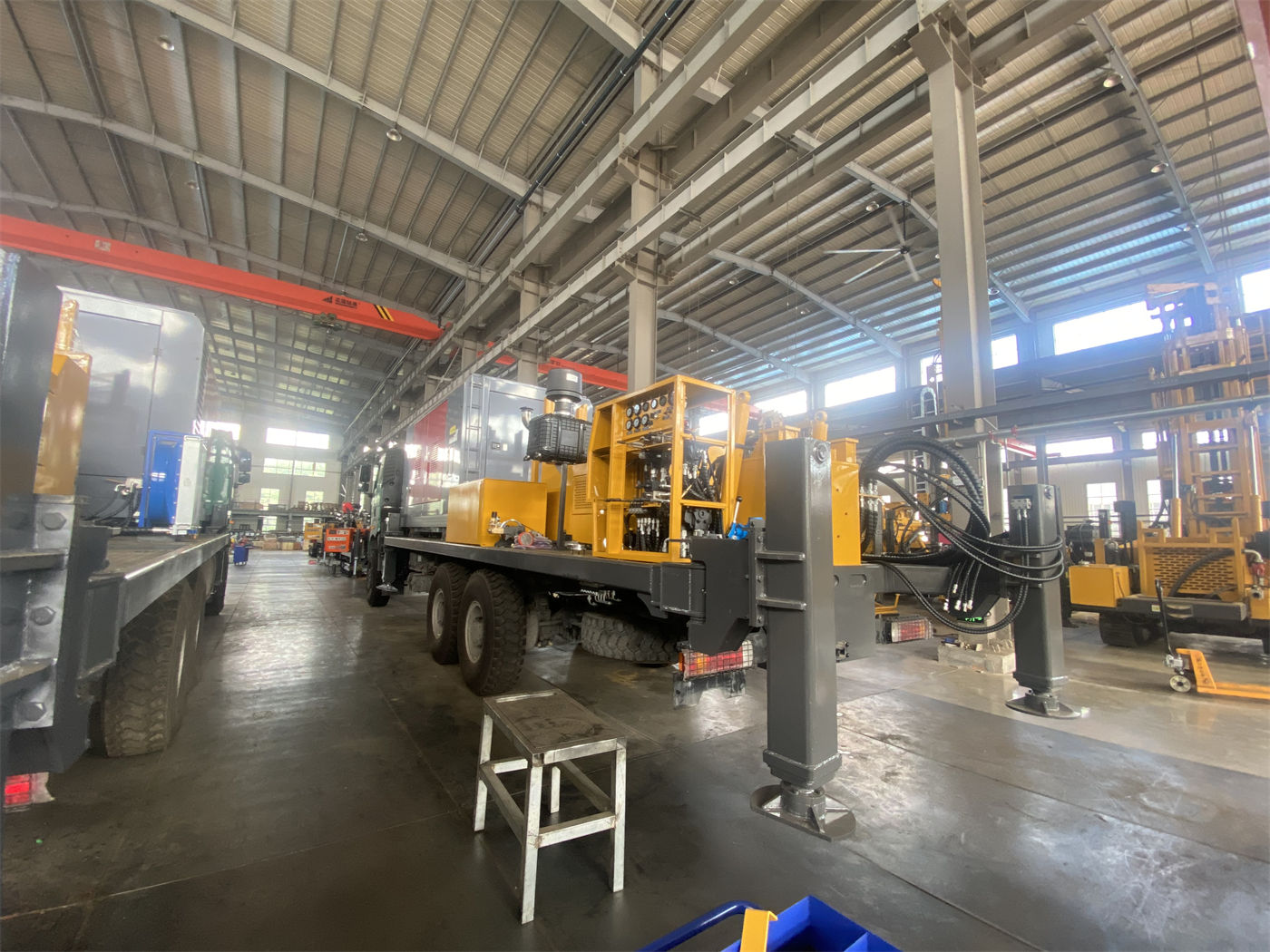
The equipment adopts a diesel and electric dual-power configuration and can be configured between diesel and electric schemes according to site conditions. For remote mining areas, deserts, and field projects, diesel power retains independent construction capability; for fixed mine drilling sites, industrial parks, or long-term construction projects, if a stable grid is available, an electric scheme can be considered to reduce fuel consumption and on-site emissions. This feature corresponds precisely to project scenarios where power supply conditions are unclear in the early stage and may change later.
Depth Capability and Well Depth Requirements
The maximum drilling depth of 1200 m brings the equipment into the range of large ultra-deep water well construction and can cover deep projects such as deep aquifers, deep mine wells, industrial high-flow water supply, and some geothermal investigations. However, this value is a nominal upper limit; actual drilling depth still needs to be determined based on hole diameter, formation, drill pipe, air compressor, and hydrogeological conditions, and cannot be directly treated as the completed well depth for every well.
Hole Diameter Range and Well Completion Structure
The drilling diameter of 105–900 mm allows the maximum hole diameter to accommodate larger well casings and higher-flow pump schemes. Large-diameter construction also places higher demands on air compressors, drill bits, casing, torque, and lifting systems. In actual projects, a reasonable hole diameter should be selected according to the completion target, and it is not recommended to use the maximum hole diameter as a routine configuration for a long time.
Drill String Handling and Ultra-Deep Hole Operations
The 60 T lifting force and 10 T axial pressure leave load margin for the self-weight of the drill string in ultra-deep holes, borehole wall friction, and casing weight; the 30000 / 15000 N·m dual-condition rotary torque corresponds to maximum rotation speeds of 85 / 170 r/min. It supports 9.6 m drill pipes, with recommended drill pipe diameters of 114 / 127 mm, which can reduce the number of connections and disconnections in deep holes over 1000 meters. These conditions jointly affect the organization of tripping and long-cycle construction in ultra-deep holes, but in case of stuck pipe or hole shrinkage, the hole should still be cleaned first and the downhole condition judged; one should not rely solely on the lifting force margin to handle it.
Mast and Relocation
The telescopic mast can shorten the transport profile during relocation and then extend to working height after reaching the hole position, improving loading, road passage, and internal site relocation conditions. For ultra-deep water supply projects with scattered hole positions or multiple relocations, this structure affects transport organization rather than drilling capability itself.
Air Supply Support
For pneumatic DTH hammer drilling, the recommended working air pressure is 1.65–8 MPa, and the air consumption is 16–120 m³/min. Ultra-deep holes, large diameters, and hard rock conditions place high demands on air compressor displacement, and selection must consider both pressure and flow; if displacement is insufficient, even if pressure meets the requirement, there may be insufficient impact and difficult cuttings removal. The air compressor is a supporting condition of the overall machine scheme and must be separately confirmed according to the actual drilling method.
Applicable Boundaries and Items to Confirm Before Purchase
The oil-electric dual-power configuration is suitable for projects where power supply conditions may change during the project cycle and depth requirements fall within the range of large ultra-deep water wells. If the well depth is significantly below this level, or if on-site power supply cannot be secured at all, the necessity of this configuration should be re-evaluated.
Before purchase, it is recommended to check item by item:
- Target well depth, well diameter, and well structure, as well as hydrogeological data for the water-bearing horizon;
- Expected formation combinations, and the drilling methods and wall protection methods for upper loose layers and deep hard rock respectively;
- If an electric scheme is considered, the voltage, frequency, transformer capacity, cable distance, and starting conditions available on site;
- Whether pneumatic DTH hammer drilling will be used, and whether the pressure and flow of the supporting air compressor can cover the planned hole diameter and depth;
- Matching of drill pipe specifications and casing specifications with lifting and rotary capabilities;
- Transport roads, loading conditions, and internal site relocation space;
- Construction period length, and the method for weighing long-term fuel and electricity costs.
Unclear power supply conditions do not necessarily point to a particular power form; a more reasonable approach is to judge power, drilling depth, hole diameter, and supporting conditions together. When requesting a quotation, provide the drilling purpose, formation data, target hole depth and diameter, planned drilling method, mobilization and transport conditions, as well as water, electricity, and air supply conditions, so that equipment information can be checked item by item.