












In the WR500RCE documentation, 'E Series' does not correspond to a set of independent technical parameters. Throughout this product description, there are no entries such as 'E Series torque' or 'E Series drilling depth.' It appears in the overall product positioning description: the E Series positioning emphasizes cost-effectiveness, controlling equipment procurement and configuration complexity while retaining 500-meter-class drilling capability, 300 kN lifting force, and relatively high rotary torque. In other words, the E Series is not a capability level of this drilling rig, but a name given by this documentation to a set of trade-off orientations.
Viewed as a trade-off, the question changes: it is not 'Is the E Series strong?' but rather on which projects this documentation retains full capability, and at which points it returns decision-making to the project itself.
What is retained: 500-meter-class capability has not been dismantled
The documentation is quite specific here. The WR500RCE has a maximum drilling depth of 500 m, borehole diameter of 140–400 mm, lifting force of 300 kN, feed force of 150 kN, rotary torque of 8000–12000 N·m, rotary speed of 40–160 r/min, and power from a 132 kW diesel engine at a rated speed of 2400 r/min. These values are not reduced by the E Series positioning; they constitute the basic threshold for this equipment to undertake deep water wells, agricultural irrigation, mining water supply, and dewatering drilling.
For construction teams hoping to enter the 500-meter-class water well market while controlling initial equipment investment, the signal from this documentation is: the budget compression points are not in drilling depth, lifting force, rotary torque, or other items that directly determine hole-forming capability. The original text states 'concentrate the budget on capabilities that truly affect construction,' and the corresponding examples listed are precisely drilling depth, lifting force, rotation, air compressor matching, and in-hole cleaning capability.
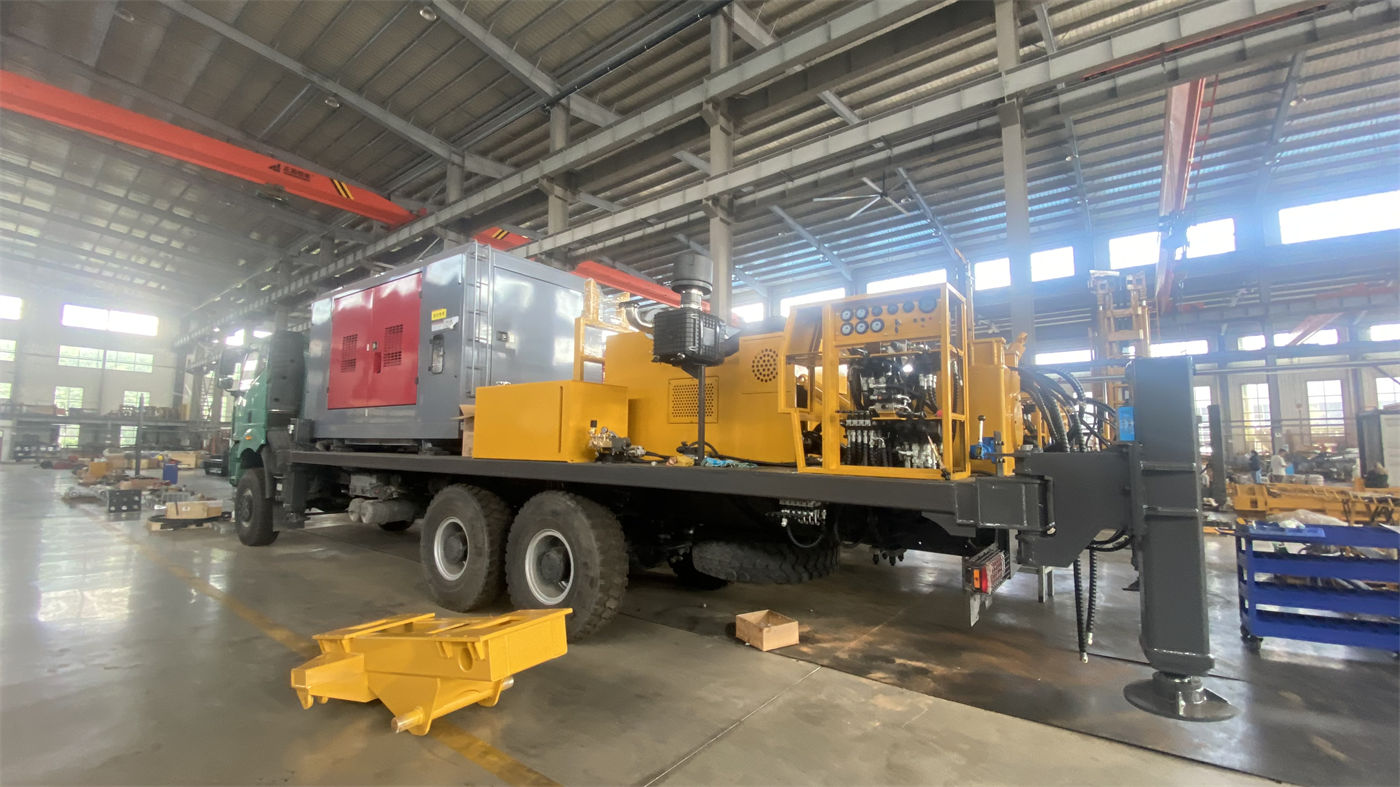
Where the trade-offs appear: optionalization of ancillary items
This documentation does not describe the E Series as a 'reduced configuration list'; it says 'control configuration complexity.' The two are not the same thing, but in the procurement process they lead to the same result—many ancillary items need to be selected separately according to the project.
Drill pipe and feed stroke: two versions coexist
The feed stroke can be configured as 3.3 m or 6.6 m, and drill pipes support multiple specifications of 1.5 / 2 / 3 / 6 m. The documentation discusses the trade-off between the two quite directly: the 6.6 m long stroke is suitable for reducing the number of pipe connections and improving continuous drilling efficiency; the 3.3 m configuration is more conducive to controlling the overall working height and site adaptability. This is a budget-related choice, because stroke length, mast height, transport dimensions, and drill pipe specifications are a linked set of items and cannot be chosen individually.
Air compressor: a key ancillary not included in the overall machine parameters
The documentation states a recommended working pressure of 1.7–3.5 MPa and air consumption of 17–42 m³/min, and clearly points out that the air compressor is a key ancillary for the air-lift reverse circulation system. As hole depth increases, hole diameter enlarges, rock formations harden, or construction altitude rises, the required displacement will increase; actual selection must also consider the needs of both the DTH hammer and reverse circulation cuttings return. The overall machine parameter table does not include the air compressor, meaning the cost and matching responsibility for this item fall on the project side.
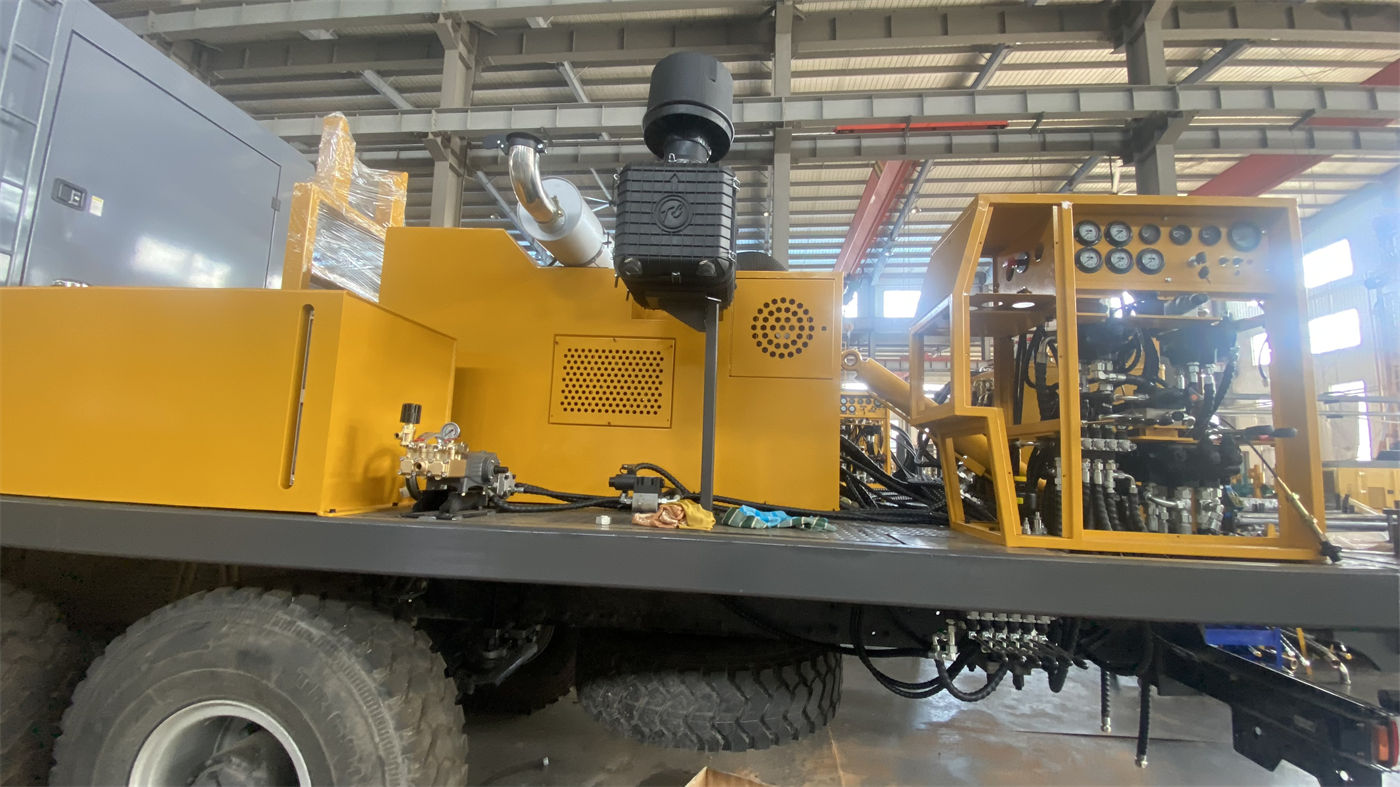
Construction tools and auxiliary systems
The documentation lists configurable reverse circulation DTH hammers, drill bits, drill pipes of different specifications, casing tools, air compressors, high-pressure air hoses, oil mist lubricators, foam pumps, and generators. The original text also states 'not all configurations are needed for different formations.' This sentence is the most straightforward footnote to the E Series trade-off logic: the length of the configuration list is determined by the formation and process route, not automatically by the equipment model.
Under which working conditions these trade-offs show differences
| Working condition | Relevant conditions in the documentation | Trade-off focus |
|---|---|---|
| Hard rock, intact rock formation | Suitable for granite, basalt, limestone, sandstone DTH drilling | DTH hammer, drill bit, air volume matching |
| Fault, fractured zone | Prone to block falling, diameter reduction, air leakage, sticking | Casing or foam assistance, hole cleaning arrangement |
| Air-leakage formation | Open fractures, karst caves, high permeability | Air compressor displacement, foam or casing |
| Strong water inflow section | Water inflow changes cuttings return and DTH hammer status | Air supply, hole cleaning, casing method adjustment |
None of these conditions in the table are solved by the main machine itself; they need to be planned at the configuration stage. The E Series returns the choice to the project, at the cost that the purchaser must have their own basis for judgment; the benefit is not paying in advance for functions that will not be used.
Parts unrelated to trade-offs: these parameters remain fixed
To avoid reading the E Series as 'everything can be saved,' several values in this documentation are definite overall machine capabilities that do not change with configuration: 132 kW diesel power and 2400 r/min rated speed, 300 kN lifting force, 150 kN feed force, 8000–12000 N·m rotary torque, 40–160 r/min rotary speed, 20 kN auxiliary winch, walking speed of about 2.5 km/h, reference gradeability of 30°, and overall weight of about 12 T.

Transport and working dimensions are also fixed: transport dimensions of about 6300 × 2100 × 2500 mm, working dimensions of about 4000 × 2900 × 6800 mm. The working dimensions include the height after the mast is raised, which directly constrains the reserved space on site and is unrelated to options.
Questions this documentation does not answer
The documentation provides the E Series positioning statement and complete parameters, but does not provide several types of information commonly asked in procurement, which need to be confirmed separately:
- Whether the 3.3 m and 6.6 m feed strokes differ in overall machine weight, price, and delivery cycle is not given in the documentation;
- Whether ancillaries such as air compressors, foam pumps, and generators are supplied with the main machine or purchased separately by the project is only written as 'configurable' in the documentation;
- Whether transport dimensions change under different combinations of feed stroke and drill pipe specifications is not addressed; the documentation gives only one transport dimension value;
- The specific borehole diameter, drill pipe specifications, and formation combination corresponding to the 500 m drilling depth: the documentation states that the final well depth should be determined by hydrogeological data and the actual water-producing layer, and is not bound to a fixed combination.
Reading the E Series as a trade-off is closer to how this documentation is written than reading it as a configuration grade. What it retains are the values of hole-forming capability itself; what it compresses is the preset length of the configuration list. Which projects are suitable depends on whether the purchaser can clearly arrange the formation, air compressor matching, and well completion process.