












Hole position deviation in foundation pre-drilling often does not appear only after drilling starts; it accumulates gradually during equipment positioning, attitude adjustment and the drilling process. For slope anchoring, equipment foundations, guardrail posts and short pile pre-drilling, if the hole position is off, subsequent installation of anchor rods or reinforcement cages will be affected. The question here is: when a compact crawler DTH drill performs foundation pre-drilling, which stages support hole position accuracy, and which aspects are boundaries not yet given in the information and requiring on-site verification.
It should first be noted that hole position accuracy is not a performance indicator listed separately in the product information. The following analysis is based on the verified structure, attitude adjustment capability and drilling parameters of this model, and is used to explain the relationship between each stage and hole position control, rather than to give a numerical accuracy commitment.
Whether positioning is stable determines the starting point of hole position control
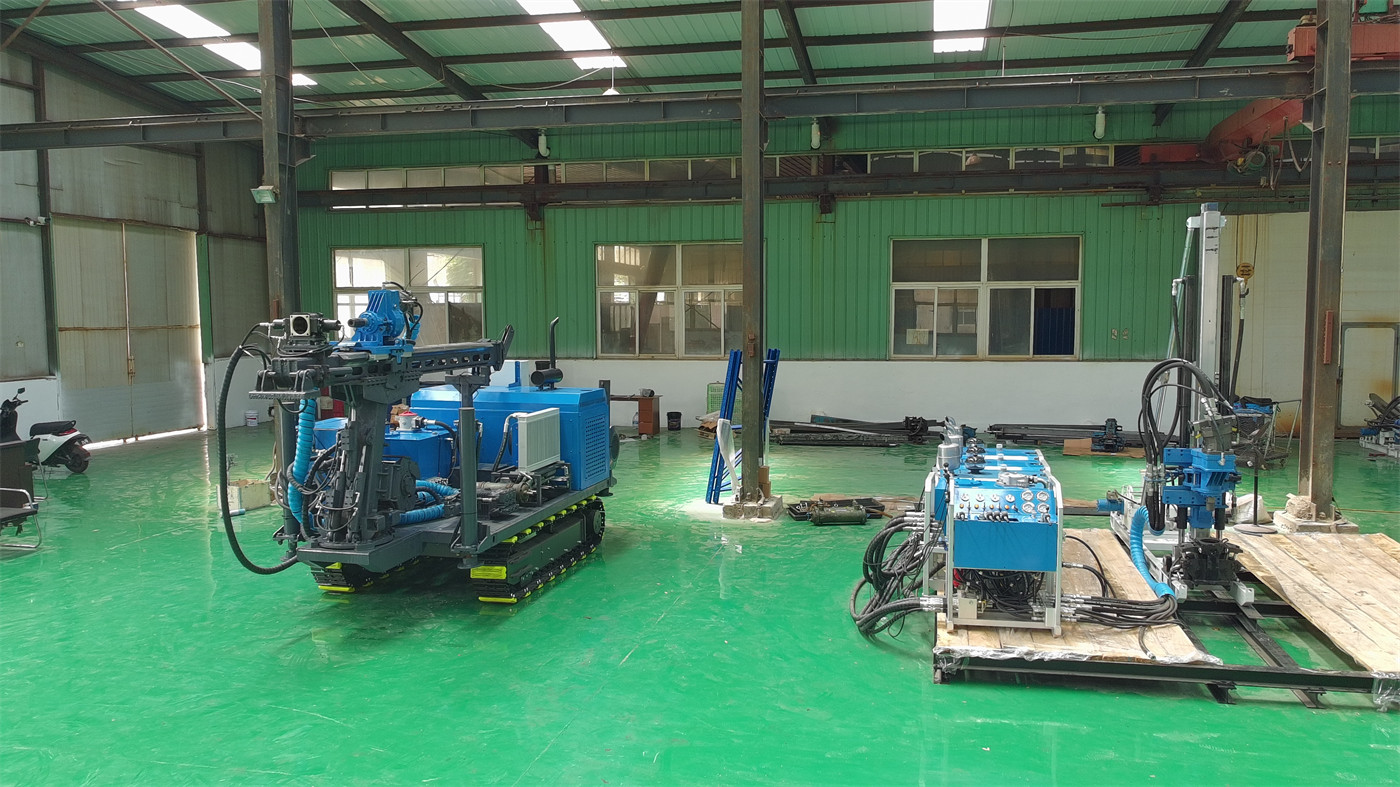
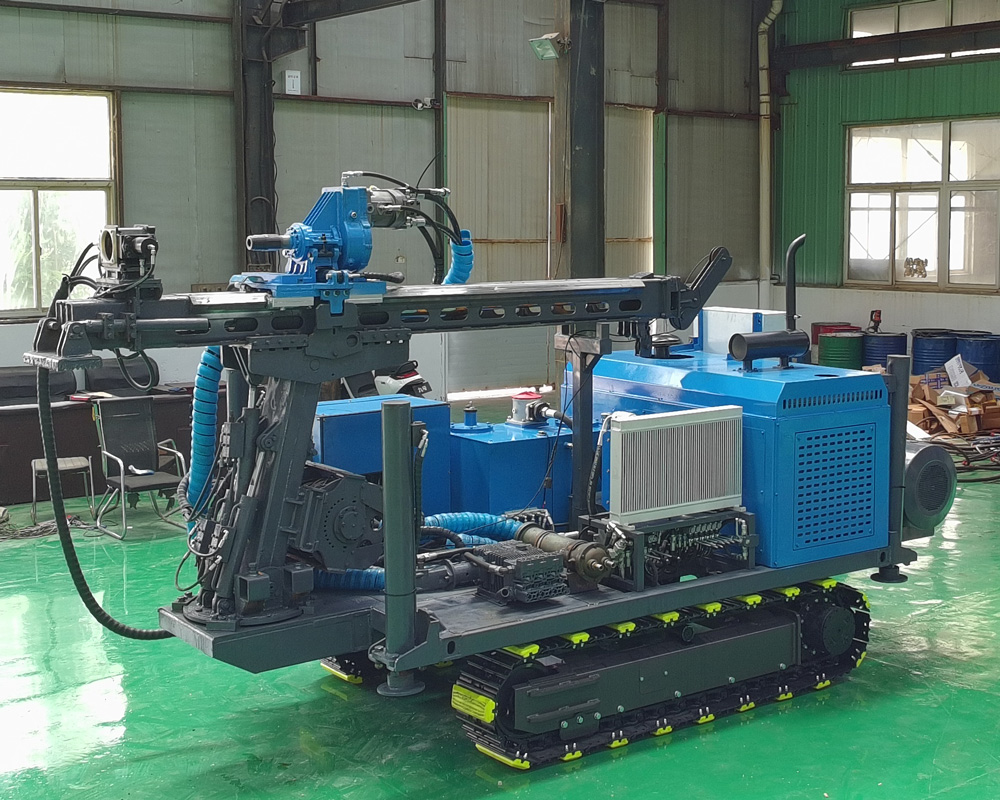
After hole positions are laid out, the equipment's parking position and chassis condition are the first step. This model uses an engineering rubber crawler chassis, with an overall weight of about 2500 kg and dimensions of about 3200 × 1200 × 1850 mm, suitable for compacted soil, gravel roads, construction access roads and generally uneven sites. Rubber tracks are relatively friendly to paved surfaces, with a travel speed of 5–10 km/h, making short-distance repositioning within the same construction area convenient.
However, compactness and light weight also mean that ground bearing capacity requires more attention during positioning. On backfill soil, soft overburden or the edge of a slope platform, the chassis may sink or tilt slightly, which directly introduces deviation in hole collar position and hole direction. The information does not give the specific configuration of outriggers or leveling mechanisms, so how the equipment is leveled on soft ground or slopes and whether auxiliary pads are needed are matters to confirm with the supplier before purchase.
Swing and tilt angle adjustment address hole direction, not hole position
Foundation pre-drilling is not necessarily always vertical. Slope anchor bolt holes, anchor cable holes and drainage holes often have design inclinations, and the equipment needs to be able to adjust drilling attitude. This model has a swing angle range of 18–180° and tilt angle adjustment capability, and can be used for vertical holes, inclined holes and some lateral holes.
Two things need to be distinguished here: swing angle addresses the direction and inclination of the drill rig relative to the chassis, while hole position depends on the chassis parking position and hole collar alignment. No matter how accurately the attitude is adjusted, if the chassis is not aligned with the layout point, the hole position will still be off. The information does not give the specific angle range for tilt adjustment or the angle indication method, so how the angle is set and rechecked during inclined hole construction should be based on the final production configuration and technical confirmation documents; it should not be directly inferred from the swing angle range that any angle can be set accurately.
The drilling process itself also changes hole position
After collaring, whether the hole position is maintained depends on the matching of rotation, feed and impact. This model has a maximum rotation torque of 3500 N·m, a drilling diameter of 76–280 mm, a maximum drilling depth of 30 m, and is suitable for rock hardness of about f = 8–24. The information mentions that if rotation resistance continues to increase, return of cuttings decreases or bit bouncing is obvious, parameters should be adjusted promptly and the hole cleaned.
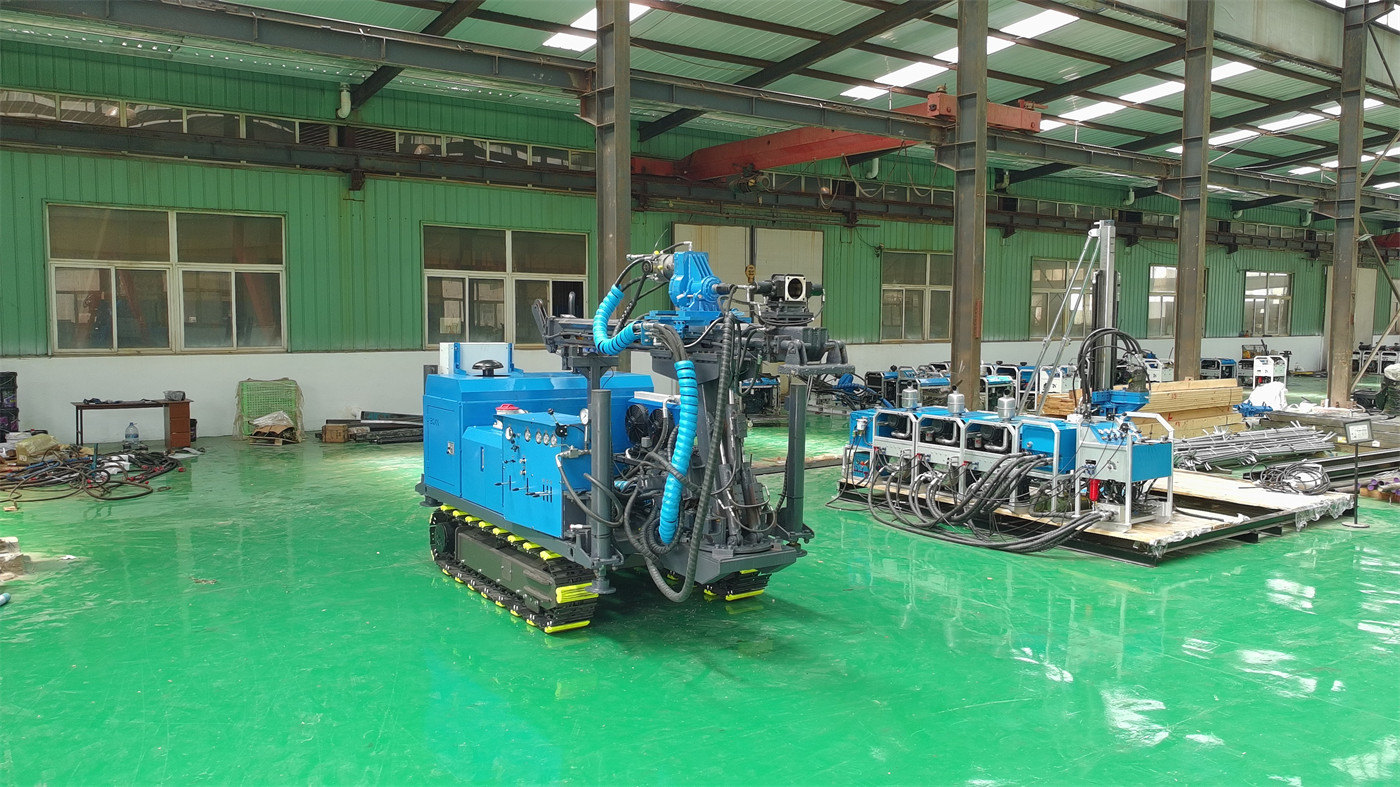
Bit bouncing and drill rod swinging are common sources of hole position deviation during the collaring stage. In weathered rock, soil-rock mixed layers and upper loose overburden, the information recommends reducing feed speed and, as needed, using casing, starting drilling tools or other upper hole stabilization methods. These practices target hole wall stability and collaring guidance, and are directly related to hole position control. As for the specific formation conditions under which casing must be used and how starting drilling tools should be selected, the information only gives direction and no quantitative criteria, so verification with on-site formation conditions is required.
Air supply and hole cleaning indirectly affect hole position maintenance
DTH drilling relies on compressed air to drive the DTH hammer and discharge cuttings. The reference air consumption given in the information is about 8 m³/min, while noting that the original table marked it as 8 m²/min; this article interprets it according to the common flow unit, and the final value should be confirmed by formal technical information. When air supply is insufficient, cuttings return poorly, cuttings are re-crushed at the hole bottom, bit working conditions deteriorate, and bouncing and deviation are easily aggravated.
In broken rock formations and fracture zones, block falling, air leakage and sticking are likely. The information recommends reducing excessive feed, maintaining continuous hole cleaning, and using casing when the hole wall is unstable. These measures are both hole stabilization requirements and related to whether the hole position can be maintained. Air compressor capacity, DTH hammer specifications and bit wear condition need to match the main machine. The information does not give specific values for air compressor pressure level, so air supply parameters should be treated as supporting items to confirm during purchase.
Multi-angle capability and crawler mobility cannot replace process control
The 18–180° swing angle, tilt angle adjustment and rubber crawler chassis give this equipment good attitude adaptability and transfer convenience on slopes, plant areas and narrow construction sites. The 3.2 m slide frame stroke and 2.2 m effective stroke are suitable for medium-short drill rods and short pile construction. However, a large attitude adjustment range does not mean that hole position accuracy is the same at every angle; crawler mobility does not mean stable positioning on any ground. Treating equipment capability as an accuracy guarantee is a common misunderstanding in foundation pre-drilling selection.
Several conditions to verify before purchase
- Whether there are clear design requirements or acceptance standards for hole position accuracy. The equipment information does not give accuracy indicators, so the achievable control method needs to be confirmed with the supplier.
- The specific angle range for tilt adjustment, angle indication and locking method; the original information does not give numerical values.
- The leveling method and auxiliary support configuration of the chassis on soft ground and slope platforms.
- Whether the air compressor pressure and flow can match the selected DTH hammer and bit; the unit of reference air consumption needs to be confirmed with formal information.
- Whether casing or starting drilling tools are prepared for upper loose layers and broken zones, and the corresponding interface dimensions.
- Turning space at the construction site, ground bearing capacity and underground pipelines. The overall width is about 1.2 m, and on-site verification should be carried out before entry.
Hole position accuracy is the result of the combined action of positioning, attitude, drilling parameters, formation conditions and air supply support; no single function can guarantee it alone. This 30-meter-class crawler hydraulic DTH drill provides corresponding conditions for compact positioning, multi-angle adjustment and medium-shallow hard rock drilling, but specific accuracy-related indicators and configuration details still need to be based on formal technical information and on-site conditions. When requesting a quotation, it is recommended to provide the drilling purpose, formation description, target hole depth and diameter, hole direction requirements, site access and transportation conditions, and supporting conditions such as the air compressor, so that the supplier can provide corresponding configuration explanations.