












Reverse circulation drilling is often summarized as "cuttings come out through the drill pipe." This sentence describes the sample return path, not the hole completion result. For contractors preparing to set up exploration holes or deep water wells, what really needs to be judged is: what conditions this path imposes on drilling tools, air supply, and sample management, and which links still need to be controlled separately. This article starts from this concept and, based on verified information about a 500-meter class crawler-mounted reverse circulation drill rig, explains its applicable boundaries and the matters that should be confirmed before procurement.
The sample return path has changed, and the sampling procedure changes accordingly
In conventional direct circulation drilling, the flushing medium travels down through the drill pipe and carries cuttings up through the annulus between the drill pipe and the borehole wall. Reverse circulation uses a dual-wall drill pipe to establish an independent channel: the medium enters the hole bottom from the annulus or outer pipe, and cuttings mainly return to the surface through the inner pipe. The direct result of this path change is that the time and distance during which cuttings contact the borehole wall are shortened, and the chance for cuttings from different depths to mix with each other on the way up is correspondingly reduced.
However, "reducing the chance of mixing" does not equal "the sample is automatically representative." Whether the sample return is continuous, whether the hole is cleaned when adding a rod, and how transition samples are handled when drilling resumes after a stop still depend on the on-site sampling system. Treating the path advantage as a guarantee of sample quality is a common misunderstanding when understanding reverse circulation.
What conditions this path imposes on the equipment
Because cuttings must return to the surface at high speed through the inner pipe, the air compressor must not only drive the down-the-hole hammer at the hole bottom but also handle the task of carrying samples upward. The recommended working air pressure given in the information is 1.6–6 MPa, and the recommended air consumption is 16–55 m³/min. Actual selection should be combined with hole diameter, RC hammer specifications, altitude, and rock hardness, and cannot be configured based on a single value alone.
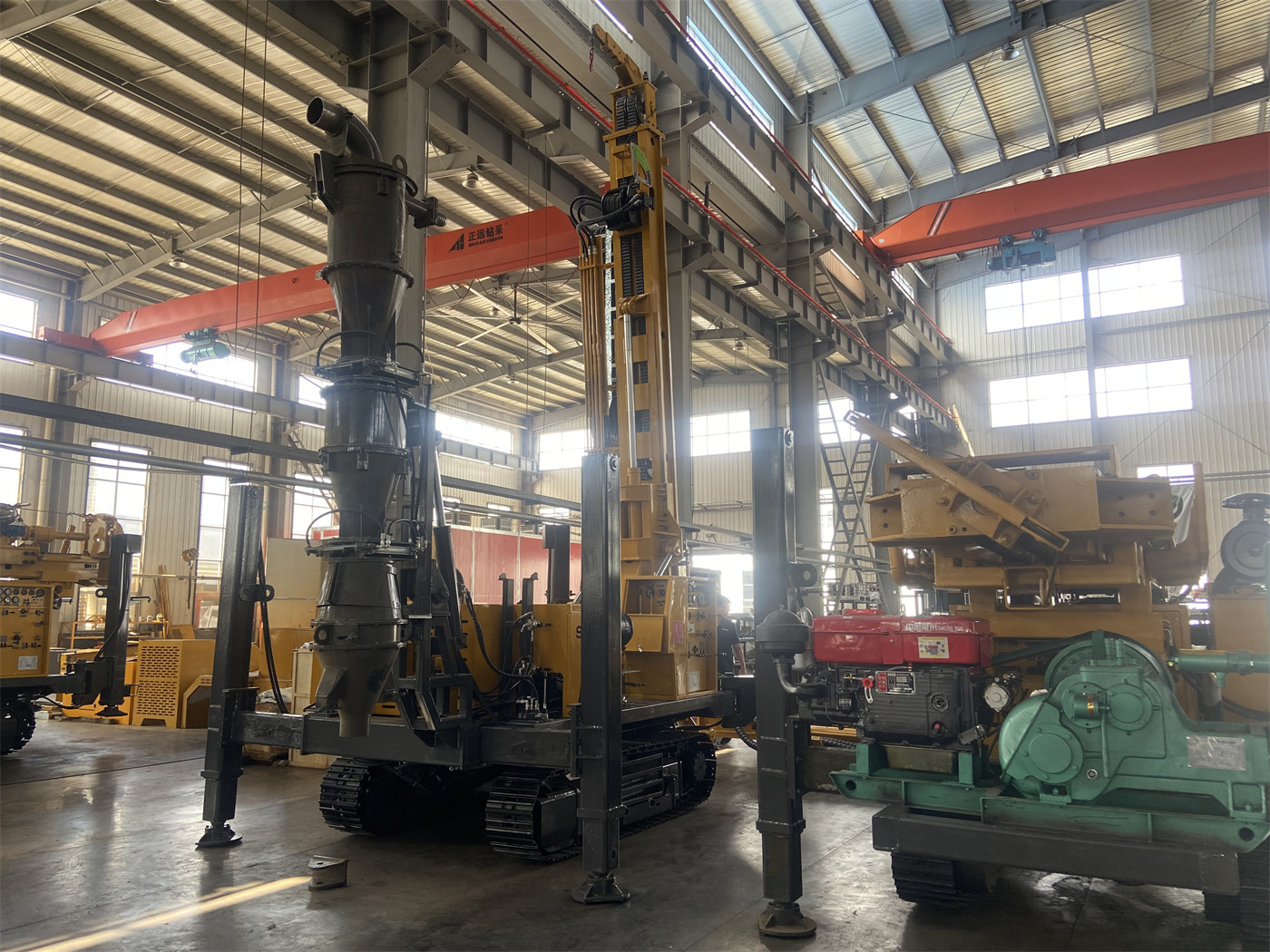
Regarding the drill pipe, the dual-wall structure is the prerequisite for establishing an independent sample return channel. The interface and sealing condition between the inner pipe and outer pipe directly affect whether the sample return is stable. The information also gives a maximum drilling depth of 500 m, a drilling diameter of 105–400 mm, a lifting force of 25 T, an axial pressure of 7 T, as well as dual-condition rotary torque of 10000 / 5000 N·m and corresponding rotation speeds of 75 / 150 r/min. These values indicate that the equipment is aimed at holes of the 500-meter class with large variations in hole diameter, but the nominal drilling depth cannot be understood as the actual hole completion depth under any formation.
For exploration projects, what the sample return path changes is the information chain
In mineral exploration such as gold-copper-iron ore and lithium ore, RC drilling obtains cuttings samples segmented by depth, which are used to observe changes in color, alteration, sulfides, and mineralization, and are then sent to the laboratory for assay. Sample bags need to be marked with the borehole number, start and end depths, date, and sample number, and the on-site records must correspond one-to-one with the sample bags. These management actions are not canceled because of the change in the sample return path; on the contrary, they need to be synchronized with depth records even more.
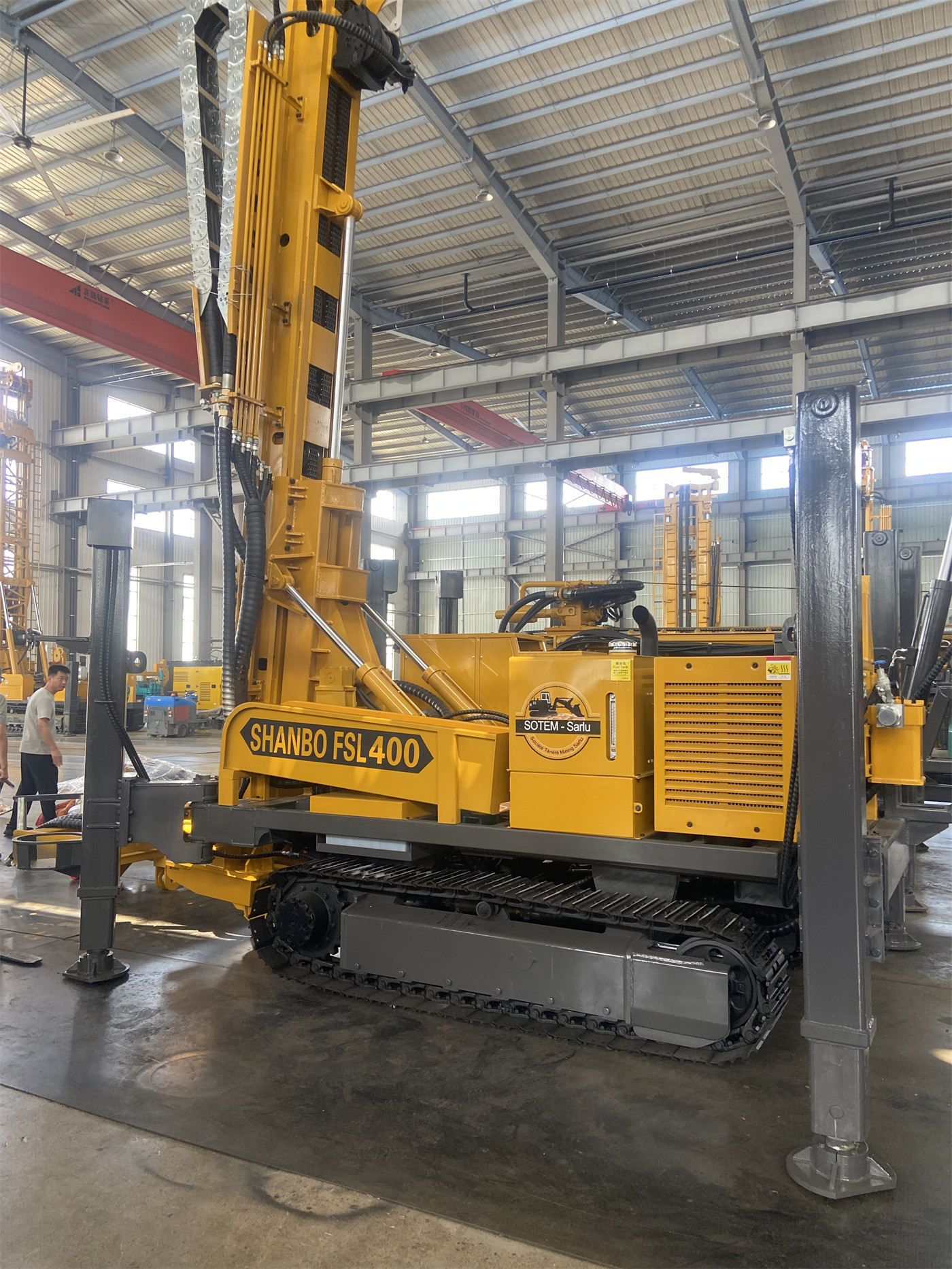
The equipment information mentions an integrated CS3 three-in-one cyclone sampling system, which integrates cyclone separation, representative sample splitting, and sample collection in the same device. For continuous exploration holes and large-batch sample collection tasks, this arrangement reduces repeated operations in sample transfer on the ground and manual sample splitting. It does not replace project quality control requirements; the setting of duplicate samples, blank samples, and standard samples still needs to be carried out according to the project system.
What needs to be distinguished is that reverse circulation sampling and core drilling obtain different information. Core provides complete lithology and structural information, while RC samples provide cuttings segmented by depth. The two undertake different tasks in the exploration process and cannot be used interchangeably just because their names are similar.
Also used for deep water wells, but the process focus is different
The information shows that this model can also be used for agricultural irrigation, industrial water supply, mining area water supply, and groundwater development. Water well projects pay more attention to borehole wall stability, well completion structure, and water-producing layers, and do not necessarily need to activate the complete three-in-one sampling system. The upper loose overburden may not be suitable for direct pneumatic reverse circulation. The information mentions that this model supports mud rotary drilling, so mud, casing, and other methods can first be used to stabilize the upper hole section, and after entering the rock formation, switch to reverse circulation or the DTH process. Whether to switch and when to switch must be determined by formation data and well completion design.
Site and supporting conditions must be calculated together
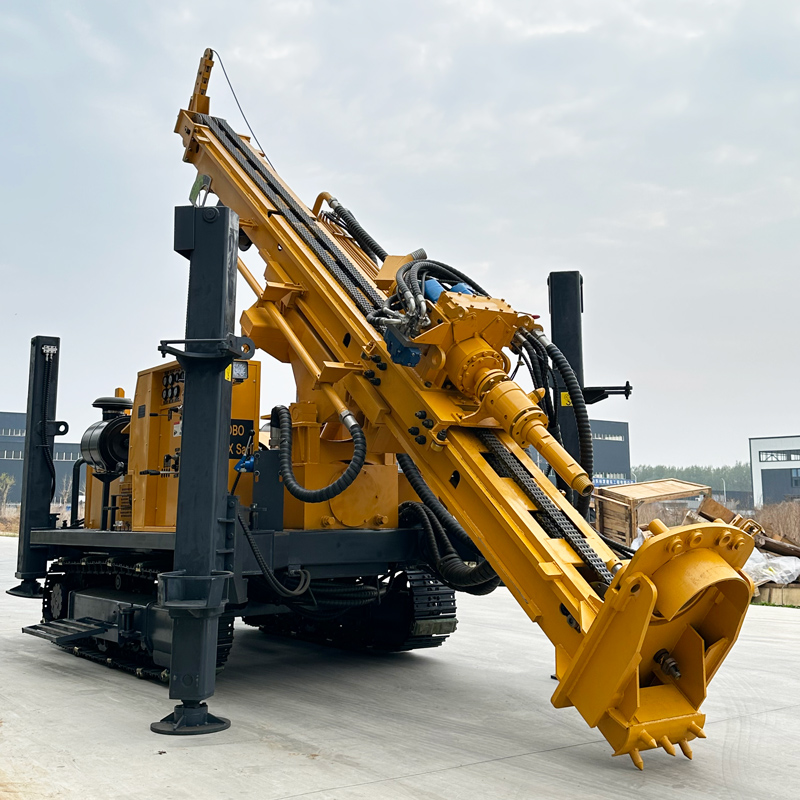
The overall weight is about 12 T, the overall dimensions are about 7 × 2.1 × 2.9 m, the travel speed is about 2.5 km/h, and the maximum climbing angle reference is 21°. RC project sites usually also need to be equipped with air compressors, cyclones, sample splitting devices, sample bags, and transport vehicles. The drilling platform area and equipment layout need to be planned in advance to ensure smooth sample return pipelines and safe personnel access. The hydraulic outrigger stroke is 1.6 m, which can help level the equipment and provide stable support, but the ground bearing conditions still need to be confirmed separately.
In broken zones and formations with developed fractures, falling blocks from the borehole wall may affect the correspondence between samples and depth. On site, the advance speed should be controlled and stable air supply maintained, and abnormal hole sections should be recorded separately. The 25 T lifting force is used for normal tripping and drill pipe handling. When abnormal resistance is encountered during pulling out, it should first be handled by cleaning the hole and judging the process, and it is not advisable to directly rely on the maximum lifting force to pull the drilling tools forcefully.
Several items of information worth checking before procurement
- Drilling purpose: mineral exploration sampling, deep water well completion, or both, determines whether to activate the complete sampling system.
- Target hole depth and diameter: compare with the 500 m and 105–400 mm ranges in the information to confirm whether there is margin.
- Formation data: the thickness of the upper overburden and the location of broken zones determine the division between the mud section and the reverse circulation section.
- Air supply conditions: whether the air compressor pressure and displacement can cover the planned hole diameter and RC hammer specifications, and whether altitude factors are considered.
- Drilling angle: the information supports working angles of 45°/90°; inclined holes need to be determined according to the ore body attitude.
- Site and transportation: the whole machine is about 12 T with overall dimensions of about 7 × 2.1 × 2.9 m; road bearing capacity and platform area must be verified in advance.
- Sample management: whether the sample splitting process, sample bag labeling, and quality control sample setup match the equipment sampling method.
Reverse circulation bringing cuttings up through the drill pipe changes the sample return channel and the organization of the sample source. Whether it is suitable for a project depends on whether the drilling purpose, formation conditions, air supply support, and on-site sampling management can all be established at the same time. Formation details and well completion structures not covered by the information should be confirmed separately during the inquiry and construction organization stages.