












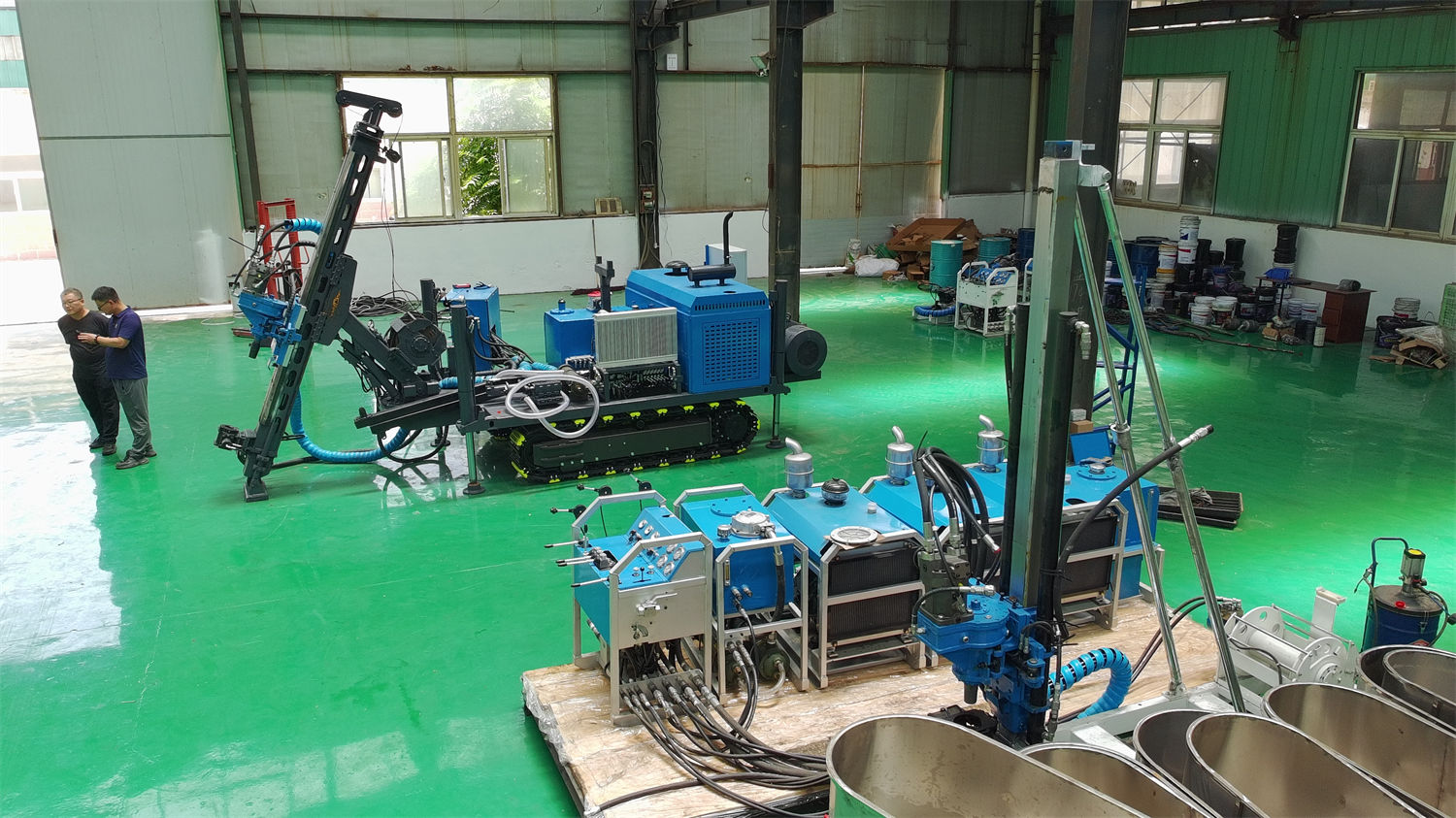
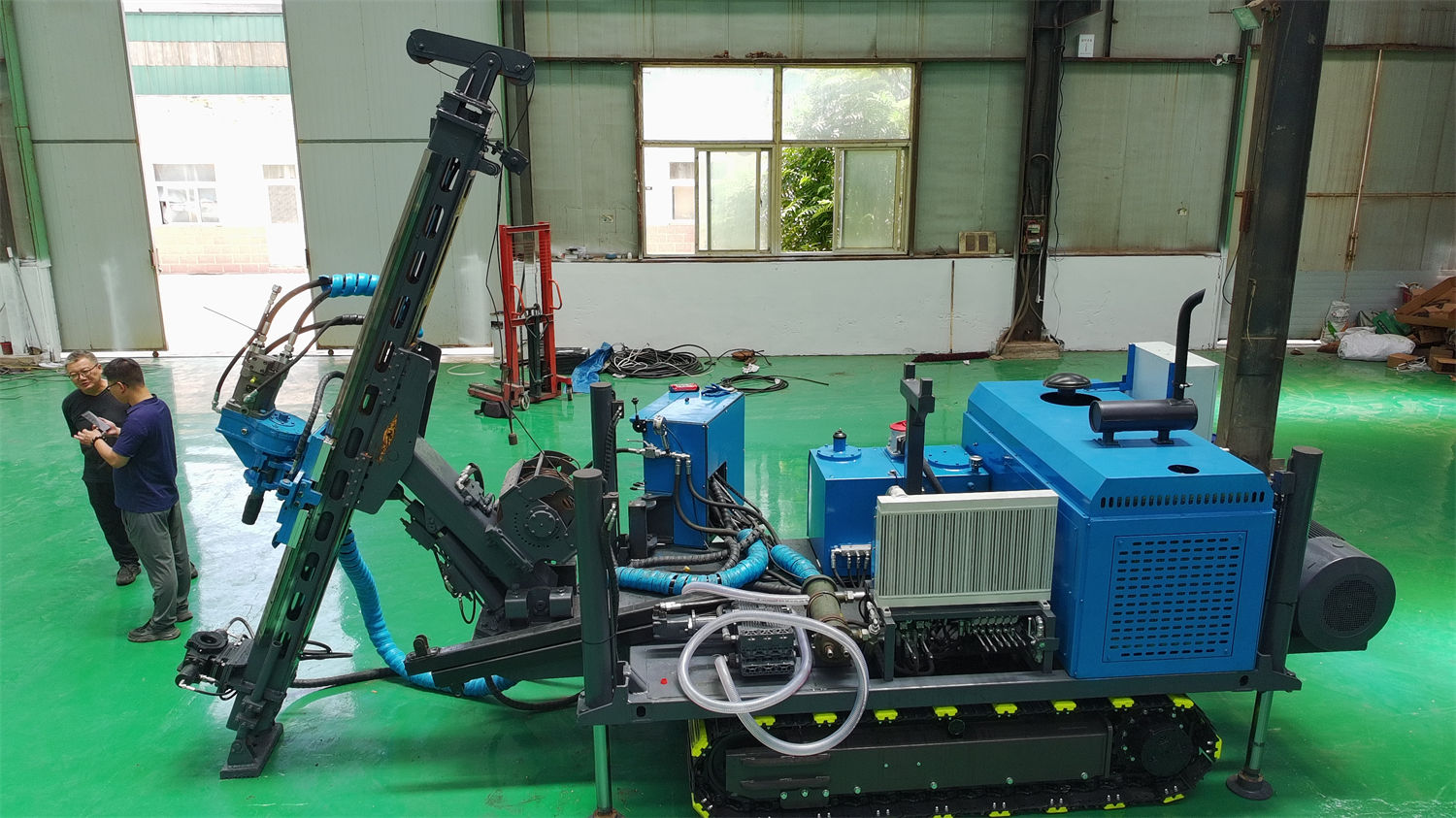
Public information on the CR1600I shows it is a fully hydraulic integrated drill designed for deep core drilling: reference drilling depth of 2000 m for B-size, 1500 m for N-size, and 850 m for H-size, maximum torque of the power head 4800 N·m, main pump flow 320 L/min at 31 MPa, mud system 250 L/min at 7 MPa, winch wire rope diameter 6 mm with a rope capacity of 1800 m. When procuring such equipment, the real question to consider in advance is not "is the torque large enough," but what maintenance boundaries these parameters correspond to in long-cycle deep hole projects and which conditions must be confirmed with the manufacturer before deployment. This article is based solely on publicly available information from this site and does not supplement field data not present in the materials.
First, what tasks is the CR1600I parameter combination intended for?
The public information positions the CR1600I for "higher load, longer cycle deep core drilling tasks," and emphasizes that it is not simply about increasing drilling depth, but simultaneously improving power head torque, hydraulic flow, winch rope capacity, mud circulation capability, and overall power reserve. Typical scenarios include large-scale mineral exploration projects, deep strategic resource surveys, and high-intensity operations requiring long-term continuous coring.
From the model naming, the CR1600I belongs to the CR series of integrated core drills and is not in the same drilling depth tier as the CR800I (800-meter class) and CR600I covered in existing articles. When procuring, one should not directly apply the construction organization experience of the CR800I to 2000 m-class deep holes, because drill string weight, downhole friction, auxiliary time, and downhole risks all change significantly with hole depth.
Main parameters listed in this site's materials
| Parameter Item | Parameter Value |
|---|---|
| Drilling capacity | B-size reference depth 2000 m; N-size 1500 m; H-size 850 m |
| Drilling angle | 45°–90° |
| Drill rod length handled | 1.5 / 2 / 3 m |
| Power head transmission | Gear drive |
| Maximum torque | 4800 N·m |
| Maximum speed | 1500 rpm |
| Gear conversion | 1:3 / 1:3 |
| Movement method | Hydraulic side shift |
| Feed stroke | 3.3 m |
| Feed speed | Fast + slow adjustable |
| Mast installation | Hydraulic telescopic |
| Feed force | 63 kN |
| Pull force | 185 kN |
| Winch wire rope diameter | 6 mm |
| Winch rope capacity | 1800 m |
| Winch lifting force | 13.5 kN |
| Winch lifting speed | 118 m/min |
| Chuck through-hole diameter | 150 mm |
| Applicable drill rods | NQ, HQ, PQ, NTW, HTW |
| Clamping method | Hydraulic clamping + wooden horse wedge self-weight anti-drop |
| Hydraulic system main pump | 320 L/min, 31 MPa |
| Hydraulic system auxiliary pump | 160 L/min, 23 MPa |
| Cooling method | Air cooling + water cooling |
| Mud system | 250 L/min, 7 MPa, speed 727 rpm, power 15 kW |
| Engine | Cummins 6CTA8.3, displacement 8.3 L, rated power 153 kW, rated speed 2000 rpm, 6-cylinder inline turbocharged, water-cooled |
| Electrical system | 24 V |
Regarding the engine parameter column, the public information mentions that the model title in the last column of the PDF powertrain table shows "BX1500T," while other parameter tables on the same page correspond to BX1600T; this article only organizes the parameters provided in that column such as 6CTA8.3, 153 kW, 8.3 L, and does not make additional inferences about the model title discrepancy. If the powertrain model needs to be written into the contract during procurement, this should be confirmed with the manufacturer.
Coordination between 4800 N·m torque and 31 MPa hydraulic system
As drilling deepens, drill string weight and downhole friction continue to rise, and risks of sticking, hole shrinkage, and deviation in complex formations become more pronounced. The public information describes the 4800 N·m maximum torque as: providing greater load adaptation space for the power head, which while ensuring coring speed is more conducive to handling hole sections with significant resistance changes in deep holes. This statement is qualitative; the materials do not provide torque utilization ratios or speed-torque curves for different hole depths and diameters.
31 MPa is the main pump pressure, with main pump flow of 320 L/min; auxiliary pump flow of 160 L/min at 23 MPa. The materials summarize the role of the high-flow hydraulic system as supporting the power head, feed, side shift, and other actuators working together under high-load conditions. For the purchaser, what needs to be clarified in advance is: during long-cycle construction, hydraulic oil cleanliness, filter pressure differential, and system temperature rise are the three maintenance concerns explicitly pointed out in the materials, which also note "avoid performance degradation," but do not provide specific values such as oil cleanliness grade, filter replacement cycle, or allowable temperature rise range.
Long-cycle maintenance concerns explicitly mentioned in the materials
- Hydraulic oil: The materials require strict cleanliness control but do not provide specific grade indicators.
- Filter pressure differential: Listed as a concern for long-cycle construction, but no replacement or alarm threshold is given.
- System temperature rise: The materials note avoiding performance degradation due to temperature rise; the overall cooling method is air cooling + water cooling, but no allowable oil temperature upper limit is given.
- Wire rope: Listed in the scope of regular inspection for high-intensity construction; winch parameters are 6 mm diameter, 1800 m rope capacity, 13.5 kN lifting force, 118 m/min lifting speed.
- Chuck: Listed for regular inspection; chuck through-hole 150 mm, applicable to NQ, HQ, PQ, NTW, HTW, clamping method is hydraulic clamping plus wooden horse wedge self-weight anti-drop.
- Drill rod threads: Listed in the scope of regular inspection, but no thread inspection cycle or rejection criteria are given.
- Power head bearings: Listed in the scope of regular inspection, but no bearing inspection cycle is given.
The common point of these items is: the materials give the direction of "what to inspect" but do not provide directly executable cycles and thresholds. Therefore, during procurement, one should request from the manufacturer the maintenance manual, oil requirements, filter element specifications and replacement conditions, and consumable parts list, then arrange spare parts and personnel based on project site conditions. The above inspection items should not be understood as already sufficiently complete maintenance procedures.
Winch and drill string management boundaries under wireline coring configuration
The public information states that the winch system uses 6 mm wire rope, with a rope capacity of 1800 m and lifting speed of 118 m/min; for 1500 m-class N-size deep holes, the retrieval distance of the wireline inner tube is very long, and winch capacity and speed significantly affect the auxiliary time per run, so this configuration is more oriented toward continuous deep hole coring conditions.
During procurement, two aspects need to be considered separately: first, the capacity and speed parameters themselves; second, the actual use and inspection conditions of the wire rope in long-hole wireline coring. The materials only list the wire rope in the scope of regular inspection and do not provide rejection criteria, inspection frequency, or replacement cycle for the wire rope in wireline coring operations. In long-cycle projects, this part should be included in the list of items to confirm with the manufacturer.
Regarding drill string control, the public information gives a feed force of 63 kN and a pull force of 185 kN, and states that this provides high margin for deep hole drill string control and tool recovery; the 150 mm chuck through-hole is compatible with NQ, HQ, PQ, NTW, HTW and other drill rod systems. The materials link stable clamping and sufficient pull capacity to the space for handling downhole incidents. It should be noted here that the materials do not provide a comparison table of maximum usable hole depth for different drill rod specifications under deep hole conditions; if the purchaser intends to use specific rod specifications at specific hole depths, the manufacturer's calculation results should prevail, and one should not judge solely based on the literal parameters.
Long-hole conditions corresponding to mud system 250 L/min, 7 MPa
The public information explains that in deep holes, the rock powder transport distance is longer, and downhole temperature rise, friction, and return water stability all affect drilling; the CR1600I mud system with 250 L/min flow and 7 MPa pressure can provide greater circulation capacity for bit cooling, powder carrying, and hole wall stability. In the face of deep leakage and fractured aquifers, the materials recommend adjusting the mud system in a timely manner based on changes in return water.
This content gives the direction of effect and adjustment principles, but does not provide mud system formulations, pump rate-hole diameter matching tables, or specific operational steps for leakage treatment. What can be verified during procurement is: mud pump power 15 kW, speed 727 rpm, flow 250 L/min, pressure 7 MPa, and whether the overall machine provides matching recommendations based on the project's intended drilling tools and hole diameter. Regarding treatment measures for deep leakage, plugging, casing, etc., the materials only mention "timely take plugging, casing, or phased treatment measures" without elaborating on process details; this article does not supplement related operational content.
Deep hole formation changes and dynamic parameter adjustment
The public information provides qualitative directions for parameter adjustment by formation type:
- Intact hard rock sections: usually require stable rotation speed and reasonable bit pressure.
- Fractured zones: should pay more attention to run control and flushing fluid wall protection.
- Water-bearing fracture sections: need to observe changes in return water volume and pressure.
- Severe leakage sections: the materials mention plugging, casing, or phased treatment measures.
The materials also emphasize that deep hole operations cannot use a single fixed parameter for a long time and should be dynamically adjusted with changes in hole depth and formation. This means that the 4800 N·m torque and 1500 rpm maximum speed should be understood as usable working ranges, not constant values throughout. The materials do not provide gear speeds, corresponding torques, or specific bit pressure values for each gear; if a drilling parameter table needs to be compiled by formation during procurement, the manufacturer should be asked to provide corresponding technical support documents.
Significance of inclined hole layout for deep orebody control
The CR1600I supports drilling angles of 45°–90°. The public information explains that deep holes with different inclinations can be arranged according to orebody attitude, fracture direction, and existing drilling results, forming spatial control through multi-directional drilling and reducing the uncertainty of single vertical holes in judging inclined orebodies. In deep gold mines, concealed orebodies, and structurally controlled ore projects, deep hole cores can provide continuous stratigraphic, structural, and mineralization information. This content is a description of use and does not constitute a judgment on the applicability of a specific mining area.
Items to confirm with the manufacturer during long-cycle project procurement
Based on the public information, the following items have not yet been given specific values or plans in the materials and are recommended to be confirmed item by item before procurement and mobilization:
- Specific hydraulic oil cleanliness requirements, filter element specifications and replacement criteria, and the maximum allowable oil temperature of the system.
- Inspection cycles and rejection criteria for power head bearings, chuck, drill rod threads, and wire rope.
- Use and replacement conditions of the 6 mm wire rope under wireline coring conditions.
- Actual configuration and drill string calculations for different drill rod specifications at the reference depths of 2000 m, 1500 m, and 850 m.
- Speed-torque ranges corresponding to each gear, and the basis documents for compiling parameters by formation.
- Pump rate matching recommendations for the mud system under different hole diameters and leakage conditions.
- Which version should prevail for the powertrain model title discrepancy (BX1500T appearing in the PDF versus BX1600T in other tables on the same page).
- Standard accessories, consumable parts list, and scope of on-site maintenance training.
Parameter notes and applicable premises
The public information has made clear: due to differences in actual geological conditions, downhole tools, drilling angles, and operating methods, the final drilling efficiency, drilling depth, and core recovery results should be based on on-site conditions. The values cited in this article such as 4800 N·m, 2000 m, 1500 m, 850 m, 31 MPa, 250 L/min, 1800 m, 185 kN, etc., all come from the public CR1600I information on this site and are reference values or configuration descriptions, not equal to actual results achievable in any project. Maintenance arrangements for long-cycle deep hole projects should be based on the manufacturer's formal technical documents and on-site condition calculations.