












When preparing to use a water well drilling rig or mining drilling rig with a DTH hammer to drill hard rock, the air supply plan is often simplified into one sentence: choose an air compressor with high air volume. But on site, it is not uncommon for a high air volume figure to fail to drill effectively, or for a high pressure rating to still result in poor cuttings removal. The problem is often not that a single number is insufficiently large, but that air displacement, rated pressure, hammer air consumption, hole diameter and depth, and the cuttings removal channel are not matched together. This article uses the air supply conditions of screw air compressors as a thread to explain how such matching should be judged.
Three on-site questions the air supply plan must answer first
In DTH drilling, compressed air serves two purposes at the same time: driving the hammer to do work, and carrying rock cuttings from the hole bottom along the annulus to the hole collar. These two tasks do not have exactly the same requirements for the air source, but both are supplied by the same air compressor, so at least three questions must be answered during selection.
- How much air consumption the hammer requires at the set working pressure; this is the basis for the lower limit of air source displacement.
- Hole depth and hole diameter determine the annular return air velocity; the deeper the hole and the larger the diameter, the higher the air volume usually required to maintain cuttings removal.
- Whether the pressure required by the drilling rig and hammer can be maintained stably, rather than merely rated at a certain value.
Each of these three questions corresponds to one data point, but none of them alone is sufficient to determine the model. For example, looking only at air displacement may overlook reduced hammer performance caused by insufficient pressure; looking only at pressure may overlook repeated crushing caused by insufficient air volume and incomplete cuttings removal.
Why air displacement and pressure must be considered together
The air displacement and rated pressure in air compressor specifications are two indicators given under specific conditions. In actual matching, together they determine how much usable compressed air the hammer end can receive. If the hammer's recommended working pressure is relatively high while the air compressor's rated pressure is relatively low, even if the air displacement rating is large, the hammer may not reach its designed working state; conversely, if pressure is sufficient but air displacement is too small, cuttings removal at the hole bottom cannot keep up, and drilling efficiency is likewise limited.
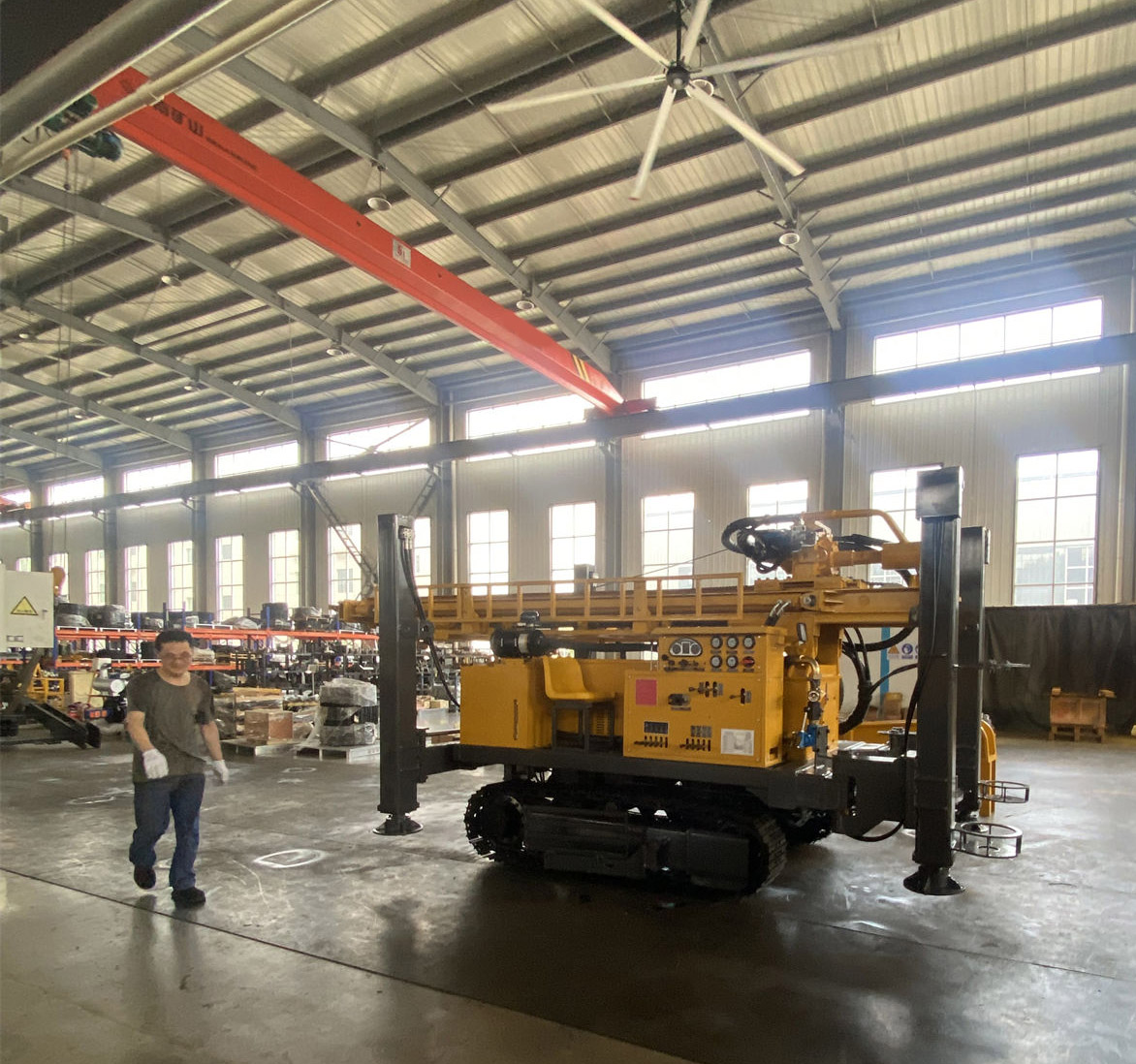
Therefore, the judgment sequence should be: first confirm the required working pressure and air consumption according to the hammer catalog, then estimate the air volume required for cuttings removal based on hole diameter, hole depth, and formation, and finally check whether the air compressor's air displacement and rated pressure can cover both at the same time. For deep holes, hard rock, or larger hole diameters, the materials explicitly recommend reserving appropriate margins for both air volume and pressure. Here, "margin" means leaving margin for both indicators, not merely enlarging one of the numbers.
Several conditions in the ZCS100 data corresponding to air supply requirements
Based on the public data of the ZCS100 screw air compressor, its parameters can be placed back into the above judgment framework.
| Data item | Value | Corresponding requirement type |
|---|---|---|
| Air displacement | 33 m³/min | Continuous high-volume air supply scenarios, such as DTH impact and hole-bottom cuttings removal |
| Rated pressure | 2.5 MPa (25 bar) | Drilling conditions requiring relatively high working pressure |
| Power | 315 kW | Power configuration for high-load continuous operation |
| Overall dimensions | 3960 × 2000 × 2000 mm | Reference for site layout and transport conditions |
According to the data, the 33 m³/min air displacement corresponds to drilling and engineering construction scenarios requiring sustained high air volume, and stable air supply is beneficial for DTH impact and continuous drilling. The 2.5 MPa rated pressure is intended for conditions requiring relatively high working pressure. Only when these two values hold at the same time do they form the basis for its applicability in DTH air supply.
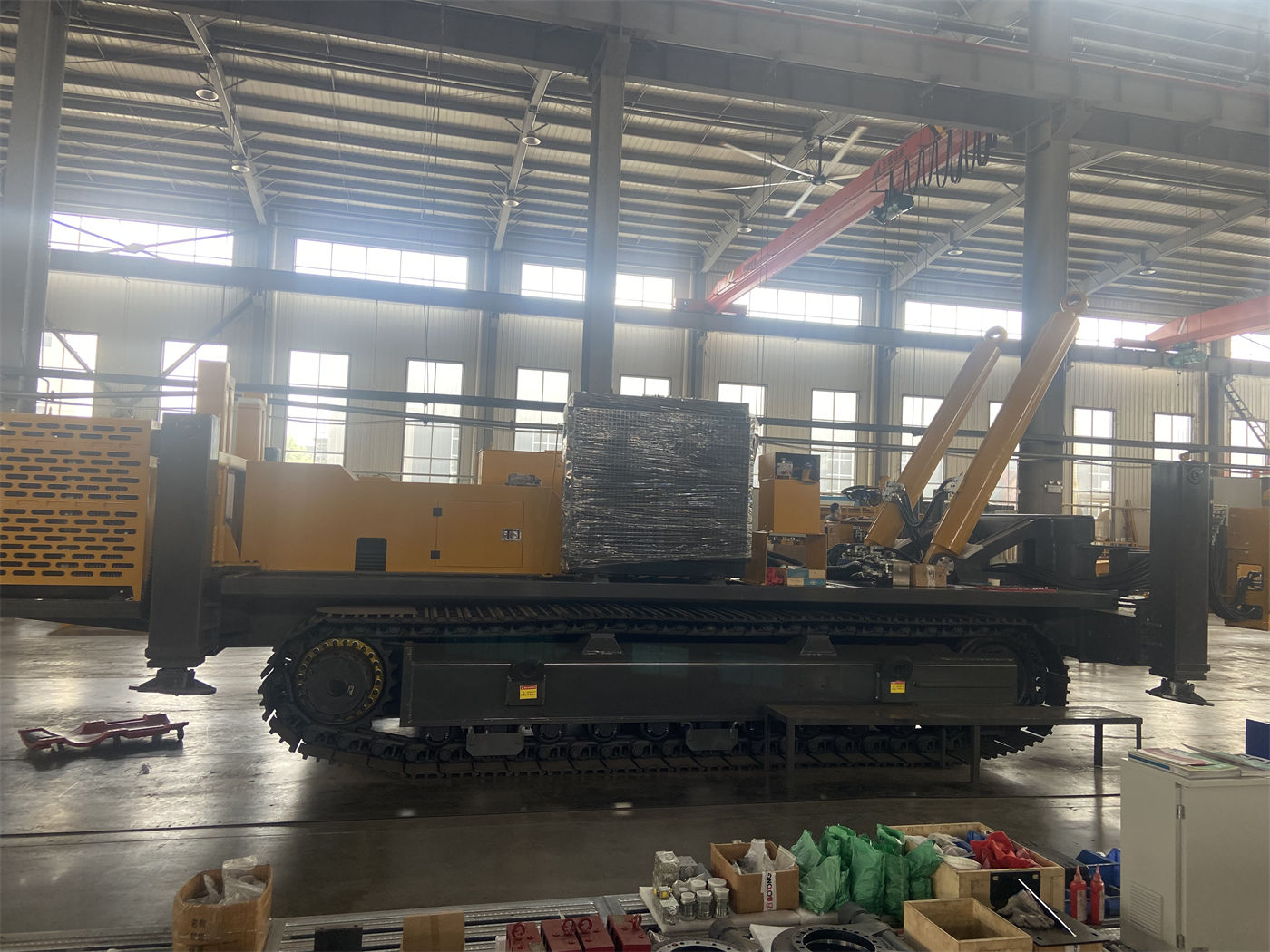
The 315 kW power configuration corresponds to high-load continuous operation. In other words, the design orientation of this type of equipment leans toward long-term continuous air supply rather than intermittent air use. For occasions such as water well drilling, mining drilling, and quarries where the air compressor needs to run continuously with the drilling rig, whether the power has margin directly affects the stability of continuous operation.
Under which working conditions these air supply conditions are worth considering
According to the application scope listed in the data, the ZCS100 can be used in water well drilling, mining drilling, quarry blast hole construction, and engineering construction. As a supporting air source for drilling rigs, it can provide compressed air for DTH hammers, pneumatic drilling tools, and other air-consuming equipment. In practical judgment, if a project falls into the following situations, this type of high-displacement, high-pressure model can be included in the comparison:
- Using a DTH hammer to drill hard rock, and the hammer's recommended working pressure is relatively high.
- The hole diameter is relatively large or the hole is relatively deep, and the air volume required for cuttings removal cannot be estimated only on the basis of shallow holes.
- The drilling rig operates continuously, and the air compressor needs to run along with it for a relatively long time rather than supplying air briefly.
These are conditional judgments supported by the data; they do not mean that any specific project has adopted this model, nor do they constitute a commitment regarding drilling efficiency or well completion results.
If supporting conditions are not implemented, even large air supply figures cannot be brought into play
The air compressor is only one link in the entire air supply system. The application method mentioned in the data is that the air compressor provides an air source for DTH hammers and pneumatic drilling tools, which means the following supporting conditions also enter the selection judgment:
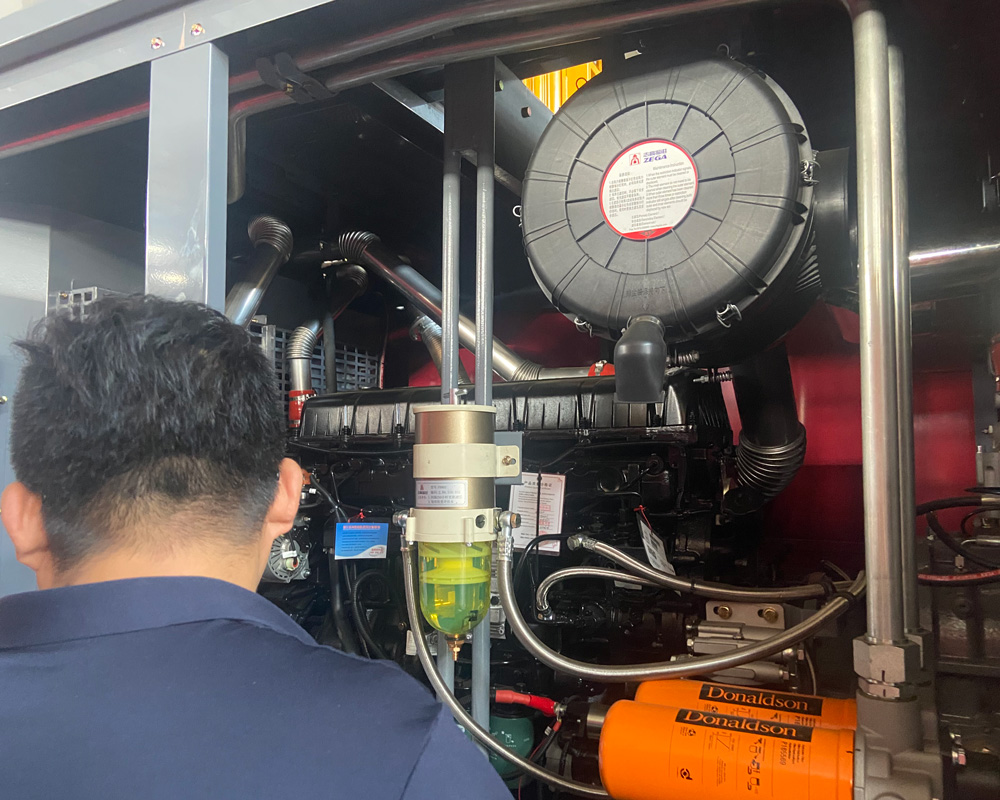
- The hammer model and its recommended pressure and air consumption need to match the air compressor output.
- The drilling rig model, hole diameter, and target depth determine the air volume requirement for annular cuttings removal.
- The main formation conditions affect actual air consumption and drilling status.
- Whether the air supply pipeline and joints can withstand the corresponding pressure is not elaborated in the data and needs separate confirmation.
The data also clearly indicates that different geological conditions, hole depths, hole diameters, drilling tool specifications, and operating methods will affect actual air consumption and construction efficiency, and the final basis shall be the on-site working conditions and the technical requirements of the supporting drilling rig and hammer. This shows that selection cannot stop at the air compressor catalog; the requirements at the drilling tool end must also be brought in.
Matters still requiring verification with suppliers and on site
The data provides air displacement, rated pressure, power, and overall dimensions, but does not provide matching conclusions for a specific hammer or specific hole diameter, nor does it list operating data such as noise, fuel consumption, and maintenance intervals. Therefore, before actual selection, it is also recommended to confirm:
- Whether the working pressure and air consumption of the hammer used fall within the range that this model can output stably.
- The basis for estimating the air volume required for cuttings removal under the planned hole depth, hole diameter, and formation.
- Whether the on-site power supply or power conditions and equipment layout space meet the overall dimension requirements.
- Maintenance arrangements and preparation of wear parts for long-term continuous operation.
Only by preparing this information and then judging against the air compressor's two indicators of air displacement and pressure can one avoid replacing the matching of the entire air supply plan with a single number. This is also the practical meaning of "high-volume, high-pressure air supply cannot be determined by a single number": the numbers are the starting point for judgment, while supporting conditions are the basis for the conclusion.